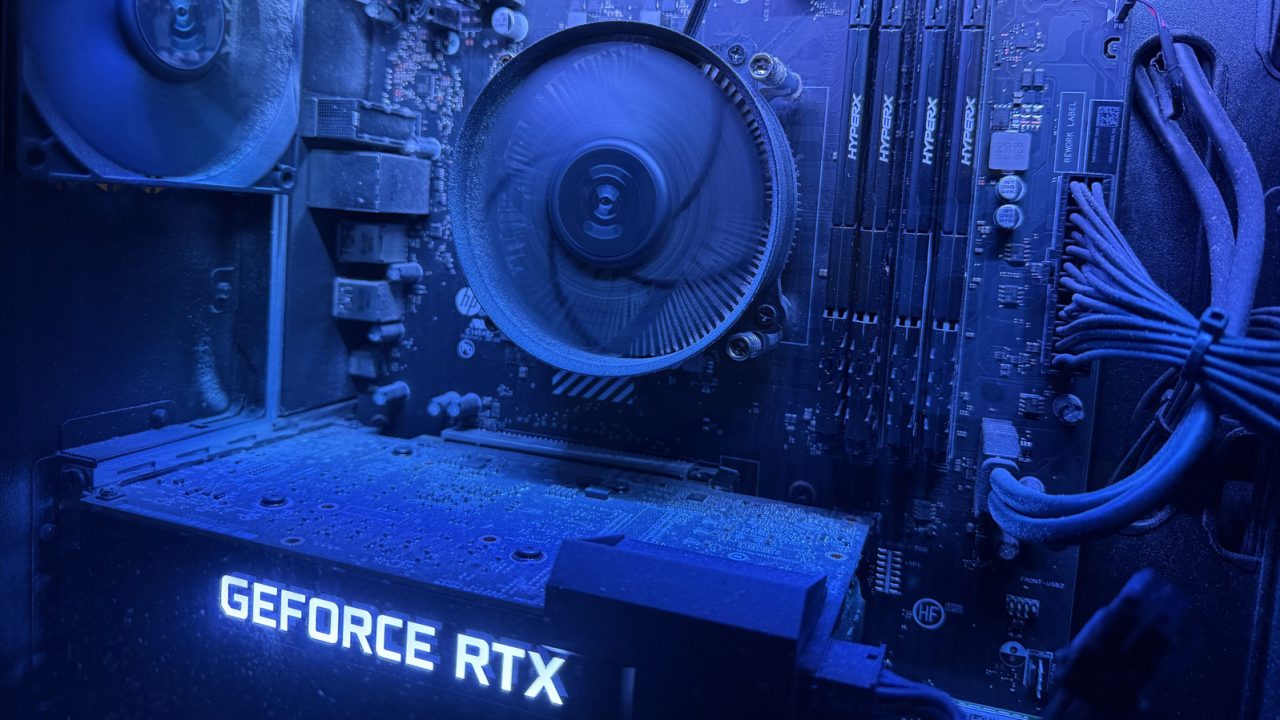
Although PlayStation 5 and Xbox Series X consoles utilize AMD Radeon technology similar to that found in personal computers, the two platforms handle graphics processing in fundamentally different ways. While a gaming PC features a discrete graphics card with its own memory, consoles integrate the GPU and CPU onto a single chip, creating a unified system designed for efficiency and consistency.
Microsoft’s Xbox Series X, for instance, employs an Accelerated Processing Unit (APU) that combines an eight-core CPU and a 52-compute unit GPU on a single 360.45 square millimeter piece of silicon. This configuration includes 16GB of shared memory, of which 13.5GB is available for games, as the operating system reserves the remainder. In contrast, traditional PCs keep system RAM and GPU video memory separate, allowing for hardware upgrades that are not possible on fixed console hardware.
Because consoles use bespoke, semi-custom chips, game developers can optimize their software for a specific hardware configuration. Mark Cerny, the lead architect for the PS5 Pro, explained that the upgraded model’s GPU is based on RDNA 2.x rather than the newer RDNA 3 to maintain backward compatibility. This approach ensures that existing games, with their pre-compiled shaders, can run on the newer hardware without requiring studios to create separate versions.
This fixed hardware environment significantly impacts game performance and loading times. On PCs, which vary widely in components, games must compile shaders on the user’s specific machine, often leading to long loading screens and potential stuttering. To address this, Microsoft has introduced Advanced Shader Delivery for Windows, which downloads pre-compiled shaders to reduce load times; for example, Forza Horizon 6 loads in four seconds with this feature, compared to nearly 90 seconds without it.
Performance tests by Digital Foundry have shown that the outcome of using similar hardware depends heavily on how a game is optimized. In Hitman 3, an AMD Radeon RX 6700 was found to be up to 44 percent faster than the PS5, while the console outperformed the PC by 45 percent in Cyberpunk 2077 with ray tracing enabled. These results highlight that while a high-end PC will generally offer superior graphical fidelity, a console game tailored to its specific hardware can extract more performance from mid-range chips.
The industry landscape continues to evolve as Microsoft advances its next-generation semi-custom chip for Xbox, with AMD CEO Lisa Su confirming progress toward a launch next year. Meanwhile, the price gap between the two platforms has narrowed, with the PS5 starting at $599.99 and the Xbox Series X at $749.99, even as rising memory and storage costs affect the affordability of PC components.



Digital Foundry’s results show it’s not just hardware. Optimization wins over raw power sometimes. Good article.
90 seconds to load Forza without pre-compiled shaders? My PC must be older, but that seems extreme.
Mark Cerny’s choice of RDNA 2 for PS5 Pro just for backward compatibility makes total sense.
Unified memory is clever, but I still want the flexibility to swap my graphics card whenever I please.
The price gap is real. Why does Xbox cost more than PS5 now? Feels weird seeing that happen.
I prefer PC for upgrades, but the console optimization is definitely superior for those specific AAA titles.
So a PS5 can beat a PC at ray tracing? That is surprisingly specific and depends heavily on the game.
The shader compilation delay on PCs is getting annoying. Microsoft’s Advanced Shader Delivery is a must-have for smooth gaming.