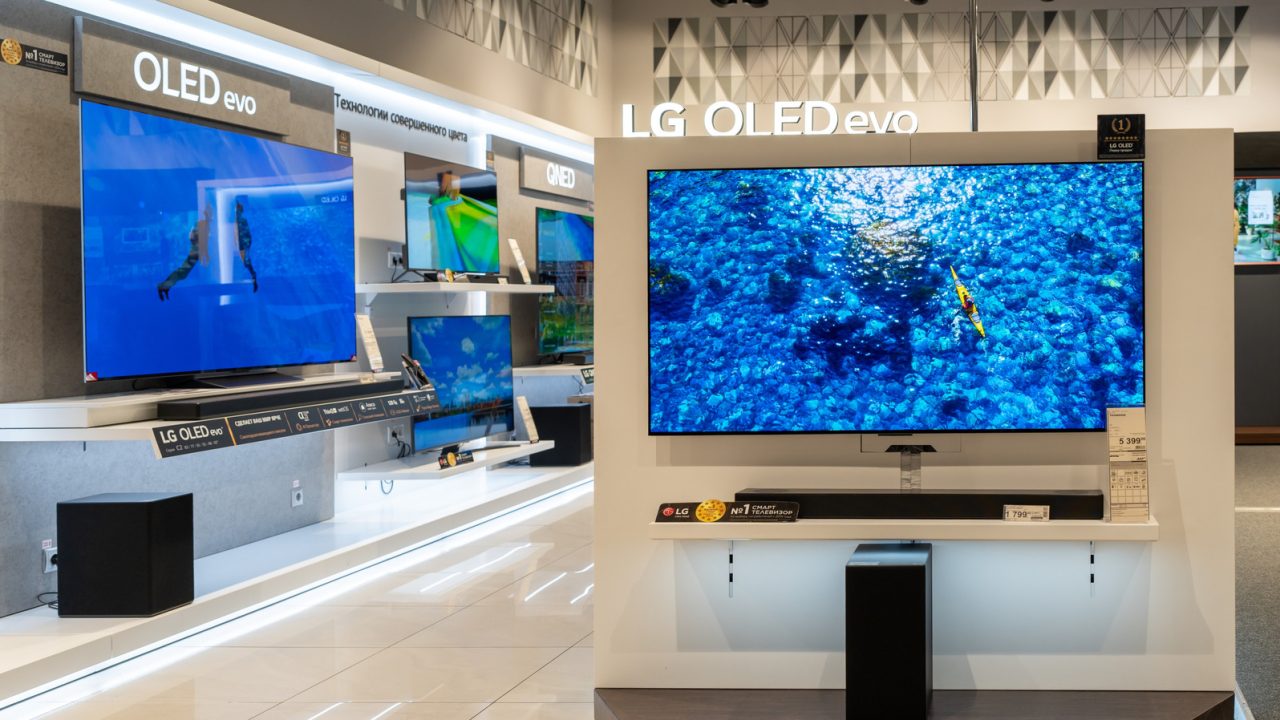
LG and Samsung remain the dominant forces in the OLED television market, each approaching the technology with distinct strengths and weaknesses. LG entered the industry in 2010 with its early 15-inch 15EL9500 and released its first 55-inch OLED TV in 2012, gradually establishing a reputation for vivid color accuracy. In contrast, Samsung returned to the OLED segment in 2022, investing heavily in proprietary panel innovations to differentiate its products.
The two manufacturers rely on different underlying display technologies. LG primarily utilizes WOLED (White OLED) panels, which use a white light source passed through red, green, and blue filters. While this approach is effective in high ambient-light environments, it can compromise text clarity. Samsung, on the other hand, employs QD-OLED technology, which uses a blue light source and quantum dots to convert color. This method produces a wider color gamut and greater energy efficiency, making it the gold standard for HDR performance, though it is less suitable for bright rooms due to potential magenta glare from strong ambient light.
The choice between the two brands often comes down to the viewing environment. A top-tier QD-OLED television will struggle in a brightly lit living room, whereas LG’s WOLED panels offer better resilience to ambient light, despite anti-glare coatings on both brands’ displays not eliminating reflections entirely. Additionally, Samsung has continued to face criticism for obscuring specific panel information in its marketing, while LG has grappled with quality control concerns regarding its recent G6 model.
Software ecosystems and long-term support are also significant differentiators. LG’s WebOS platform typically supports updates for up to five years, whereas Samsung’s Tizen OS promises support for up to seven years. However, Samsung OLED models do not support Dolby Vision, relying instead on HDR10, while LG televisions include Dolby Vision support. Furthermore, consumer trust is influenced by privacy controversies; LG previously faced backlash over its terms of service allowing it to record user conversations for advertising purposes, an issue the company later addressed with a public statement. Buyers must consider these factors alongside panel technology to determine which television best suits their needs.
These are the only two brands that actually matter. Everything else is just marketing fluff to me.
I bought the Samsung and I am not complaining. The colors in my dark basement theater are stunning.
LG has been doing OLEDs for a decade. They just know what they are doing better.
Finally, someone explaining why my living room setup needs a WOLED panel instead of QD-OLED.
Samsung skipping Dolby Vision is a real bummer. I hope they change that in the next model year.
Is it true that the magenta glare is really that bad? I have seen conflicting reviews online.
The privacy stuff with LG still makes me nervous. I do not want my TV recording my conversations.
Seven years of updates? That is a massive advantage for Samsung. I hope they actually deliver on it.
I picked the LG G6 for my bright kitchen. The Samsung one looked washed out there, honestly.