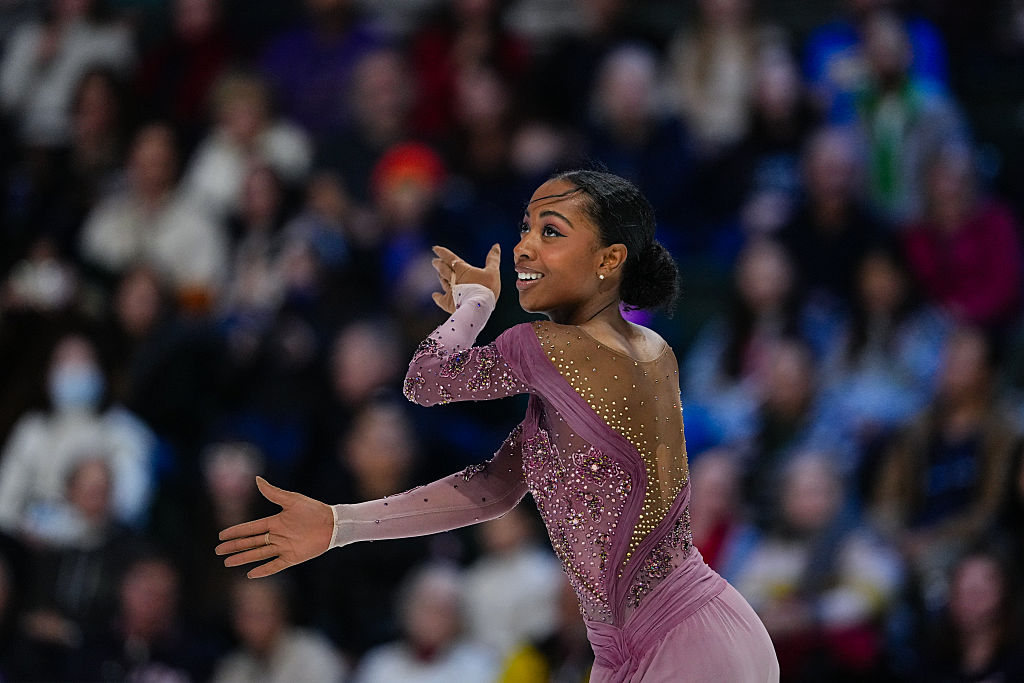
Alexa Gasparotto made history last weekend when she became the first Black woman to successfully land a triple axel at the International Skating Union Grand Prix, a competition held on November 14, 2026. The achievement is viewed as a symbolic milestone for a sport where Black competitors remain rare, yet the presence of athletes from marginalized backgrounds is increasingly visible.
Gasparotto’s success is the result of sustained efforts to increase visibility and support for skaters of all backgrounds in a sport that requires significant financial investment. Her performance demonstrates the progress Black athletes have made in winter sports, a path that began with pioneers like Tai Babilonia, the first Black figure skater to compete at the Olympics in 1964, and Debi Thomas, who won bronze at the 1988 Calgary Games. While other skaters such as Surya Bonaly and Vanessa James competed in later Olympic cycles without winning medals, Winter Olympic golds were eventually claimed by Black athletes in other disciplines, including bobsledder Vonetta Flowers and speedskater Shani Davis.
In more recent years, figure skater Starr Andrews cemented her place in history as the first Black female singles skater to medal on the Grand Prix circuit. Andrews served as an alternate for the Milano Cortina 2026 Winter Olympic Games before transitioning to pairs skating. Both Andrews and Gasparotto have spoken about the unique challenges of navigating the sport as Black athletes, noting that while the pressure of representation can be overwhelming, the role of inspiring younger Black skaters provides strong motivation to continue.
The growth of the Black skating community extends beyond elite competition to intercollegiate and recreational levels. In 2024, Howard University made history as the first Historically Black College and University to register a collegiate club with the U.S. Figure Skating Intercollegiate League. Team co-captain Cheyenne Walker emphasized that diversifying the sport is a victory in itself, despite the lack of an on-campus ice arena. This initiative was inspired by programs in historic Black neighborhoods like Harlem, where organizations such as Figure Skating in Harlem and Figure Skating in Detroit provide early access to training, competition, and academic tutoring for Black and brown youth.
Efforts to lower barriers continue through scholarship programs like Diversify Ice, founded by skater Joel Savary, and the Mabel Fairbanks Fund, which supports underrepresented skaters. The sport is also evolving technically, with skaters like Elladj Baldé and Adam Siao Him Fa pushing boundaries; Siao Him Fa successfully advocated for the unban of backflips in 2024. As figure skating continues to open up to skaters of all identities, including openly queer athletes and those with physical disabilities, Gasparotto’s historic jump reaffirms that the sport is accessible to everyone.



Wait, triple axel at Grand Prix level? That jump is so hard. Did she land it clean?
The support systems like Diversify Ice are crucial. We need more of this funding to keep doors open for everyone.
Huge moment. Seeing this level of technical mastery in our community inspires the next generation of skaters.