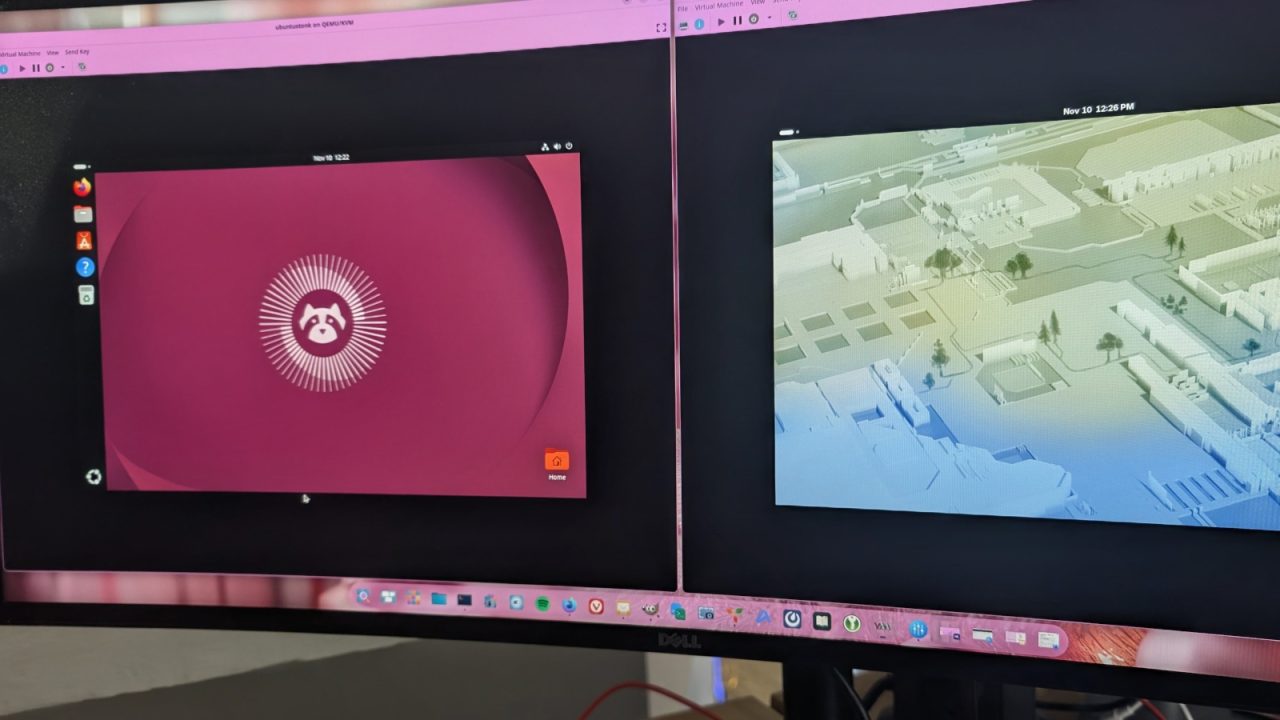
For Linux enthusiasts ready to move beyond Ubuntu, Fedora presents a compelling alternative that balances ease of use with enhanced performance and newer software libraries. While migrating between distributions can seem daunting for newer users, the transition from Ubuntu to Fedora is largely seamless due to the strong similarities between the two operating systems, according to ZDNET contributor Jack Wallen.
Wallen notes that both distributions offer graphical interface tools, robust security, and user-friendly package management, ensuring that essential software is readily available. The command-line interfaces also share most core commands, reducing the learning curve for those accustomed to terminal usage. However, Fedora distinguishes itself by generally providing faster performance and a more cutting-edge software stack.
In comparative testing, Wallen found that while boot times were similar—with Fedora taking 13.69 seconds versus Ubuntu’s 14.31 seconds in controlled reboots—Fedora significantly outperformed Ubuntu in application startup speeds. For instance, launching the GIMP image editor via Flatpak on Fedora took 3.48 seconds, compared to 4.34 seconds for the Snap version on Ubuntu. Package installation via the native DNF5 manager was slightly slower on Fedora at 15.34 seconds for Audacity, compared to 14.61 seconds on Ubuntu, though this gap is negligible for most users.
A key differentiator is the software ecosystem; Fedora ships with newer applications and updates them more rapidly than Ubuntu, maintaining a ‘fresher’ system without compromising stability. Additionally, the distribution favors Flatpak over Ubuntu’s Snap packages. Flatpak, developed by Red Hat, is fully open-source, enforces mandatory sandboxing for security, and typically launches applications faster than its proprietary counterpart, Snap.
Despite superficial differences in their desktop environments, both systems are built on GNOME. Fedora utilizes a standard GNOME installation, whereas Ubuntu modifies it to resemble the older Unity interface. Users preferring the Ubuntu-style layout on Fedora can easily replicate it by installing community extensions such as Dash to Panel or Unite-Shell, allowing for a personalized transition that retains familiarity while gaining the benefits of Fedora’s architecture.



Interesting take. I run both side by side and see no meaningful performance difference in daily use.
Fedora’s update cadence is what I actually want. Staying on Ubuntu LTS feels outdated quickly.
I am scared of breaking my system, but the seamless transition claim sounds very encouraging for me.
Snap is proprietary? I did not realize that was such a big security and openness issue.
The Audacity install time difference is negligible, just as the article suggests. Do not sweat the seconds.
Does DNF5 really struggle with repositories? I worry about dependency hell moving to this system.
Ubuntu has served me well for a decade. Why would I risk a migration over minor gains?
13.69 seconds versus 14.31? Honestly, that is statistically insignificant noise for regular users.
The GNOME extension tip is gold here. I hated Ubuntu’s customization limits anyway, so this looks easy.
Finally someone mentions Flatpak speed advantages clearly. My apps load noticeably faster on Fedora now.