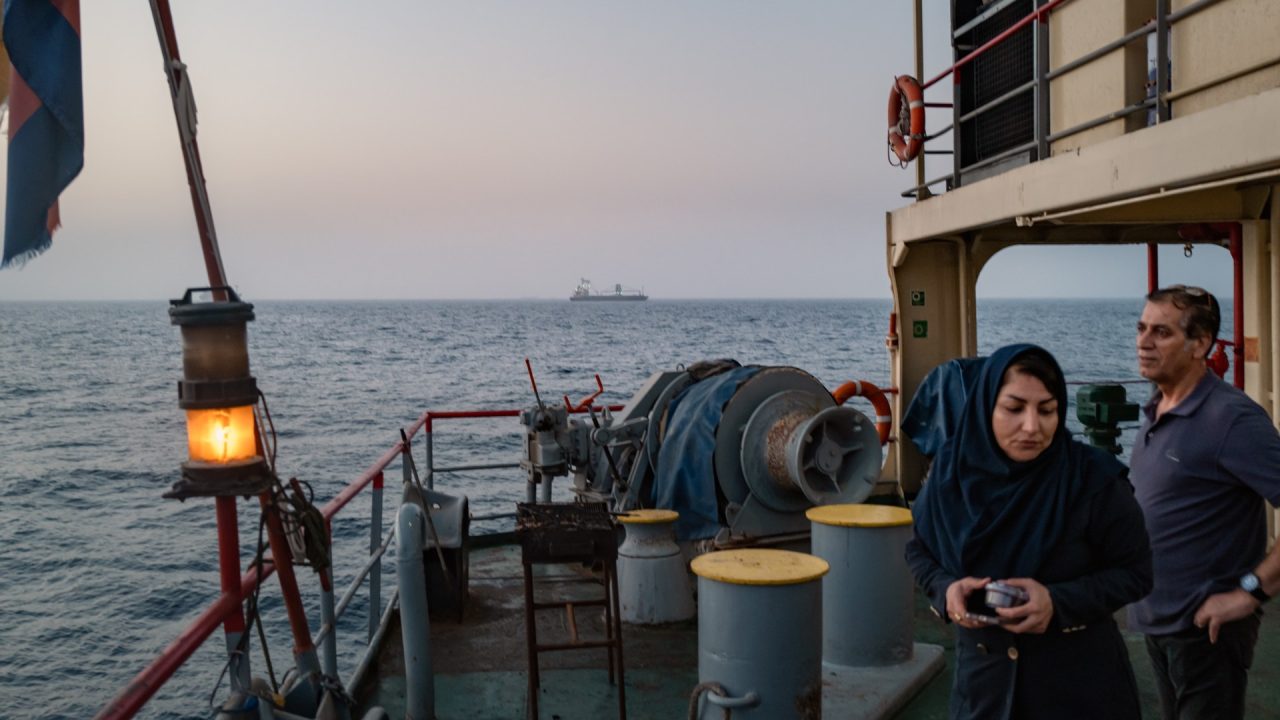
Tehran is preparing for a severe fiscal crisis as the US continues to pressure Iran economically, a strategy that has effectively reduced the country’s oil revenues to near zero. During a meeting in Paris with G7 counterparts, US Secretary of State Marco Rubio outlined a sustained campaign of naval blockades, stringent sanctions, and border disruptions, warning that Iran’s economic conditions will likely worsen over the coming quarter.
The United States military imposed its first naval blockade on Iran’s southern ports in April 2026. Although a temporary agreement in June allowed some trade through the Strait of Hormuz, the deal collapsed, leading to a second blockade that has been in effect since July. US authorities report having redirected 147 ships, disabled five vessels, and destroyed ten Iranian tankers linked to the Islamic Revolutionary Guard Corps. As a result, Iran has not loaded oil onto vessels since August 25, according to the US Treasury.
Iranian President Masoud Pezeshkian’s administration issued a budget directive in November acknowledging the need to plan for a scenario where oil revenue reaches zero. Deputy at the Plan and Budget Organization, Mohammad Ghasemi, stated that the government must prepare for this contingency, contrasting it with a more optimistic scenario involving the removal of the blockade.
Economist Isaac Saidian warned that the loss of oil income forces the government to address fundamental fiscal challenges, including salary payments, pension funding, and currency stability. He noted that while the state has increased its reliance on taxes, oil still accounted for approximately one-third of the planned government funding in the 2026–27 budget proposal. Without sustainable access to foreign trade, austerity measures alone cannot resolve the structural imbalances.
The Iranian economy is already grappling with chronic inflation, which stood at nearly 89 percent in the month ending October 22. To manage the crisis, officials are prioritizing fiscal discipline and household support, including the distribution of electronic food coupons. However, experts caution that abrupt cuts to social support could deepen poverty, while expanding non-oil exports is unlikely to compensate for lost oil revenue in the short term due to ongoing restrictions on banking and transport.

Redirecting 147 ships sounds like a major logistical operation. How are they tracking all that traffic?
Food coupons help, but you can’t buy much when prices rise nearly ninety percent a year.
It is worrying to see such aggressive naval actions. Are they not afraid of a full regional war?
Funny how the ‘temporary agreement’ fell apart so fast. Seems these deals rarely hold up in the long run.
Inflation at eighty-nine percent sounds like a typo, but I guess not. The local currency must be collapsing.
This is just economic warfare by another name. The people suffer the most when superpowers clash.
Zero revenue means the state has to find money elsewhere. How exactly do they pay teachers and police?
I can’t believe the US actually destroyed ten tankers. That feels like a massive escalation beyond just sanctions.