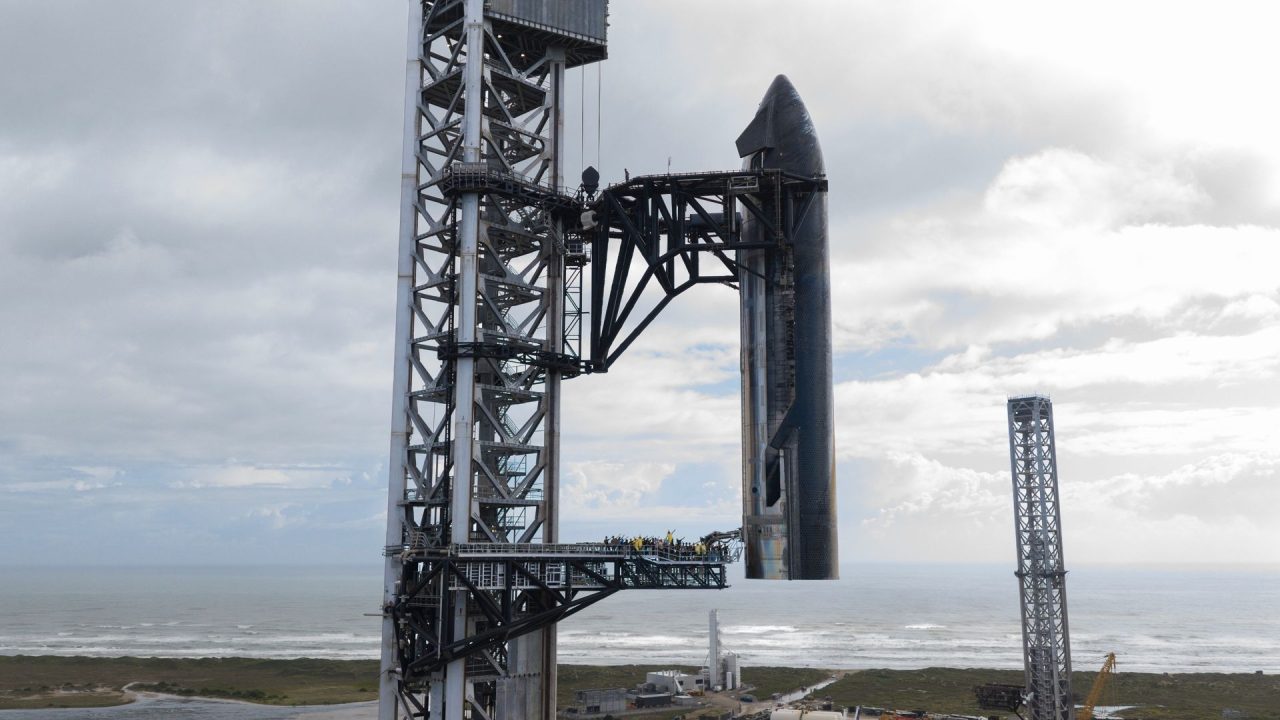
SpaceX has decided to retire the first Starship upper stage it successfully recovered, a vehicle designated as Ship 42. The spacecraft launched on the company’s 15th test flight on November 13 and returned from orbit the following day, where it was securely captured by the “chopstick” arms of the launch tower at SpaceX’s Starbase facility in South Texas.
Despite Elon Musk noting that Ship 42 completed its flight in good condition and could potentially have been reflown after a few weeks of refurbishment, the company will not attempt to reuse it. Speaking at the TomorrowX Summit on November 18, Musk explained that the vessel holds historic significance as the first of its kind to be successfully caught. “In this case, because it’s kind of an historic ship, we’re going to, I think, not take any chances with the ship and just kind of leave it for public display, because what it’s done is historic,” Musk stated.
While a specific location for the display has not been confirmed, Starbase is the most likely candidate. The site currently serves as SpaceX’s primary hub for Starship manufacturing and launches, although the company is planning to shift most operations to a new $100 billion complex in Louisiana, which has yet to break ground.
Musk participated in the virtual discussion with venture capitalists Gavin Baker and Antonio Gracias, who moderated the event in Austin, Texas. At the time, Musk was in China, accompanying President Donald Trump on a diplomatic visit to meet with President Xi Jinping.
The successful recovery of Ship 42 marks a critical milestone for SpaceX, moving the company closer to its goal of developing a fully and rapidly reusable launch vehicle. Prior to this flight, SpaceX had already successfully caught and reflown its Super Heavy booster twice, but the upper stage presents a significantly greater challenge due to its higher velocity and distance traveled. Musk described the achievement as fundamental, noting that Starship will become the first fully reusable orbital space system.
The company views rapid reusability as essential to its long-term strategy, which includes launching approximately 10,000 Starship missions annually by 2030. This high launch cadence is intended to support the deployment of two massive satellite constellations in low Earth orbit: the next-generation Starlink network, expected to hold around 100,000 satellites, and the Starmind AI data-center constellation, which will be ten times larger. Ship 42’s predecessor, on Flight 14, was part of the initial testing for this next-gen Starlink network, successfully deploying 26 new internet spacecraft.



Leave a Reply