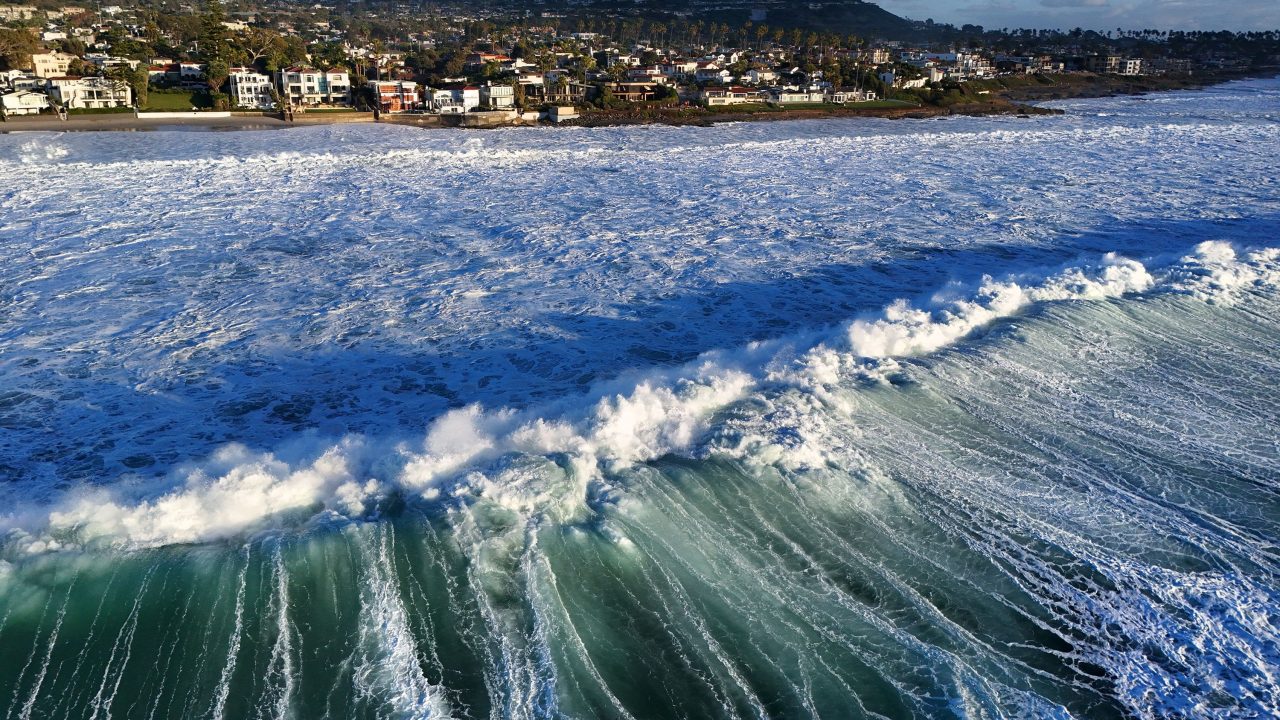
A record-breaking marine heat wave is currently affecting the coast of California, driven by a powerful El Niño event that oceanographers say is the strongest on record. Daniel Rudnick, a Scripps Institution of Oceanography oceanographer who has monitored underwater gliders for two decades, described the recent temperature anomalies as unprecedented, noting that the data charts had to be adjusted to accommodate the intense heat extending hundreds of meters below the surface.
The warming trend is significantly impacting marine ecosystems and intensifying the state’s winter storm season. In late October, a monitoring station in Monterey Bay recorded a temperature of 64.72 degrees Fahrenheit at a depth of 200 feet, shattering previous records. Data from San Diego at the same depth showed an even more dramatic anomaly, with water reaching 77 degrees Fahrenheit—21.3 degrees above the normal average. Rudnick emphasized that this event combines El Niño effects with long-term warming, as coastal California waters have experienced heat spikes since early 2025, with some regions reaching eight degrees above average in August.
Climate scientists attribute part of the sea level rise and temperature increase to Kelvin waves, which transport warm water across the Pacific and push down the ocean’s thermocline. Daniel Swain, a climate scientist at the University of California Agriculture and Natural Resources, compared the process to turning off an air conditioner, allowing surface waters to warm significantly. This combination of factors has led to several weeks of coastal flooding, with waves in the San Francisco Bay Area exceeding 30 feet in height and triggering coastal flood advisories. The warmer waters have also set new hourly rainfall records in locations ranging from San Francisco to Burbank, and on Tuesday, two rare twin waterspouts formed over San Francisco Bay, a phenomenon typically associated with warmer regions like the Mediterranean or Florida rather than the Pacific.



Always skeptical when they say ‘record-breaking,’ but 30 foot waves in the bay really sounded extreme and scary.
The charts had to be adjusted? That really shows how far off we are from normal weather patterns.
I did not even know that twin waterspouts were rare in California. Now I feel like I need to worry about everything.
Wait, 77 degrees in San Diego? That is basically a hot bath for the ocean life. Yikes.