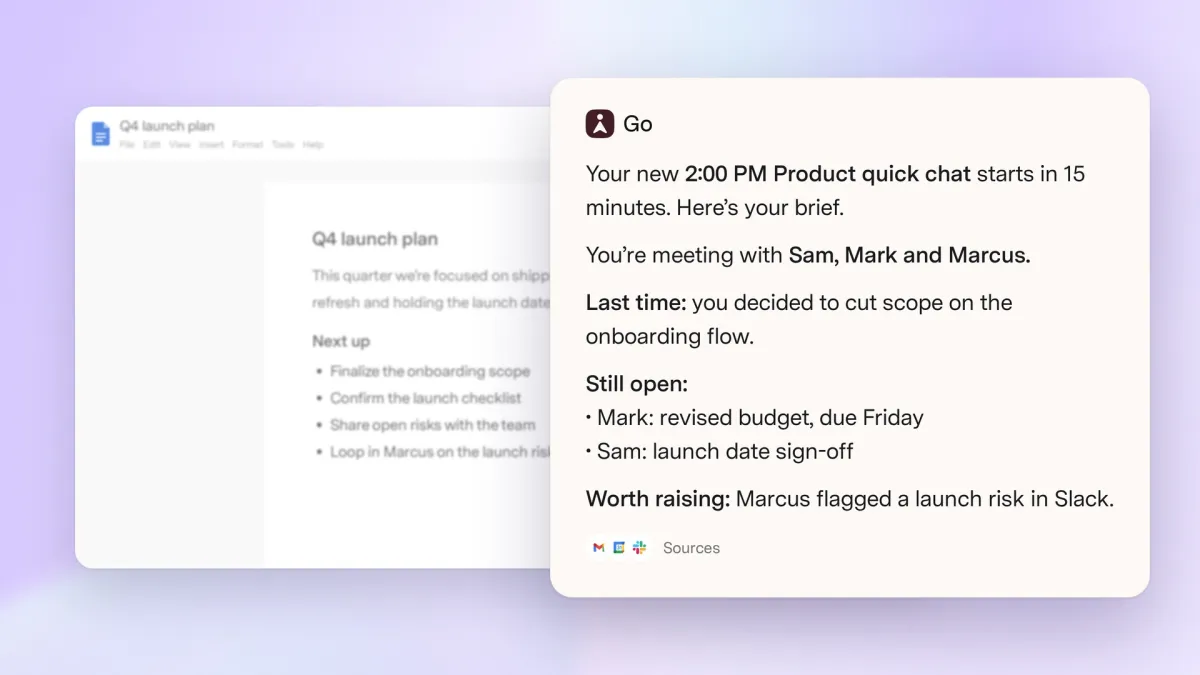
Superhuman, formerly known as Grammarly, is significantly expanding the capabilities and reach of its Go AI assistant. The company aims to make the agent more contextual and proactive by enabling it to learn user preferences across different applications, manage background tasks in Docs, and integrate with numerous third-party tools. This expansion follows a rebranding effort last year and addresses previous criticisms regarding the depth of its AI features.
The updated Go assistant now functions inline with the user’s cursor and manages a broader suite of agents. It is designed to be proactive, monitoring user schedules, tracking emails, and drafting responses. Additionally, the system analyzes users’ writing styles to ensure consistency in both email and document creation. Superhuman has also revamped its onboarding process, allowing users to connect various tools and load work context before starting to use the assistant.
To enhance interoperability, the company is adding 20 new connected agents through its Go SDK, including integrations with DeepL, Legora, Amplitude, Databricks, and Blackboard. In its Docs application, Go agents now operate natively, allowing users to assign background tasks and set event-triggered routines. In Superhuman Mail, Go is replacing the previous central AI tool, offering enterprise search capabilities and inbox organization across Google and Outlook accounts.
The rollout also incorporates features from Fathom, a notetaker acquired by Superhuman in September. The company is now offering live collaborative notetaking for teams, with Go capable of making post-meeting decisions, such as generating initial proposal drafts. Shishir Mehrotra, CEO of Superhuman, noted that Go has achieved strong momentum with over one million active users. While the assistant is primarily work-focused, Mehrotra emphasized that it can also assist with personal emails and calendar management, aiming to compete with other AI assistants like OpenAI’s Dots and Claude Duet.
The cursor inline editing feature sounds slick. Hopefully, it does not lag when I am typing fast.
Competing with OpenAI is brave. But will it truly replace my current workflow or just add clutter?
Twenty new integrations? That is ambitious. I will believe it works smoothly once I test the SDK myself.
Wait, they changed the name? I still think of it as the old writing tool. Confusing.
Finally! Proactive email drafting is a game changer. I hope it stops making those annoying mistakes.
Does it actually work well with Outlook? Most AI assistants still feel much more natural in Gmail.
Surprised to see Fathom integrated here. The collaborative notetaking feature sounds promising for my distributed team.