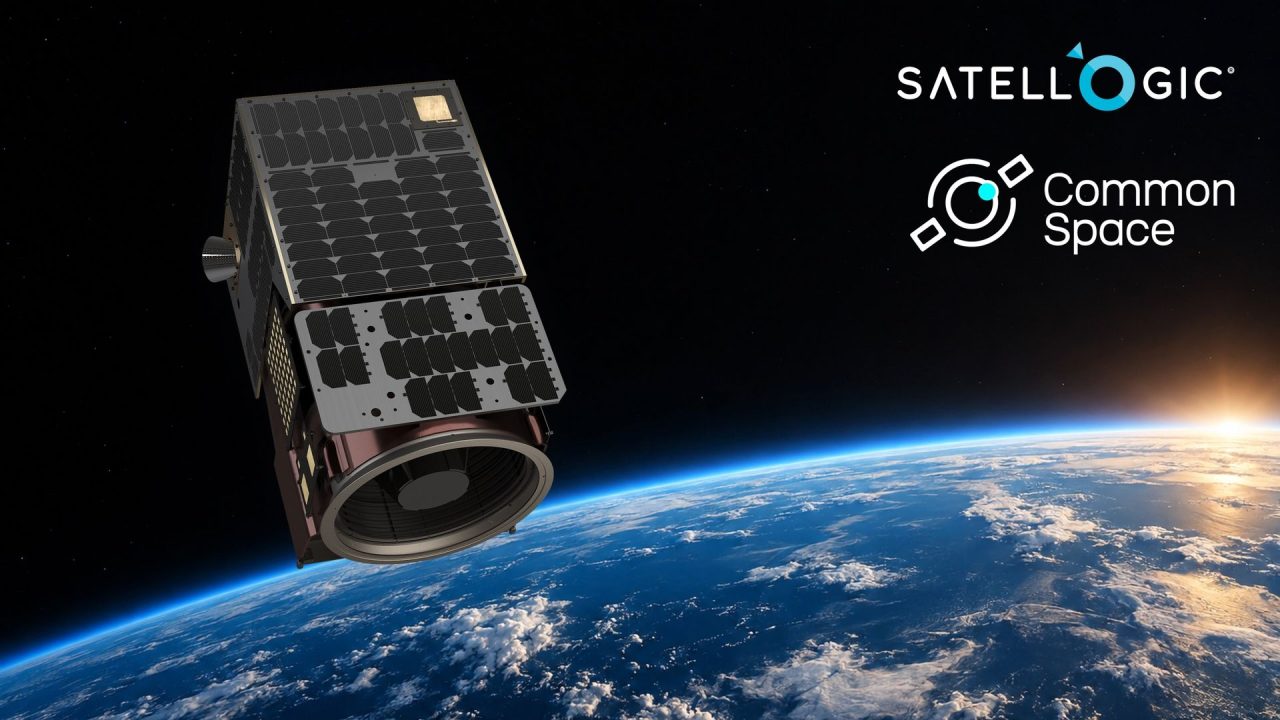
The nonprofit organization Common Space has confirmed that Satellogic will construct the first satellite in a new constellation dedicated to humanitarian applications. The launch of the initial spacecraft is scheduled for July 2027, marking a significant step toward a project that aims to provide high-resolution Earth imagery to first responders, journalists, scientists, and human rights investigators.
Announced on November 19, the partnership involves the use of Satellogic’s NewSat Mark V, a microsatellite selected through a competitive request-for-proposal process. Measuring just 32 inches (82 centimeters) in length and weighing 85 pounds (38.5 kilograms), the spacecraft will operate in low Earth orbit. It is capable of resolving ground features as small as 27.5 inches (70 cm) naturally, with proprietary algorithms enhancing this to a super-resolution of 19.7 inches (50 cm).
Common Space aims to address what it describes as a gap in the current market, where data from the more than 1,000 existing Earth-observing satellites is often proprietary or too costly for public-interest use. The organization will operate on a “club-good model” to share infrastructure and costs, ensuring extensive and low-cost access to high-quality data. Rhiannan Price, a co-founder of Common Space, stated that the collaboration moves the project from vision to orbit, creating infrastructure to serve people who need it most.
Satellogic, an Argentine-U.S. geospatial intelligence company, will manage the satellite preparations and operations, which are expected to last at least five years. The company has successfully deployed 61 Earth-observing satellites to date. Luciano Giesso, vice president of space systems at Satellogic, emphasized that the mission aligns with their goal of democratized access, ensuring that humanitarian responders have the frequent, high-resolution imagery required to act with confidence during crises.
Common Space is currently raising funds to expand the constellation to six satellites by 2030. This expanded network is designed to provide daily high-resolution coverage of priority areas globally, further supporting public-interest purposes.



Leave a Reply