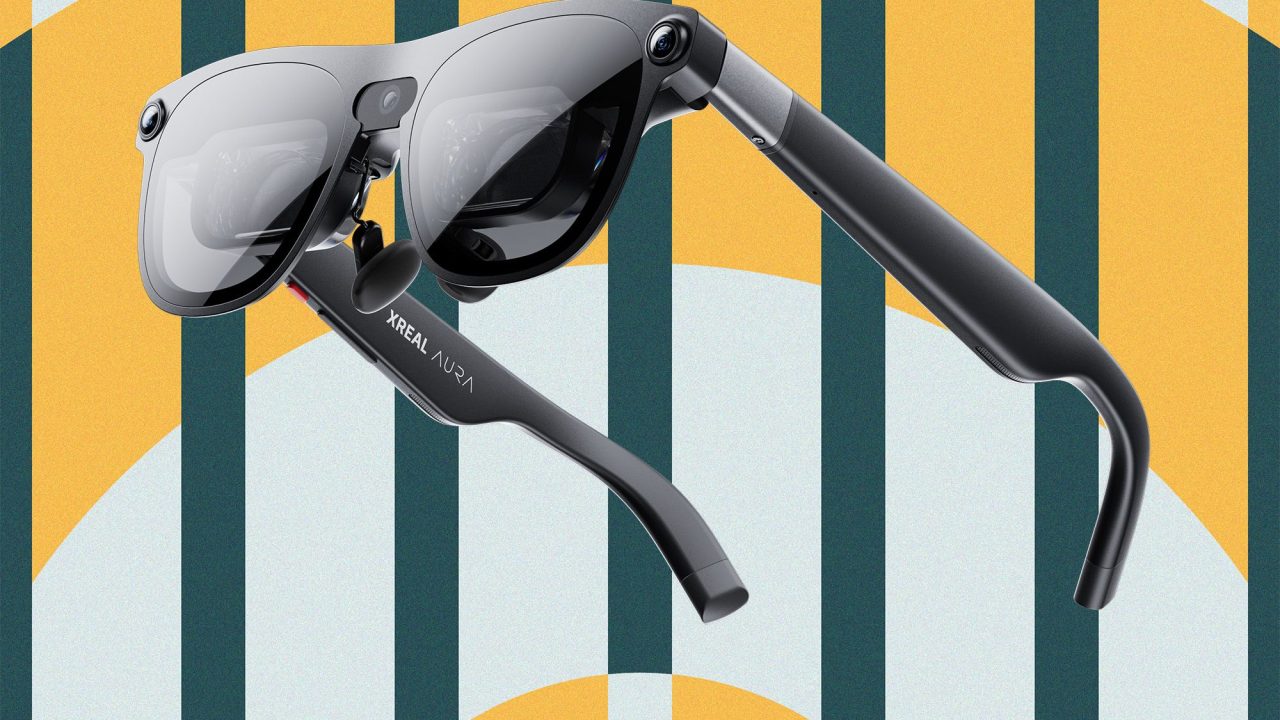
Xreal has launched the Aura, a pair of extended-reality (XR) glasses priced at $1,279, designed to provide a more comfortable and lightweight alternative to traditional virtual reality headsets. The device operates on Google’s Android XR platform, allowing it to project virtual screens into the wearer’s field of vision while maintaining augmented-reality elements for real-world interaction. The Aura is notably lighter than its competitors, weighing just 95 grams, and features a four-microphone array with Bose EQ tuning for high-quality audio. Users can also connect wireless headphones for a private listening experience.
The visual performance of the Aura is a standout feature, boasting a display resolution of 1920 x 1200 pixels per eye and a 70-degree field of view. This wide view allows virtual screens to occupy a significant portion of the wearer’s vision, although the 70-degree limit means the outer edges of the view remain anchored in the physical environment, which may hinder full immersion for some users. The glasses are wired to a separate compute puck via a USB-C cable. This puck, which is roughly the size of a smartphone and weighs slightly more than half a pound, houses the processing power and a battery that provides approximately four to five hours of continuous usage. The device is available in 12 GB and 16 GB storage configurations.
Despite the impressive display and comfortable form factor, the Xreal Aura faces criticism regarding its user interface. WIRED’s review highlights that the hand gesture controls are inconsistent, often described as ‘hit or miss.’ Additionally, reviewers noted that the compute puck can become hot during extended use, and the battery life is considered mediocre for the price point. The device is positioned in the market ahead of upcoming Android XR glasses from Google and Samsung, which are expected to compete with Meta’s smart glasses ecosystem. While the Aura is more akin to a VR headset in a glasses-like design, it is set to face competition from Meta’s VR Glasses, which are scheduled for release in early 2027. Overall, the Aura is seen as a promising step in XR technology, though its control mechanisms and hardware limitations remain areas for improvement.


The price tag is steep, but if the visuals are as good as advertised, it might be worth it.
Waiting for Meta’s release to see which ecosystem becomes the winner in the long run.
It is basically a VR headset disguised as glasses, which is an interesting compromise for the market.
Bose audio in a headset? That actually sounds like a really nice touch for movie nights.
I am curious if Google will fix these specific issues before launching their own competing hardware.
The display resolution sounds fantastic. I hope the heat issue from the puck gets fixed soon.
Four hours battery life at that price point feels underwhelming for daily use, honestly.
95 grams is incredibly light. I am genuinely impressed that they managed such a small form factor.
Hand gestures being hit or miss is a real dealbreaker for me. I need reliable controls.