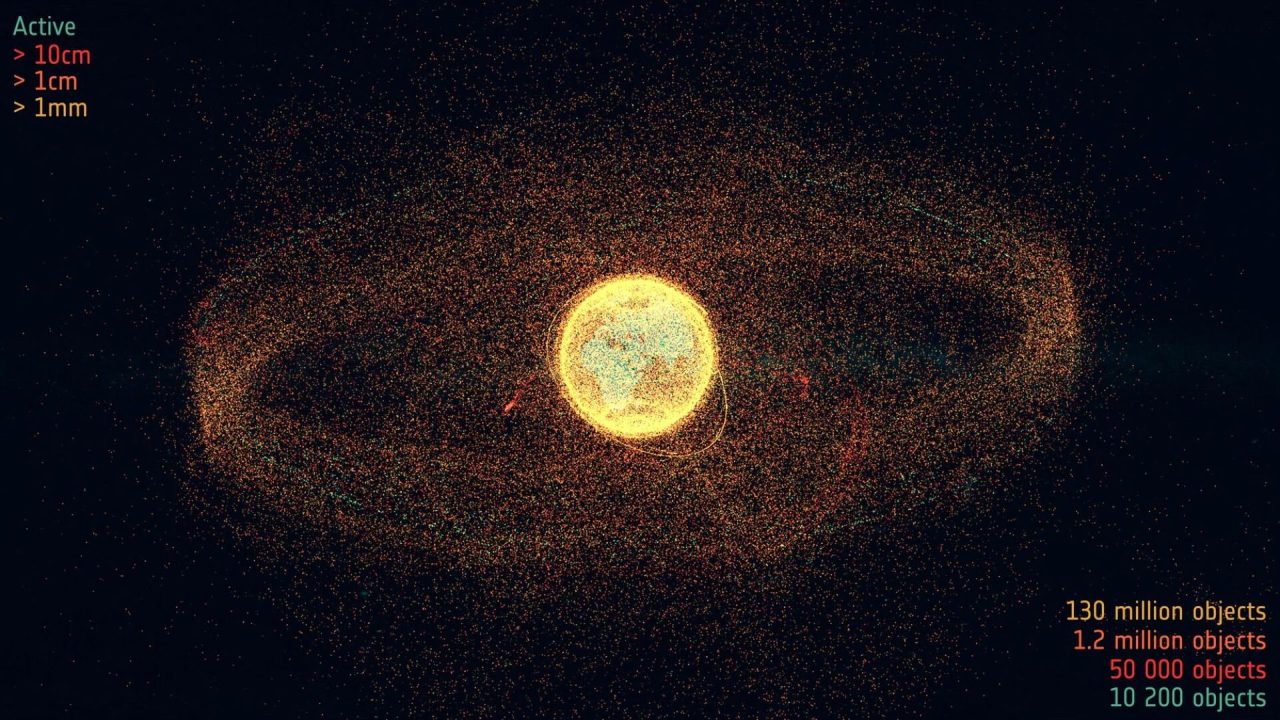
London-based startup Foundational has successfully completed an orbital test of its passive tracking technology, designed to help manage the growing population of space debris. According to the European Space Agency, millions of fragments currently orbit Earth, posing significant collision risks due to their high velocities. While existing solutions range from large capture nets to active deorbiting and in-orbit refueling, Foundational is introducing a new approach using laser-reflecting retroreflectors.
The company recently tested its Retro-2 system, developed in collaboration with the European Space Agency, to verify its ability to return laser-ranging signals from satellites at altitudes between 600 and 870 kilometers. The primary objective is to create a passive tracking device that allows ground stations to monitor spacecraft orbits even if the satellite itself becomes inactive or falls silent.
The demo mission launched in July on SpaceX’s Transporter-17 rideshare flight. The compact Retro-2 unit, which consists of seven reflectors and weighs only 50 grams, was attached to a small satellite integrated into a D-Orbit ION carrier craft. The test was successful, with the device returning 6,111 laser shots from the ground across five passes in low Earth orbit.
“Our tests have shown that a device weighing just 50 grams can deliver millimeter-level ranging precision,” said Dave Gooding, co-founder and chief technical officer of Foundational. “As space becomes increasingly crowded, keeping satellites trackable throughout their lifetime and beyond is critical to managing collision risks.” The technology requires no electronics, power, or commands from the host spacecraft, making it a lightweight solution for long-term tracking.
Founded in 2025 and emerging from stealth mode in October, Foundational has raised £8.2 million in pre-seed funding. The startup is part of a broader trend of investment in space sustainability, with other companies such as Starfish Space, Katalyst Space, and India’s Cosmoserve Space also securing significant funding for debris removal, satellite servicing, and tracking technologies in 2026.
Does this retroreflector work effectively during eclipse periods when solar power is unavailable? Passive tracking sounds promising but has limits.
Wait, founded in 2025? That’s extremely fast for an orbital test. How did they integrate so quickly with ESA and SpaceX?
50 grams is incredibly lightweight for millimeter precision. This passive approach seems far more practical than active capture nets for small debris.