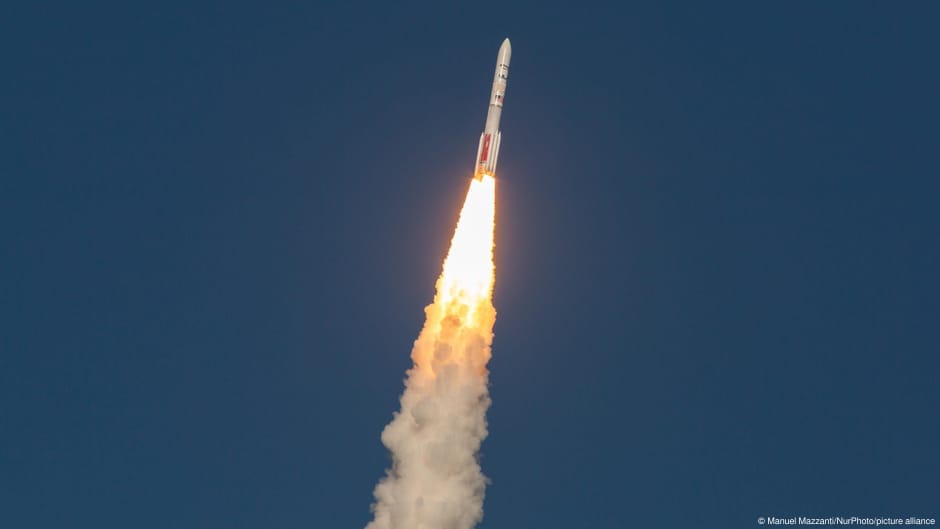
United Launch Alliance (ULA) confirmed that its Vulcan rocket suffered a critical anomaly approximately 10 minutes after liftoff from Space Launch Complex 41 at the Cape Canaveral Space Force Station in Florida on Sunday. The failure resulted in the complete loss of the mission’s payload, which consisted of 40 Amazon Leo internet satellites. This incident marks the first total mission failure in the history of ULA, a joint venture formed in 2006 by Boeing and Lockheed Martin.
In a statement, ULA said its Launch Director confirmed that the vehicle failed to deliver the Amazon mission to orbit. The company noted that while every flight generates data, no specific details were immediately available to determine the exact cause of the anomaly. A technical investigation is expected to follow, which could potentially ground the Vulcan rocket for an extended period.
The setback raises concerns regarding US launch capacity, particularly amid uncertainty over the future availability of SpaceX’s Falcon 9 rockets, for which the company is no longer accepting bookings. Amazon acknowledged the risks associated with inaugural missions, referring to the launch as LV-01, and expressed confidence that ULA would learn from the experience to fulfill its long-term plans for the Vulcan program.
This was only the fifth flight for the Vulcan rocket since its debut in 2024, following a nine-month hiatus caused by investigations into its solid rocket boosters and BE-4 core engines supplied by Blue Origin. The BE-4 engines had previously required modifications after anomalies in prior flights, though it remains unclear if they contributed to Sunday’s failure. The Space Force has paused national security launches for Vulcan pending these corrective measures.
Amazon competes directly with SpaceX’s Starlink network, which has over 11,000 satellites in orbit. Unlike SpaceX, Amazon relies on third-party launch providers to deploy its constellation, adding complexity and cost to its expansion. Prior to this failed mission, Amazon had successfully launched 398 Leo satellites across 14 missions since 2025, accounting for approximately 12% of the 3,236 satellites required for global coverage.


Forty satellites gone in seconds. The cost of replacing them is probably a headache for Amazon.
Ten minutes after launch is a tough spot. The boosters just separated and now the engine is taking over.
Wait, is Falcon 9 actually stopping bookings? That changes the whole launch market landscape immediately.
Amazon really needs their own rockets. Relying on others makes them vulnerable to exactly this kind of disaster.
First failure for ULA is scary. They’ve been the gold standard for decades. Hope they find the cause soon.