
Ukrainian President Volodymyr Zelenskyy has warned that operational limits imposed on SpaceX’s Starshield military-grade internet service are significantly disrupting Ukrainian drone operations and weakening the country’s defense capabilities against Russia.
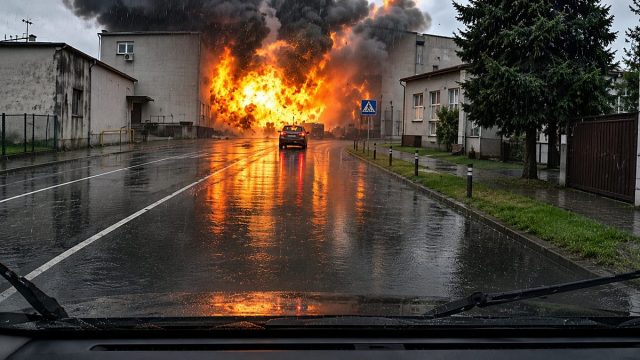
The concern follows a weekend in which two people were killed in a Russian jet-powered drone attack on critical infrastructure in the northern Koriukivka region. Additionally, an energy facility in Odesa was struck overnight on Sunday, leaving approximately 41,000 households without power. Zelenskyy attributed the effectiveness of these Russian strikes to restrictions on the use of Starshield, a service that has been vital for the Ukrainian military since December 2024.
Starshield, a sister service to the commercial Starlink network of 11,000 low Earth orbit satellites, is used by Ukraine to guide interceptor drones. In a statement on social media on Sunday, Zelenskyy noted that Russian forces are targeting energy substations with Shahed drones. He stated that many of these strikes are succeeding because operating speed restrictions on Starshield terminals in frontline and occupied territories remain in place, and he urged that these limits be lifted to protect lives and infrastructure ahead of the winter season.
Zelenskyy accused the service of throttling internet speeds and hampering military operations for five days. He explained that Ukrainian interceptor drones lose connection with their operators when they reach a speed of 161 kilometers per hour (100 miles per hour), a limitation that prevents them from catching up with faster Russian jet-powered drones.
This incident is not the first time Ukrainian officials have raised concerns about Starshield limitations affecting their defense efforts. In the previous month, Ukrainian defense officials reported losing access to critical satellite-based communications, which disrupted military missions following heavy Russian missile and drone attacks for which no prior warning was received. Serhiy Beskrestnov, a defense adviser to the president, previously noted that the speed caps meant drones and missiles flying faster than the limit lost their guidance connection, leading to mission failures.
According to a report by the Center for Strategic and International Studies (CSIS), Starshield is critical for encrypting the satellite communications needed to guide drones. The report highlighted that while Ukraine uses the system for strikes in Russian-occupied territories, it is also essential for defending against new jet-powered drones targeting critical infrastructure and civilians. Without access to these services, the effectiveness of Ukrainian defense drones is diminished.
Russia has increasingly deployed high-speed jet-powered drones, such as the Geran-3, Geran-4, and Geran-5 models, which are significantly harder to intercept than traditional propeller-driven drones. In August, a drone attack on an ammunition depot in Myla killed 38 people, with 12 more killed in subsequent attacks in September. Ukraine’s Air Force spokesman Yurii Ihnat stated in September that while the country maintains an interception rate of over 90 percent against propeller-powered drones, that rate drops to 60 percent against jet-powered variants.
Despite these challenges, Ukraine has continued to retaliate against Russian infrastructure. According to the Ukrainian defense ministry, strikes in August hit 12 Russian refineries, two gas-processing plants, and three oil shipment terminals. On Sunday, the Ukrainian army reported shooting down 106 of 132 Russian drones launched overnight.
Addressing the issue, Zelenskyy said he has instructed teams from Ukraine’s Ministry of Foreign Affairs, Ministry of Defence, and the presidential office to work closely with the US government and SpaceX to remove the restrictions. While Elon Musk, who owns SpaceX, previously stated that Starshield is controlled by the US government and that speed limits are decided by the US military, he also clarified that commercial Starlink is intended for civilian or defensive activities only.
Meanwhile, tensions between Kyiv and Washington have persisted since Donald Trump returned to the presidency, with Washington showing reluctance to provide direct military support to Ukraine. Although US Secretary of State Marco Rubio stated that speed and access decisions belong to private commercial contracts, the diplomatic climate remains complex. In related developments, US-mediated peace talks in Abu Dhabi last week resulted only in an agreement on prisoner exchange. A proposed US pathway for Ukraine to join NATO in exchange for ceding the Donbas region has been raised, a position Ukraine has rejected. Zelenskyy reiterated that Kyiv would not surrender territory unless offered a peace deal including strong security guarantees, a well-funded army, and reconstruction funds, in which case a national referendum would be held. The Kremlin has maintained that Ukrainian NATO membership is a red line for Moscow.

Sixty percent interception is scary. Losing that advantage against jet drones will likely increase civilian casualties significantly.
I wonder if SpaceX is just following strict export controls? It feels like Ukraine is caught in the middle.
A 161 km/h speed cap sounds ridiculous for modern warfare. Hope they fix this before winter gets too cold.