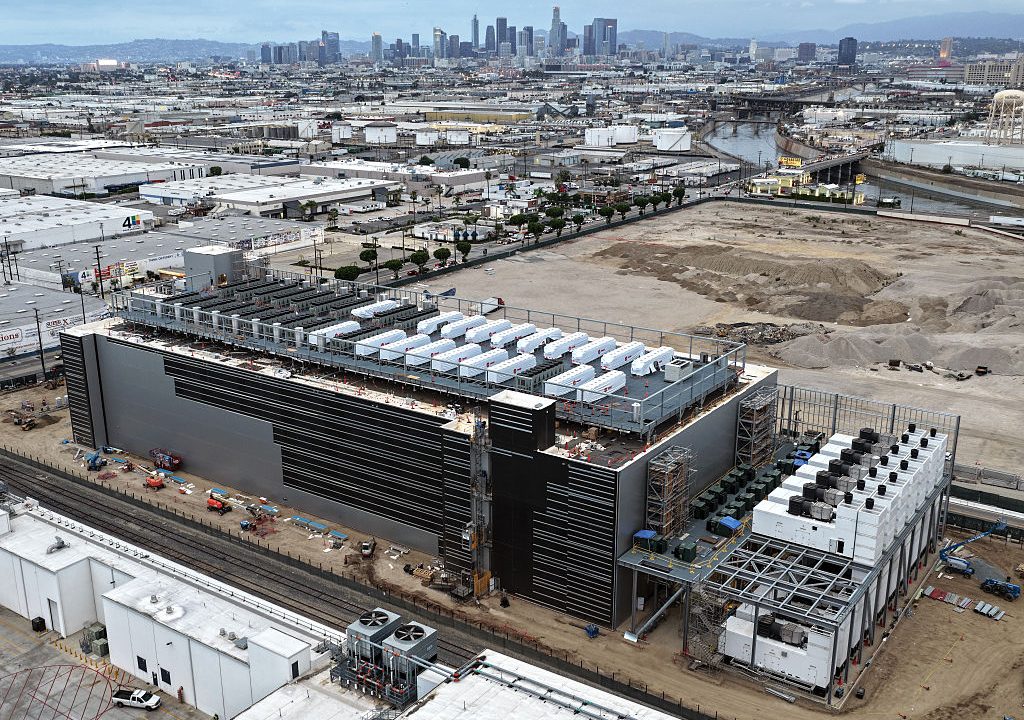
A new study published in Nature Sustainability reveals that the United States’ 403 hyperscale data centers collectively consume as much electricity as entire states like Wisconsin, Michigan, or Indiana, while generating millions of metric tons of carbon dioxide annually. The research provides one of the first facility-level estimates of energy usage and emissions for these large-scale facilities, which are critical for training and running artificial intelligence models.
The number of hyperscale data centers has exploded globally, doubling from over 500 to more than 1,100 between 2019 and 2024, with over half located in the US. Analysts at Synergy estimate that total US data center capacity will double within the next three years, driven primarily by the expansion of these hyperscale facilities. This growth has sparked public concern, with voters in 40 out of 41 recent local ballot initiatives choosing to limit or prevent new data center development due to economic and environmental worries.
Researchers from Harvard, led by senior author Francesca Dominici, used satellite imagery to map the 403 facilities and estimated their electricity consumption between May 2024 and April 2025. The study found that these centers used between 68 and 99 terawatt-hours (TWh) of electricity. In the lower scenario, this consumption matched the annual electricity sold to customers in Wisconsin (roughly 70 TWh) or Minnesota (around 65 TWh), while the upper estimate equated to the annual usage of states like Indiana, Michigan, and Tennessee.
Over half of the electricity powering these data centers comes from fossil fuels, primarily natural gas and coal. Consequently, the facilities produced an estimated 25.7 million metric tons of carbon dioxide combined, a volume roughly equivalent to Denmark’s annual emissions. The study noted that half of the total electricity use was concentrated in just four states: Virginia, Oregon, Ohio, and Iowa. While Virginia is known for its high density of data centers, the average facility in Iowa had a substantially higher electricity demand than the average in Virginia.
However, emissions varied significantly by region due to differences in local energy grids. Virginia, Iowa, and Ohio recorded the highest emissions, whereas Oregon, which hosts more hyperscale centers than Iowa or Ohio, produced significantly fewer emissions thanks to its cleaner energy mix. Lead author Gianluca Guidi explained that for the same amount of electricity, the regional grid in Wyoming produces approximately seven times more carbon dioxide than Oregon, highlighting that geography plays a crucial role in environmental impact.
Without the expansion of clean energy alternatives, US data centers are projected to consume more natural gas than most countries by 2035, according to BloombergNEF. The researchers noted that actual demand and emissions are likely higher than reported, as the study could not assess every facility and new data centers have emerged since the data collection period ended in April 2025. The team aims to continue quantifying these impacts to better understand their effects on air pollution, water resources, and public health, emphasizing that AI infrastructure growth must be managed sustainably.
“We tend to imagine AI as something that is almost immaterial, but in the end, the infrastructure power is profoundly physical,” Guidi said. “Behind every algorithm, there are enormous buildings, power plants, water resources, and ultimately also communities that live with the consequences.”



Wait, Iowa has higher average facility demand than Virginia? I always assumed Virginia was the undisputed king of data centers.
I live in Virginia and our water bills are already creeping up. We need better local planning for these massive facilities.