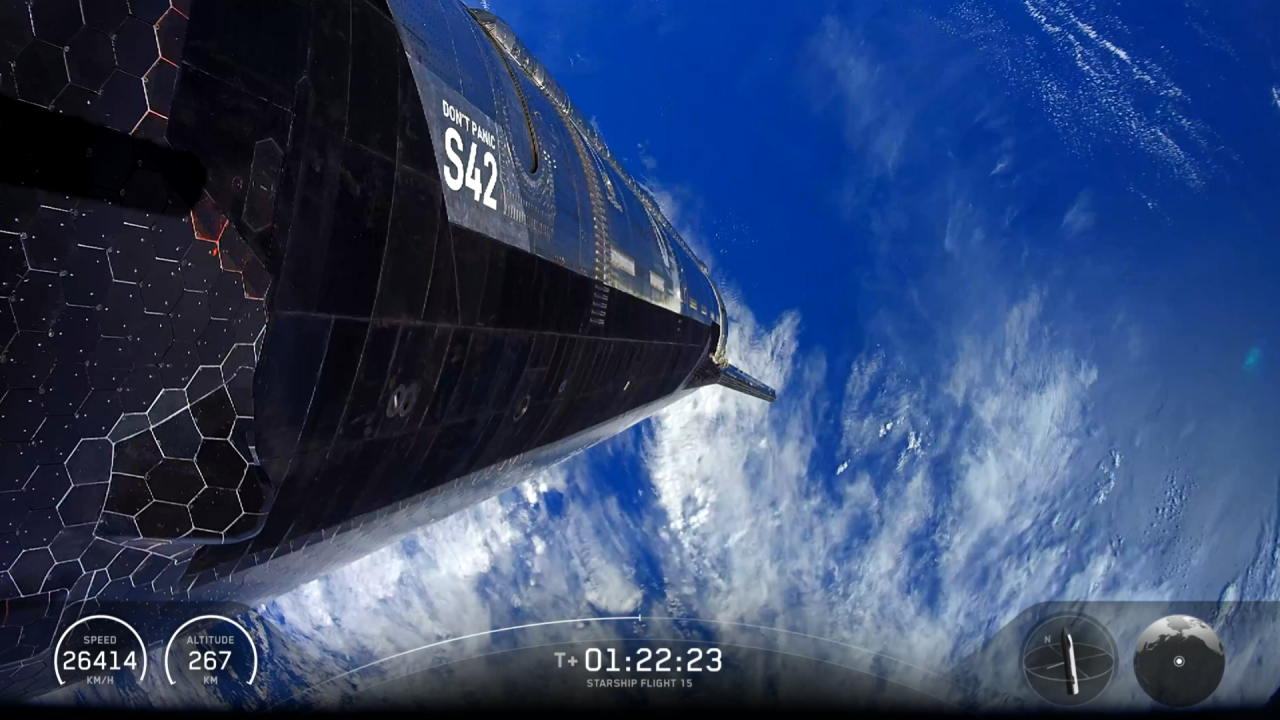
SpaceX is set to attempt the first-ever recovery of a Starship upper stage using its launch tower ‘chopsticks’ arms on Saturday, November 14. The maneuver follows the fifteenth test flight of the megarocket, which launched from the company’s Starbase facility in South Texas on the evening of November 13.
The initial mission profile aimed for a full dual recovery of both rocket stages. However, SpaceX diverted the Super Heavy booster to a controlled splashdown in the Gulf of Mexico approximately 6.5 minutes after launch. According to the company, a guidance and navigation anomaly during descent triggered an automatic abort of the booster catch attempt.
Despite the booster landing in the ocean, the capture of the Ship upper stage remains a primary objective for this mission. Scheduled for around 4:20 p.m. EST, the catch represents a historic milestone for SpaceX, which has previously not attempted to retrieve the upper stage from orbit.
Following the launch, flight controllers decided early on Saturday to keep the Ship in orbit rather than ending the mission with a splashdown off the coast of Chile. Dan Huot, a SpaceX spokesperson, confirmed in a live update that the vehicle would remain in space. ‘We are one step closer to an eventual return to launch site,’ Huot stated.
In addition to the recovery attempt, Flight 15 successfully deployed 26 next-generation Starlink V3 broadband satellites into low Earth orbit. This deployment mirrors Flight 14, which launched on September 28. These satellites are part of a planned constellation of 100,000 spacecraft.
Some of the deployed Starlink units captured imagery and video of the Starship heat shield to assess its condition for reentry. SpaceX reported that engineers reviewed data from both these satellite cameras and ground-based tracking systems, confirming the heat shield is in good condition for a return to the launch site.
The company emphasizes that the double-catch maneuver is crucial for achieving the high launch cadence required for its future projects, including the Starmind AI data-center constellation, which Elon Musk has proposed would host one million spacecraft. The current Starlink network operates approximately 11,000 satellites. Successful retrieval will allow for faster inspection, refurbishment, and reflight of the vehicles.
While the catch is scheduled for Saturday, SpaceX has noted that the attempt could be aborted if the company detects any off-nominal issues with the Ship during its descent.

If this catch succeeds, the launch cadence argument becomes much harder to ignore for skeptics.
Is anyone else worried about the space debris cloud? We keep adding stuff up there without thinking about impact.
SpaceX still deploying twenty-six satellites while testing recovery tech is honestly impressive logistical multitasking.
I hope they inspect that heat shield thoroughly. If it’s cracked, reentry could get really nasty.
Good thing they kept it in orbit. Trying that chopsticks maneuver without the booster landing feels risky anyway.
One million data centers in space is genuinely wild to me. The bandwidth requirements are going to be insane.
The automatic abort protocol actually working as intended gives me more confidence than if they had forced the catch.
Six and a half minutes after launch? My coffee hasn’t even cooled down yet, let alone that booster.