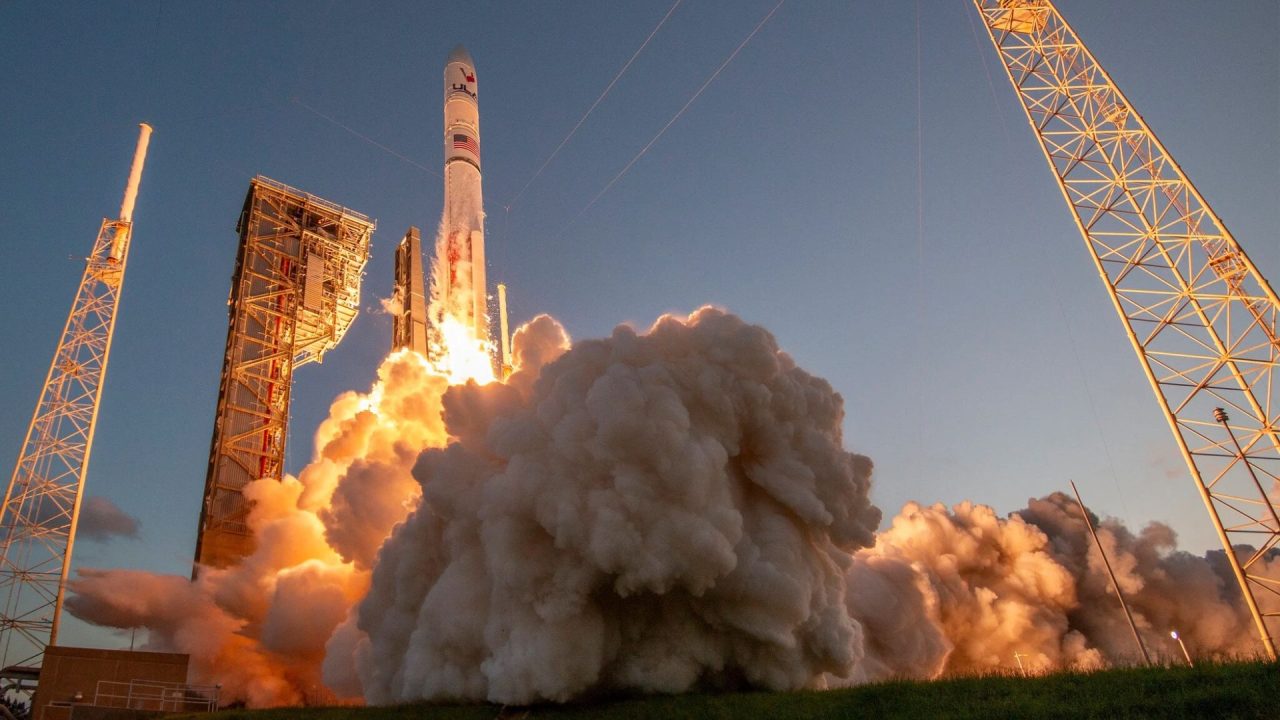
United Launch Alliance (ULA) is set to conduct the first flight of its Vulcan Centaur rocket in nine months, lifting off from Cape Canaveral Space Force Station in Florida at 12:54 p.m. EST on November 13. The mission, designated as Vulcan Leo 1, will deploy 40 Amazon Leo internet satellites into low Earth orbit.
The resumption of flights follows a pause in national security launches for the Vulcan Centaur ordered by the U.S. Space Force after issues with solid rocket boosters (SRBs) on previous missions. During its second and fourth launches in October 2024 and February 2025, respectively, SRB nozzles on the rocket burned through and detached approximately 30 seconds after liftoff. Although both missions successfully delivered their payloads, the anomalies prompted the Space Force to halt operations until the company could address the concerns.
ULA stated that its team has identified potential contributors to the anomaly and implemented design and process improvements to the nozzles. The upcoming launch will utilize the upgraded nozzle design to generate valuable flight data that validates these fixes. The company emphasized that continuing additional testing and analysis in parallel with the mission is the most beneficial path for supporting its customers.
The Vulcan Centaur serves as the successor to ULA’s Atlas V rocket, which has only a few launches remaining on its schedule. This launch is part of the effort to build out Amazon’s broadband constellation, known as Amazon Leo, which previously operated under the name Project Kuiper. The network is designed to compete with SpaceX’s Starlink and will eventually consist of more than 3,200 satellites. As of now, approximately 400 of these satellites have reached space across 15 different launches conducted by various rockets.
If the mission proceeds according to plan, the Vulcan Centaur will release the 40 satellites over a 25-minute period starting about 70 minutes after liftoff, at an altitude of roughly 270 miles (435 kilometers) above Earth. This launch occurs during a busy period for space activity, with SpaceX scheduled to test its Starship megarocket later that day and Rocket Lab planning its 100th mission for the following morning.

The twenty-five minute deployment window sounds tight. Hopefully the satellite separation sequence goes smoothly without any glitches.
I am skeptical about the solid rocket boosters. Nine months is not a lot of time to solve complex propulsion issues.
Remember when Atlas V was the only option? Now we have this and Starship tests. Space is getting crowded.
It is wild that this mission is just a validation flight for their fixes. They are definitely taking a calculated risk.
Amazon Leo is moving fast. Four hundred satellites already launched? I did not realize they were that far ahead.
Wait, they are launching the same day as Starship? That is going to be such a chaotic morning for Florida.
Good to see ULA fixing the SRB issues. Hopefully this new nozzle design actually holds up this time.