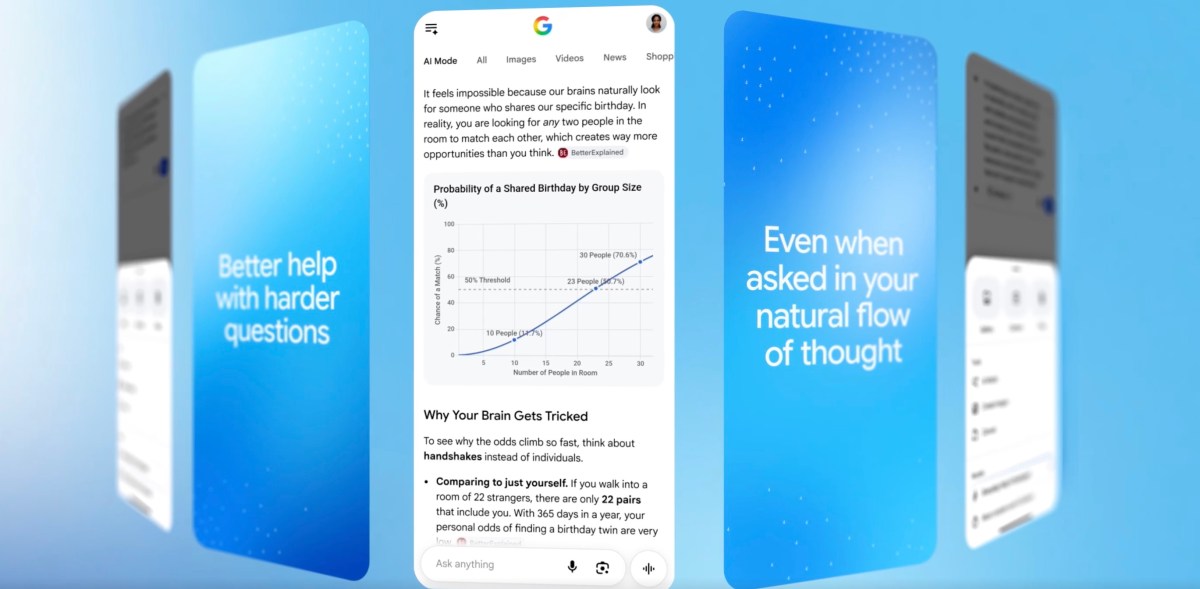
Google has introduced the Gemini 4 Hydrogen model, an update designed to enhance Search capabilities for complicated, multi-part questions and requests containing specific details or typos. The company describes the release as its most significant improvement to Search to date, highlighting its ability to balance high performance with rapid execution.
Unlike the frontier models Gemini 4 Carbon and Gemini 4 Argon, which focus on deep reasoning, Hydrogen is optimized for fast execution in various agentic workflows. Google notes that this approach allows users to access efficient and cost-effective intelligence when maximum power is not required. Benchmarking data indicates that Hydrogen is 2.5 times faster than the previous Gemini 3.8 Flash model and outperforms the more powerful Gemini 4 Argon on the Artificial Analysis Intelligence Index at its default high thinking level.
Within the Search interface, Hydrogen improves the understanding of user intent, enabling the system to process natural, nuanced queries more effectively. The model also strengthens the fan-out technique, which breaks prompts into subqueries to help users discover relevant websites they might have otherwise missed. Consequently, the model supports the display of more images, comparison tables, and custom tools as visual responses in AI Mode.
Hydrogen is also capable of handling everyday technical tasks, such as writing code and running tests, either independently or in combination with other models. It offers four thinking levels ranging from low to an extra-high tier, designed to complete tasks with fewer output tokens. In multi-step tasks like data analysis, the model ranks fifth on Agent Arena’s benchmarks.
The new model is currently rolling out to Search users globally. It is also available across all tiers of Google’s AI Studio, the Gemini API, the Gemini App, and the paid AI Pro and Ultra tiers within the Antigravity development platform.


Google keeps naming models after elements. Next up, probably Helium or something equally scientific.
The visual responses with comparison tables sound useful, but I hope they do not become too cluttered.
It is interesting that they are positioning a faster model as smarter than their top-tier reasoning model.
I am skeptical about the speed claims until I actually use it and see the real difference.
Finally, search that actually reads what I typed without needing to spell every word perfectly.