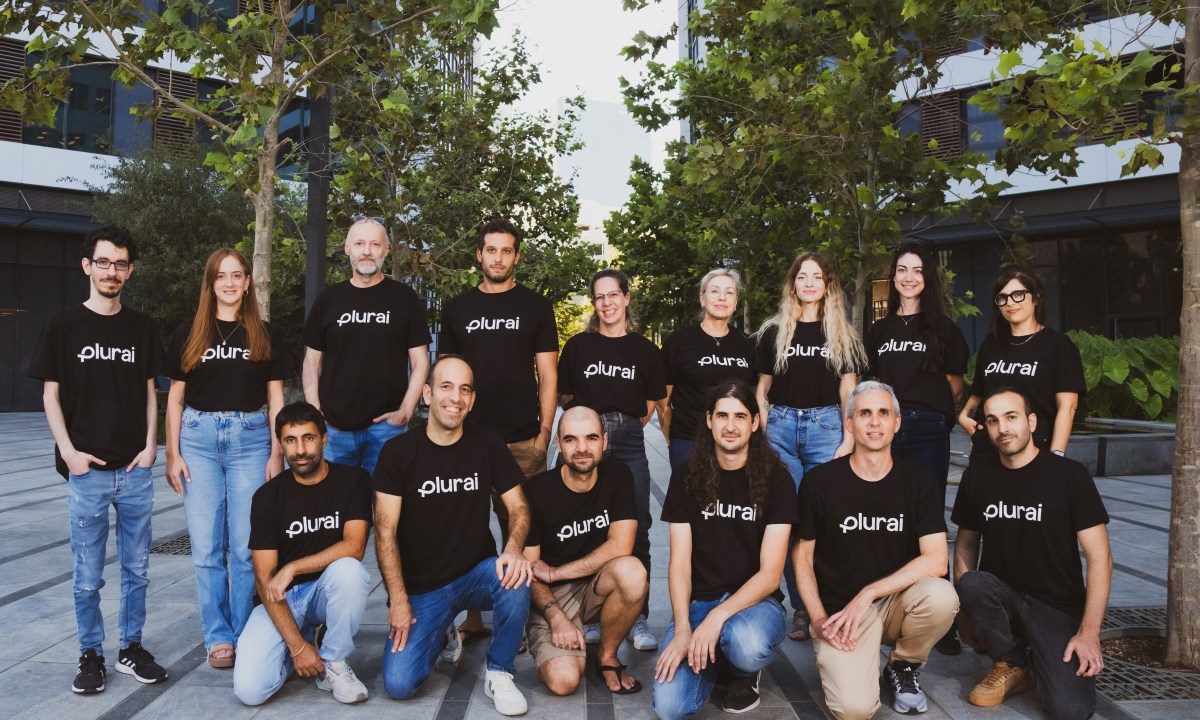
Start-up Plurai has announced it raised $13 million in seed funding to enhance the capabilities of AI agents. The company aims to apply simulation techniques originally developed for autonomous vehicles to improve the reliability of AI models in complex work environments. The funding round was led by Team8, with additional participation from U&I, Velocity, and Mercer.
AI agents currently face significant challenges in maintaining consistent performance without close supervision. Recent benchmarks, including LiveBench 2.0 and tests conducted by infrastructure company EON, have demonstrated that leading models like Claude Fable 5.2 and Claude Opus 4.8 achieve variable accuracy rates when handling complex tasks. Plurai seeks to address these shortcomings by creating a ‘digital twin’ of a company’s electronic systems. This platform maps potential agent workflows and uses synthetic data to prepare models for specific edge cases, ensuring they function correctly alongside existing tools like Claude Code, Codex, and Copilot.
The company’s co-founders, Ilan Kadar and Elad Levi, previously worked on autonomous driving technology at Nexar and Waymo. Kadar noted that AI agents present similar reliability hurdles as self-driving cars, making simulation a logical solution. The platform not only improves agent behavior but also uses the collected data to fine-tune smaller, open-weight models. According to Kadar, these tailored models can match the performance of expensive frontier models while reducing costs by one or two orders of magnitude.
Reah Miyara, a researcher at Google DeepMind and an angel investor in the company, highlighted that frontier models often struggle with specific business data and long-term cost sustainability. Miyara believes Plurai’s approach of generating synthetic data to address production failure modes offers a competitive advantage for businesses optimizing their AI expenses.
Plurai’s strategy draws a parallel between digital and physical AI deployment. While general-purpose AI models are increasingly powering robots, they are not yet reliable enough for widespread deployment. Plurai argues that building specialized models for specific tasks allows for immediate implementation and the collection of valuable real-world data. Kadar emphasized that regardless of future advancements by major AI developers, those models will not inherently understand a specific company’s internal policies and business context.



Good luck to Plurai. The AI agent reliability gap is real, and applying simulation tech feels like the right move.
Reducing costs by orders of magnitude while maintaining performance sounds incredible. Is this already available for early access users?
The autonomous driving parallel is clever, but I wonder if synthetic data truly captures nuanced human business interactions.