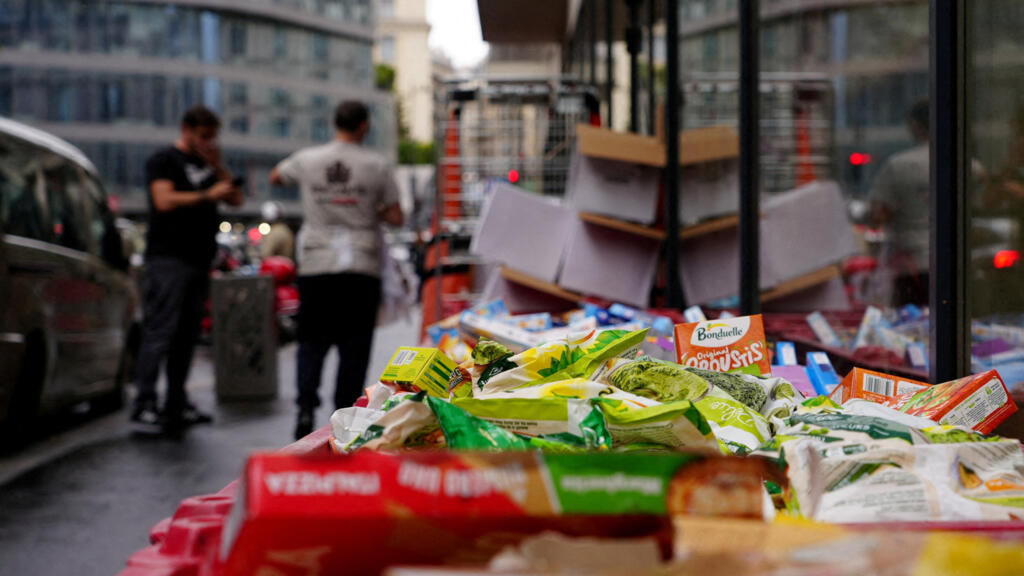
France is increasingly being identified as a primary target for cybercriminals and state-sponsored hackers, with the country experiencing a wave of high-impact attacks in recent years. The latest incident involved a sophisticated hack that compromised temperature control systems at 700 supermarket locations on October 12, causing refrigerators to heat up to 80°C (176°F) and rendering tonnes of food inedible. The disruption affected major chains including Intermarché, Carrefour, Leclerc, and Monoprix, leading workers to discard spoiled meat, dairy, and other perishables.
French Foreign Minister Jean-Noël Barrot described the incident as the first large-scale cyberattack aimed at sabotage on French territory. While he attributed the attack to an Iranian cyber unit linked to the Revolutionary Guards, analysts note that such state-backed operations are less common than the daily ransomware and data theft schemes that routinely impact French organizations.
According to cybersecurity firm UpGuard, France is now considered the most heavily breached large jurisdiction in Europe. The country has suffered data leaks affecting its unemployment agency, immigration office, ministry of education, and public hospitals. In August, the Ministry of Finance notified approximately 680,000 taxpayers that their personal information had been stolen and was being offered for sale online. The private sector has also faced significant breaches, with major health insurers, banks, and Air France-KLM falling victim to data theft. In November, cybercriminals stole over €100 million from Crédit Mutuel Arkéa.
Experts attribute France’s status as a “high-value target” to its role as a nuclear power, a permanent UN Security Council member, and Europe’s second-largest economy. Dennis-Kenji Kipker, founder of cyberintelligence.institute, noted that France is attacked not because it is weak, but because it has “too many unlocked side doors.” The centralization of state services means that a single breach at a key supplier or agency can expose millions of records.
Security experts argue that a combination of geopolitical factors, social unrest, and technical vulnerabilities drives these attacks. Sadiq Sani, a cybersecurity professor at the University of Greenwich, highlighted that attackers often collaborate to exploit gaps in the digital supply chain, such as outdated software from suppliers like Danfoss, which provided the refrigeration management systems used in the supermarket hack. Although the EU has allocated significant funding for cybersecurity, France has yet to fully implement the NIS2 Directive, a legislation designed to enforce practical security controls across key sectors.
Despite the high profile of these attacks, France is not the only European nation facing threats. Germany and Italy reported more ransomware victims in the past year, and Ukraine remains the most impacted by cyber threats according to Microsoft’s 2026 report. The refrigeration hack seen in France was also replicated in Belgium, Luxembourg, Finland, Estonia, and Sweden, illustrating how attack techniques are rapidly spreading across the continent.
Everyone thinks only Paris matters, but regional hospitals and insurers are getting hit constantly too. Worrying trend.
We need to pass NIS2 finally. Waiting years while hackers exploit old software makes zero sense to me.
Food waste from that hack must have been disgusting. Imagine throwing away all that fresh dairy and meat.
Still not sure why they keep centralizing everything. A single point of failure is asking for big trouble.
UpGuard says France is the most breached large jurisdiction here. That is a terrifying statistic to look at.
So if one key supplier gets breached, millions of records leak? That centralized system seems genuinely dangerous.
They call it state-sponsored, but how sure are they? Ransomware groups love targeting big economies for quick cash.
Supermarket fridges at 80 degrees sounds like a horror movie. Glad they caught the supplier gap quickly.