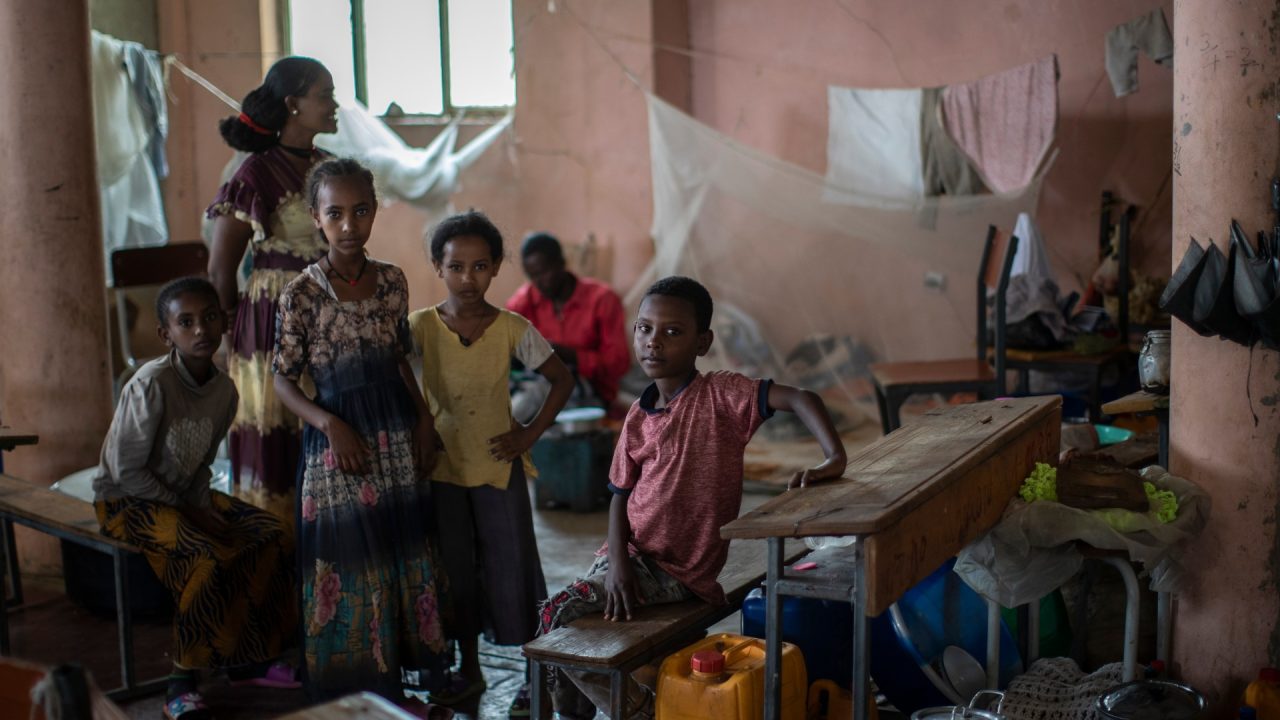
Classrooms in Abi Adi, Ethiopia’s Tigray region, which once hosted students, now serve as temporary homes for families displaced by the ongoing conflict. At a former high school, residents from Western Tigray report that what was intended to be a short-term shelter has become their permanent residence for years. Tewolde, who was displaced from Setit Humera, noted that his hope for a quick return has faded as years have passed, leaving children to grow up in these makeshift conditions.
The renewed instability is occurring just four years after the Pretoria Agreement was signed in November 2022, which ended a devastating two-year war that resulted in an estimated 500,000 deaths and the displacement of millions. Despite the ceasefire, major political and territorial disputes, particularly concerning Western Tigray, remain unresolved. These lingering issues led to escalated fighting on September 22, 2026, with the Tigray People’s Liberation Front (TPLF) launching an offensive and seizing Mekelle’s airport before federal forces counterattacked and retaken the city on October 4.
Human Rights Watch and other organizations warned the United Nations Human Rights Council that these renewed hostilities threaten to undo the Pretoria Agreement. Reports of drone strikes, mortar fire, and artillery attacks in populated areas and near displacement camps have raised concerns about the fragility of the security situation. Consequently, the federal government established a six-month caretaker administration to govern Tigray, but the underlying political conflicts persist.
The crisis has severely impacted daily life and healthcare infrastructure. Displaced families in Abi Adi face shortages of food, clean water, and essential medicines. Selass, a mother of two from Humera, described the difficulty of accessing affordable medication, stating that public clinics often lack supplies, forcing families to rely on private pharmacies they cannot afford. Doctors at Ayder Referral Hospital in Mekelle also reported significant gaps in medical supplies, noting that patients are increasingly unable to afford the prescribed drugs they must purchase externally.
While humanitarian efforts continue, thousands of former fighters are attempting to transition to civilian life. The National Rehabilitation Commission reported that approximately 5,500 former Tigrayan fighters are receiving rehabilitation training in Mekelle, focusing on education and vocational skills. However, renewed fighting undermines these efforts. UN human rights chief Volker Turk has condemned reports of forced recruitment by the TPLF and arbitrary conscription by government forces, highlighting the challenges of ensuring voluntary disarmament in such a volatile environment.
For many displaced families, the prospect of renewed war brings the fear that their exile will become permanent. Selass expressed a desire for stability, stating, “We survived one war and lost almost everything. We don’t want our children to experience another one. All we want is to return home and live normally.”


Why do unresolved territorial disputes keep leading to more fighting? These families are being forced to buy their own medicine.
It is heartbreaking how schools are just temporary shelters for years. The Pretoria Agreement really needs to stick.