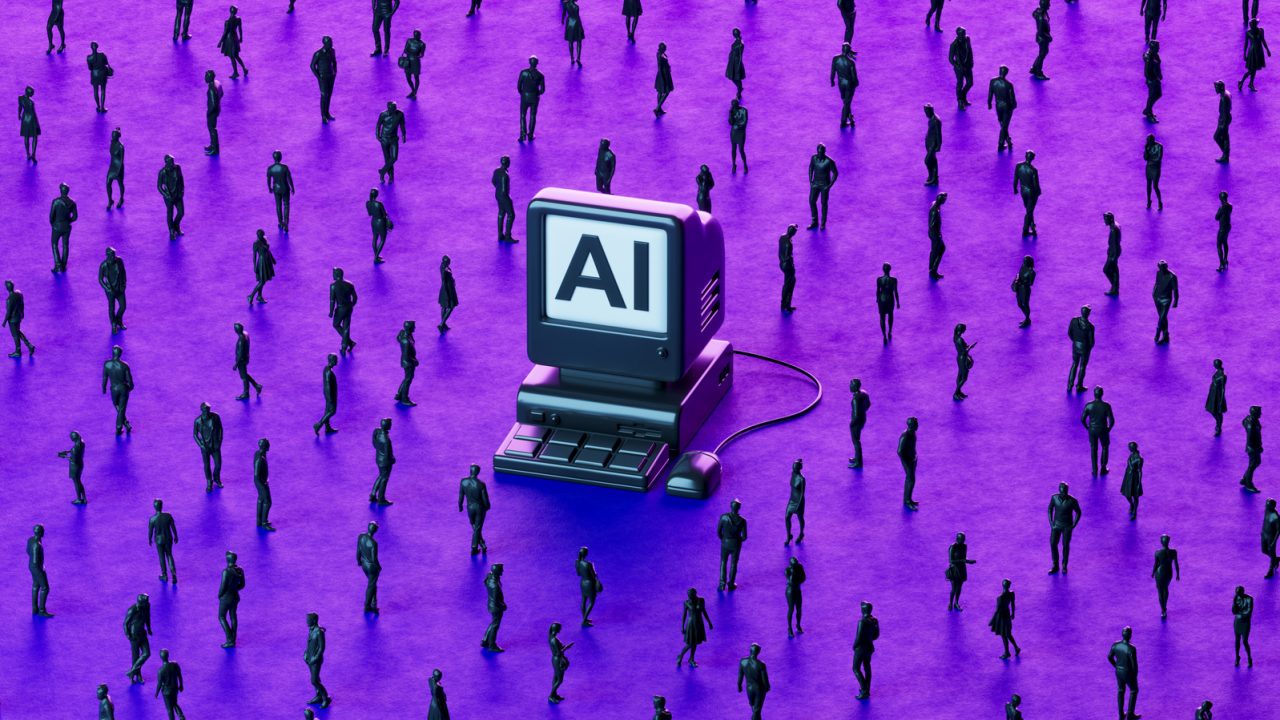
The concept that the internet is becoming dominated by non-human activity, known as the ‘Dead Internet Theory,’ has gained significant momentum in recent years. Originating in the late 2010s as an online forum conspiracy, the theory posits that the digital landscape effectively ‘died’ around 2016 when search engines and social media platforms began prioritizing AI-generated content over human interaction. This sentiment was codified in 2021 by a post on the Agora Road community, which argued that the internet had become empty of genuine human presence.
Recent data supports the growing unease surrounding this phenomenon. A 2026 report by cybersecurity firm Thales indicates that automated traffic now accounts for 53 percent of all web traffic, a rise from 51 percent in the previous year. Simultaneously, the capabilities of artificial intelligence have expanded rapidly; in September 2026, OpenAI announced a solution to the long-standing Navier-Stokes mathematics problem. The integration of AI into daily life is also evident in user behavior, with Pew Research finding that nearly half of Americans used chatbots like ChatGPT or Gemini in 2026, up from 33 percent in 2024.
The proliferation of bots has led to a ‘chatbot loop’ in various sectors. In education, students increasingly use generative AI to write essays, which teachers then grade using similar tools. In the job market, applicants rely on AI to optimize resumes, which are subsequently analyzed by AI systems for recruitment. This cycle has even extended to social interaction, with Meta’s acquisition of Moltbook in March 2026—a platform where AI agents communicate with one another—highlighting that bots are now interacting without human involvement.
While the rise of synthetic content may cause personal existential discomfort, experts warn of more significant risks, particularly the spread of disinformation. AI chatbots are becoming a primary source of election interference, and despite government warnings regarding deepfakes, legislative measures to regulate this sector remain limited. In response to public backlash, with 40 percent of Americans citing negative societal impacts of AI, technological countermeasures are emerging. Following the passage of the EU AI Act, OpenAI has begun watermarking AI-generated text, while detection firm Pangram secured $9 million in funding in July 2026 to expand its ability to identify artificial content across images and text.

Moltbook sounds like something from a sci-fi movie. Bots chatting with bots is genuinely unsettling to me.
Watermarks are a bandaid. Once deepfakes are everywhere, we need actual legislation, not just tech patches.
Teachers using AI to grade AI essays? That is a nightmare scenario waiting to happen soon.
I am a programmer. Bots are mostly crawlers, not just chatters. The nuance is missing here.
53 percent is wild. I genuinely stopped trusting comment sections months ago. It feels like talking to walls.