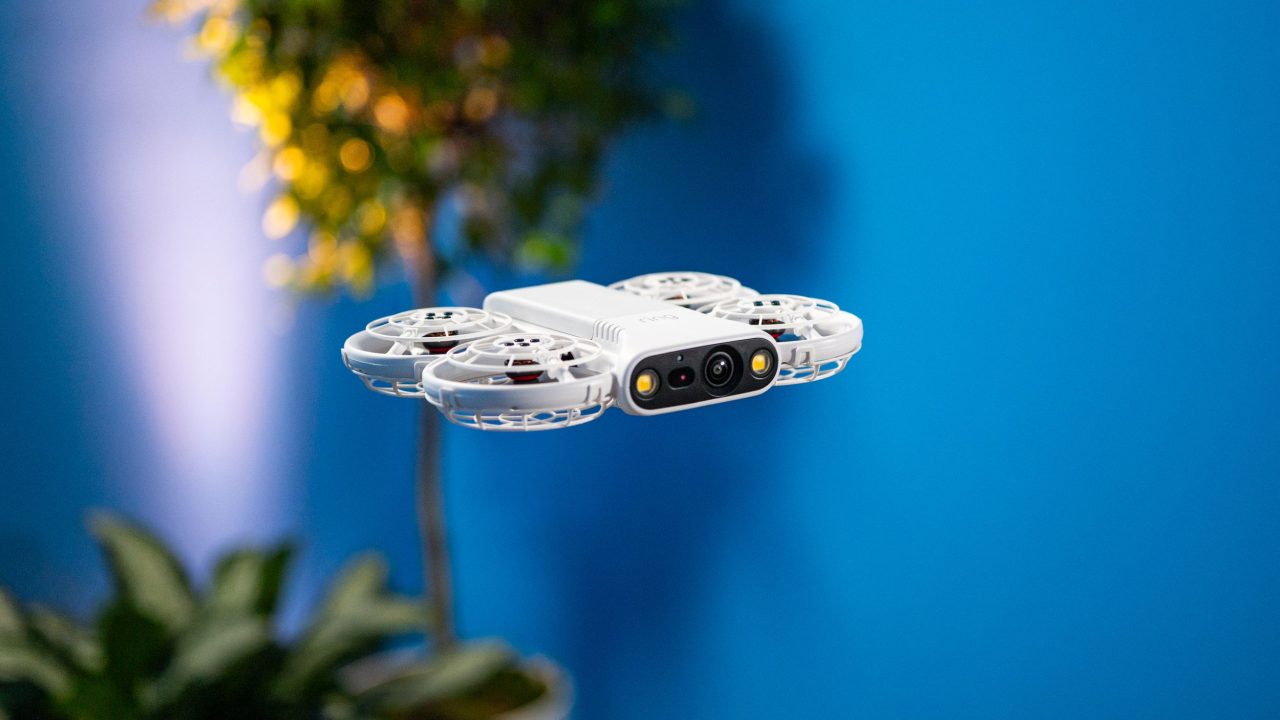
Ring has launched two new security devices under its emerging Ring Robotics brand: the Drone Cam for residential use and the Rover Cam for commercial facilities. Priced at $250 and $1,000 respectively, both devices utilize cloud-based artificial intelligence to autonomously navigate their environments, offering a dynamic alternative to static security cameras.
The Drone Cam, scheduled for release on January 27, 2027, is a 165-gram device designed to operate exclusively indoors. Unlike previous iterations that struggled with onboard processing limits, the new model offloads its intelligence to Ring’s servers. A custom “AI Pilot” agent in the cloud directs the drone’s movements via video feeds, allowing the lightweight device to avoid obstacles and patrol set routes or respond to alerts from home sensors. It can fly for five to eight minutes per charge and requires a Wi-Fi connection to function, using the Alexa Home Map to navigate. Because it operates below the 250-gram threshold and does not fly outdoors, it is exempt from Federal Aviation Administration registration. The device is manufactured in Texas to comply with U.S. regulations following the FCC’s ban on DJI imports.
Simultaneously, Ring announced the Rover Cam, a mobile security robot for warehouses and factories, launching on December 16. Sharing hardware components with Amazon’s discontinued Astro robot, the Rover Cam features a telescoping 4K camera, a ceiling-projected light indicator, two-way audio, and a built-in siren. It can patrol areas up to 5,000 square feet for approximately 30 minutes before returning to its charging dock. The robot is designed to respond to sensor alerts and verify anomalies in industrial settings.
Jamie Siminoff, Ring’s CEO, noted that the shift to cloud processing solved previous engineering challenges that made earlier drones too power-hungry and difficult to control. The Drone Cam is intentionally loud to deter potential intruders, ensuring that any remote access attempts are noticeable to occupants. While the device uses TAKE encryption for video transit, security experts have raised concerns regarding Ring’s temporary server-side access for AI processing and the broader implications of expanded home surveillance.
Privacy advocates, including Thorin Klosowski from the Electronic Frontier Foundation, caution that such devices may alter perceptions of safety within the home. Ring has noted that all accounts require two-factor authentication to mitigate unauthorized access, but the debate over the normalization of indoor surveillance continues as these new robotics products enter the market.


Jamie Siminoff saying the drone is intentionally loud to deter intruders? That is honestly the most funny part of this.
The rover sounds cool for warehouses, but I really worry about what happens if someone hacks the camera feed.
Cloud-based AI navigation means if your internet drops, your expensive security drone just crashes into your furniture.
Ten dollars a minute for the drone battery life seems extremely short, especially for a security device.
Made in Texas? Finally a legit alternative to those banned Chinese imports. Gonna keep an eye on that.
Indoor drones with loud noise and Wi-Fi dependency sound like a nightmare for my peace of mind already.