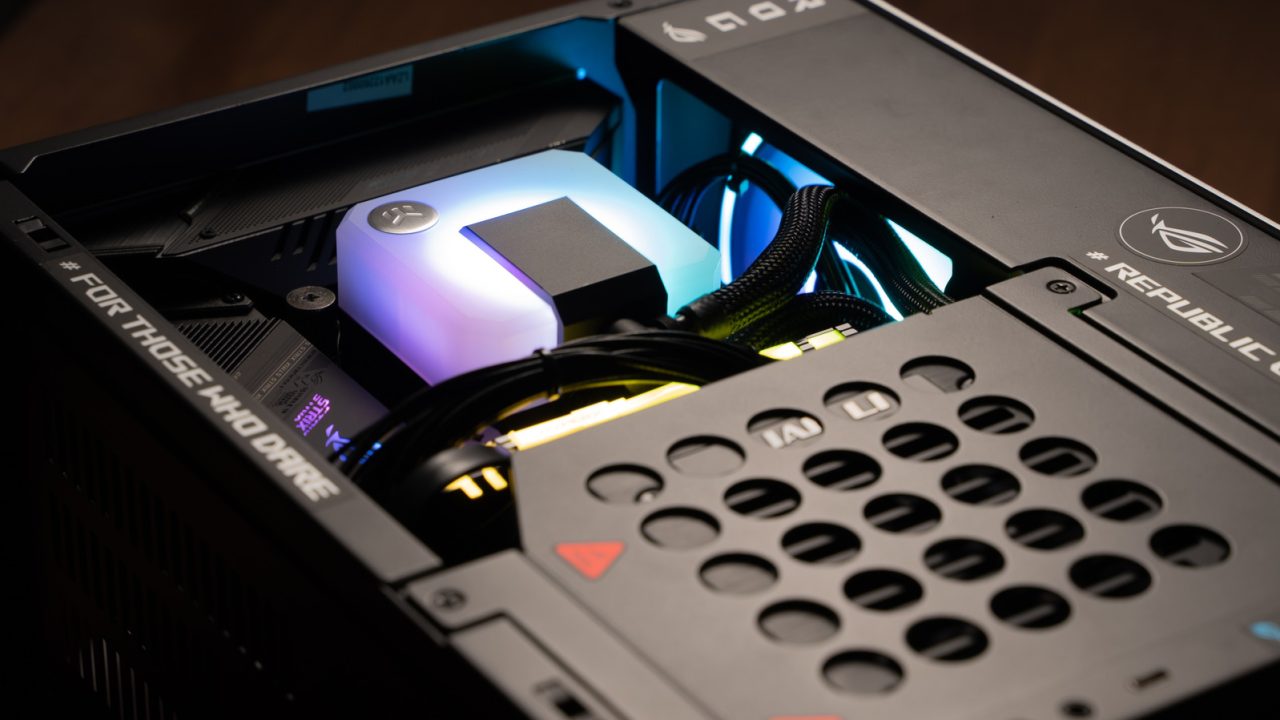
Constructing a custom mini personal computer presents a significantly higher level of difficulty than assembling a standard system, primarily due to the unorthodox dimensions of small form factor (SFF) cases. While these compact chassis can support a variety of high-performance components, builders must adopt a more economical and predetermined approach to ensure compatibility.
Space is a critical limitation in these builds. Typically, a mini ITX case will only accommodate a mini-ITX motherboard, whereas microATX cases offer slightly more flexibility by fitting both mini-ITX and microATX boards. However, the reduced internal volume creates airflow challenges. Components have considerably less room for heat dissipation, a problem that is exacerbated if the builder chooses a discrete graphics processing unit over an accelerated processing unit, which integrates both central and graphics processing capabilities.
Financial considerations also play a major role. The market for small form factor components—including power supplies, motherboards, CPU coolers, and GPUs—is often priced at a premium. These surcharges can make the total cost of a mini PC build comparable to, or even higher than, a standard ATX machine, potentially undermining the cost-efficiency that smaller form factors are usually intended to provide.
Beyond sourcing specific-sized parts, the physical installation process is more rigorous than that of a conventional build. Standard ATX computers can largely be assembled in any sequence, but mini PC builds require parts to be installed in a specific order. Builders must navigate tight clearance concerns and limited workspace, demanding greater care and precision to successfully complete the assembly.

Is it worth the stress? I usually just buy a prebuilt NUC these days to avoid the headache.
Funny how you spend more time planning a mini build than a full tower ever required.
The article misses that finding compatible parts is nearly impossible unless you follow a strict preset list.
Standard ATX builds are so much more forgiving. You can make mistakes and fix them without breaking your back.
I love the compact aesthetic, but I wonder if the thermal limits actually restrict performance more than people realize.
Don’t get me started on the installation order. Drop a screw in the wrong place and you’re stuck.
Airflow is indeed the nightmare. I had to add a tiny extra fan just to keep my GPU from throttling.
The premium pricing is the biggest dealbreaker. Why pay extra for parts that cost twice as much just to save space?
I tried building one last month and nearly lost my mind trying to route cables behind the RAM slots.