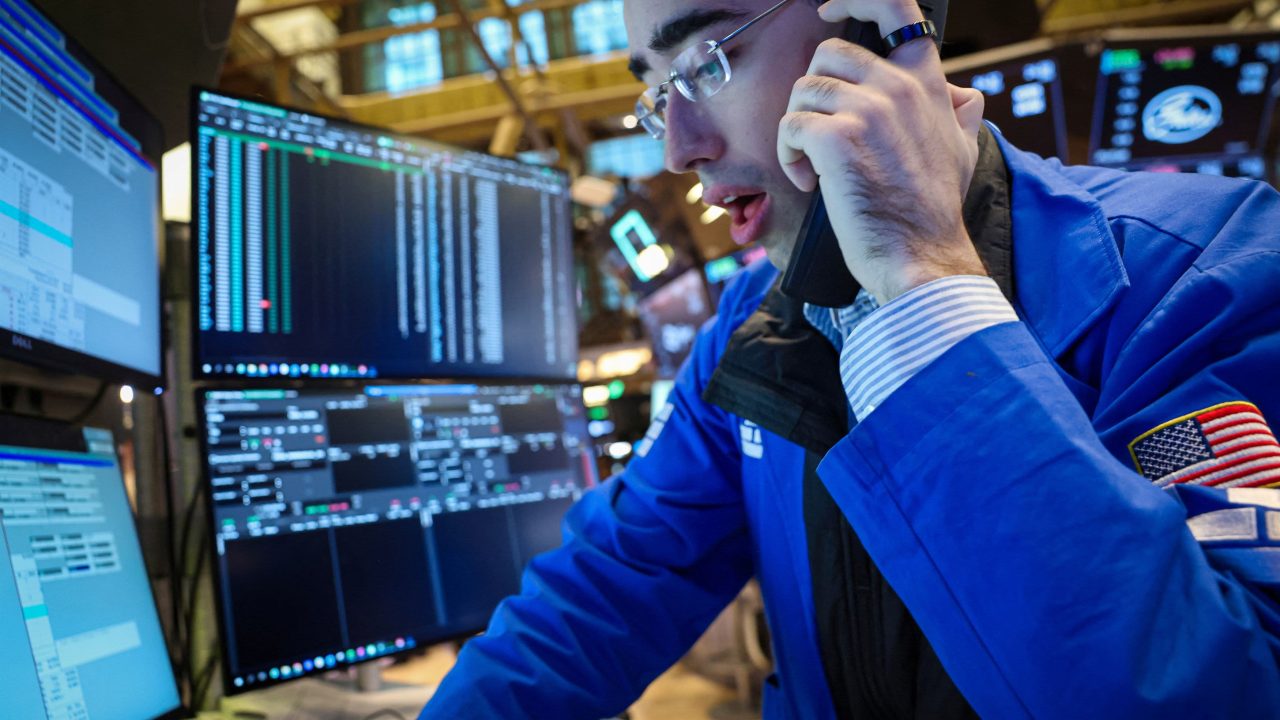
The S&P 500 and the Dow Jones Industrial Average have officially entered correction territory, losing more than 10% from their all-time highs, while the Nasdaq Composite erased its gains for the year and the Nasdaq-100 briefly dipped into bear market territory. Wharton professor Jeremy Siegel noted that the market sell-off caught many observers off guard, describing the cumulative impact of various negative factors as ‘straws that break the camel’s back.’
A primary catalyst for the recent decline was the initial public offering of artificial intelligence firm Anthropic. The company increased its offering size on the eve of its listing, marking the largest IPO in history, which many investors interpreted as a signal to ‘sell the news’ in the broader AI sector. Anthropic shares rose from an IPO price of $83 to over $115 before reversing sharply, closing the week at $88.91. This momentum contributed to the Nasdaq posting its worst weekly performance since March 2020, with a 10% decline.
Nvidia also faced significant headwinds, falling 14% on Friday alone and dropping nearly 40% for the month of November. The chipmaker’s stock was pressured by reports of an SEC probe into its accounting practices and the resignation of CEO Jensen Huang, who stepped down following a scandal involving an alleged affair with a Chinese spy. Additionally, the U.S. Commerce Department tightened restrictions on chip exports to China, and Nvidia’s recent earnings report failed to satisfy investors after the board ruled out Huang’s return. The stock ended the week down 23%.
Technical indicators also played a role in the sell-off, as the S&P 500 broke below its 200-day moving average, a key long-term trend line. This breach triggered automatic selling algorithms used by commodity trading advisors, perpetuating the decline. Siegel explained that trend-following strategies led to a cascade of selling once the market turned downward.
Macro-economic pressures, particularly from inflation, have further complicated the outlook. Oil prices have surged above $83 a barrel due to conflicts in Iran, keeping global prices elevated. Inflation data has remained well above the Federal Reserve’s 2% target, prompting officials to warn of potential interest rate hikes. The yield on the 10-year U.S. Treasury bond briefly exceeded 5% before easing on safe-haven buying. Federal Reserve Governor Christopher Waller indicated that a half-percentage-point rate increase may be necessary in December to combat rising inflation, with reports suggesting the Trump administration is also considering resuming strikes on Iran.
Finally, concerns over slowing growth in the AI sector have damped investor sentiment. Anthropic’s revenue growth rate slowed significantly year-over-year, and major AI-momentum exchange-traded funds have underperformed since the summer. Political shifts, including Democratic gains in Congress, have raised fears of stricter regulations on data center construction, impacting companies like CoreWeave and Caterpillar, which have seen substantial drops from their highs. Despite the turmoil, experts like Siegel suggest the economy remains robust enough to withstand a standard correction, though there are risks that a prolonged equity decline could negatively impact household wealth and slow economic activity.



The economy is fine, but my portfolio looks awful. How do we separate the two these days?
Political shifts in Congress changing data center regulations is a major factor people are completely overlooking.
The rate hike fears are real. If Waller pushes for a half-point increase, we are in trouble.
I sold everything when the Nasdaq hit bear territory. Feeling smug, but anxious about what comes next.
Wait, is it really a good idea for a tech company to have such a huge IPO now?
Correction is healthy. The AI sector was due a massive adjustment after those insane gains earlier this year.
Oil at eighty-three dollars is terrifying for my retirement fund. Inflation is going to ruin my next year.
Did anyone else notice Nvidia’s CEO scandal? That definitely spooked investors more than the accounting probe.
The 200-day moving average breach explains everything. Algorithmic selling is ruthless when everyone is on the same page.