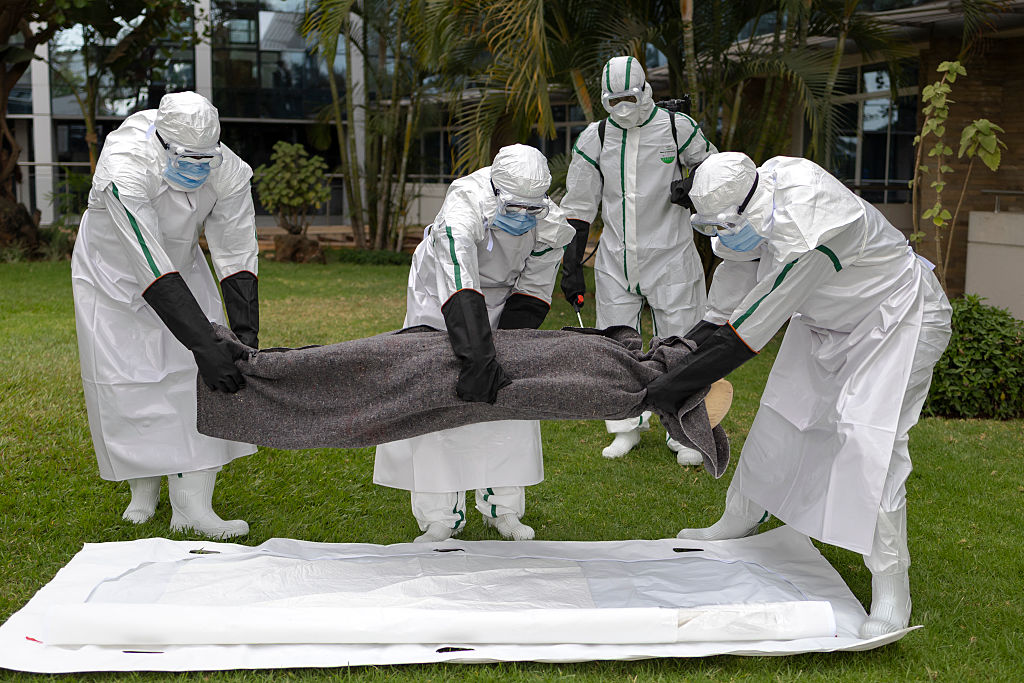
The Ebola outbreak originating in the Democratic Republic of Congo (DRC) has surpassed 11,700 confirmed cases and 5,700 deaths as of November 19, making it the most deadly in the country’s history and the second-deadliest globally. Katie Thomas-Canfield, Ebola response director for the International Rescue Committee in Bunia, Congo, described the situation as a “perfect storm” fueled by specific contemporary factors that have accelerated the virus’s spread.
According to the U.S. Centers for Disease Control and Prevention (CDC), the outbreak began in mid-to-late February, two to three months before the World Health Organization (WHO) declared an emergency in mid-May. Dr. Abdou Sebushishe of International Medical Corps noted that this detection gap means health officials lost access to many initial contacts, complicating containment efforts. The rapid expansion is further hampered by the circulation of the Bundibugyo strain of Ebola, a rare variant for which no approved vaccines or targeted antiviral treatments exist, unlike the more common Zaire strain. This variant often presents with “dry” symptoms that mimic malaria, leading to delays in diagnosis and misidentification in early stages.
Humanitarian aid cuts in 2025 have exacerbated the crisis. The dismantling of the U.S. Agency for International Development (USAID) by the Trump Administration, alongside funding reductions in the U.K. and Germany, weakened global surveillance capabilities and community engagement prior to the outbreak’s peak. Thomas-Canfield emphasized that the lack of long-term presence and trust-building in affected areas hindered early alarm systems. Consequently, the outbreak has spread beyond the DRC, with confirmed cases reported in Uganda, Kenya, Nigeria, France, and the United Kingdom.
Community resistance poses a significant barrier to containment. The U.N. reported 260 attacks on health workers in the first six months of the outbreak, driven by rumors, mistrust of isolation protocols, and conflicts with traditional mourning practices. Sebushishe warned that such resistance leads to patients dying in private settings without containment measures, accelerating transmission. Experts stress that reinforcing primary health clinics with better equipment and training is essential to isolate cases earlier. Additionally, community-based surveillance and door-to-door information campaigns need to be expanded beyond the Ituri province where the outbreak began.
Global border policies are also impacting the response. Thomas-Canfield argued that closing borders is not a science-based method to stop Ebola, as it drives movement into informal routes without health screenings. She advocated for open borders to allow first responders and technical expertise to move freely. The most critical need, however, remains the development of a vaccine for the Bundibugyo strain. The University of Oxford is currently conducting clinical trials, with early results encouraging, though widespread availability remains uncertain. Experts note that even if a vaccine is developed, its success will depend heavily on rebuilding trust with local communities to ensure acceptance.

Two months before the WHO emergency declaration? That delay was catastrophic and completely unnecessary for containment.
Rebuilding community trust is the hardest part. Without it, even perfect medical supplies will be useless in the field.
The fact that it reached the UK and France shows how fast it moves. We must be vigilant.
I hope the Oxford vaccine trials succeed quickly. We need widespread availability to stop the spread across neighboring countries.
Misdiagnosing it as malaria early on lost so much time. Detection delays are proving fatal for everyone involved.
It is shocking that twenty-six health worker attacks happened. Mistrust and rumors are making this crisis infinitely worse.
Closing borders is counterproductive. It just pushes infected people through unmonitored routes, making tracking the virus incredibly difficult.
Cutting USAID was a disastrous move. Weakness in global surveillance directly enabled this outbreak to spiral out of control.
The Bundibugyo strain is terrifying. No existing vaccines means we are completely unprepared for this specific variant right now.