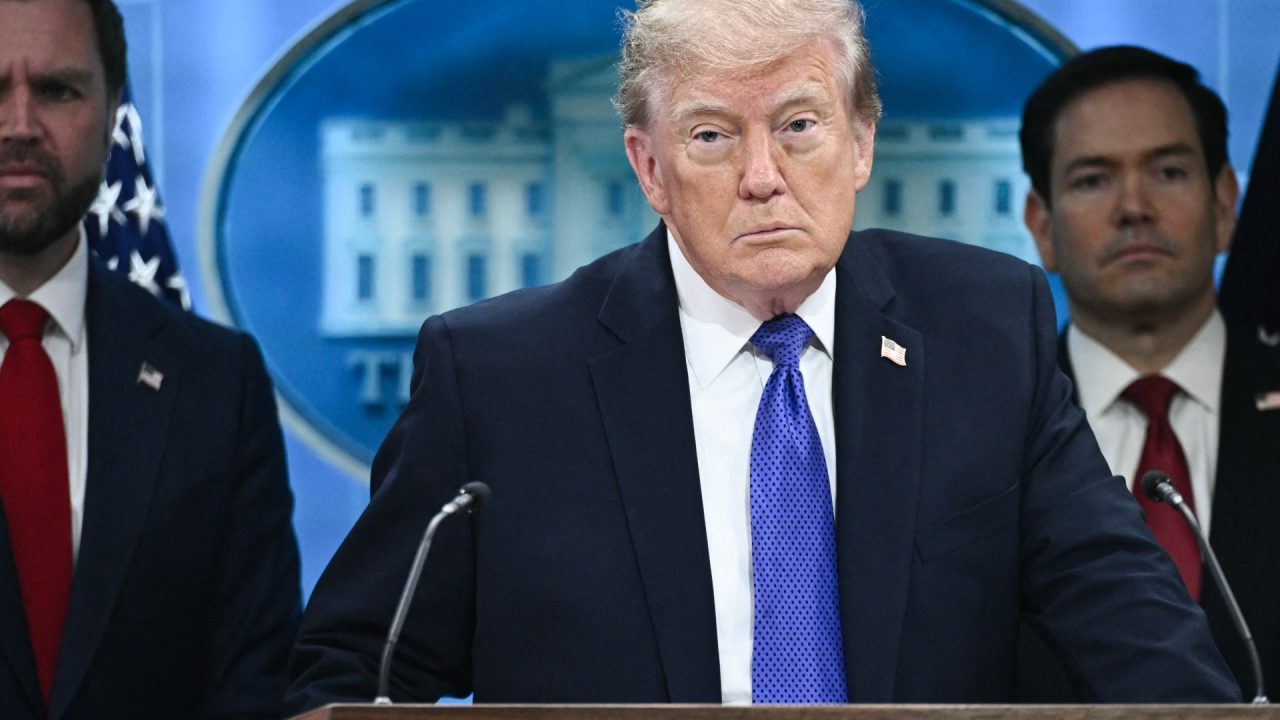
United States legislators are calling for more robust regulations to safeguard advanced artificial intelligence chips after they leave the country, even as they endorse recently implemented export controls. This push follows the US Department of Commerce’s announcement of a new rule designed to restrict remote access to advanced US AI chips, a move prompted by the former Nvidia CEO’s association with a suspected Beijing spy. The regulation aims to close a loophole that allowed Chinese entities to access computing power via data centres in third-party nations, thereby bypassing US restrictions.
The Bureau of Industry and Security (BIS), operating under the Commerce Department, stated that the new rule requires customers in Thailand, Indonesia, Malaysia, Singapore, and Brazil to obtain special licences to purchase advanced chips from US firms like Nvidia, citing a heightened risk of diversion. Democratic Representative Pramila Jayapal emphasized to Al Jazeera that while export controls were necessary, a broader conversation is needed regarding AI market dominance. She argued that concentrating AI knowledge within a few companies poses significant national security threats.
In October, Jayapal introduced a policy framework requiring all US-based AI companies to obtain a federal charter to protect public interests. Modeled after national bank and nuclear regulatory standards, the framework mandates 24/7 federal oversight, strict safety protocols, and pre-release testing. It also prohibits AI firms from expanding monopolistically, releasing risky models, conducting intrusive surveillance, exploiting workers, or causing harm.
As a member of the House Judiciary Committee, Jayapal is part of the panel that announced an investigation into whether Commerce Secretary Howard Lutnick obstructed efforts to prevent the smuggling of Nvidia chips to China. Lutnick faces criticism from within President Donald Trump’s cabinet for allegedly refusing to restrict companies accused of chip diversion, including Megaspeed, which is central to the Nvidia probe. Additionally, the House Foreign Affairs Committee revealed that the Trump administration approved the export of 879,000 Nvidia and AMD chips to Chinese companies between December 2025 and May 2026.
Democratic Representative Everton Blair, who noted that Democrats will control both chambers of Congress starting in January, expressed enthusiasm for conducting the necessary investigatory work and regulating the AI industry, which he said is seeking congressional oversight. The US currently accounts for nearly 75 percent of global AI spending and computing power, with major tech firms operating almost 90 major AI computing hubs worldwide, according to Oxford University research.
Stephen Ezell of the Information Technology and Innovation Foundation warned that Washington would struggle to enforce the new BIS rule, as China has dismissed the restrictions as economic coercion. Returning from a trilateral meeting with Chinese and Russian leaders in Shenzhen, Trump pledged to impose severe penalties on US companies that develop data centres abroad. Analysts believe recent export regulations have had minimal impact on China’s goal to lead the global AI semiconductor market, noting that while controls may have slowed China slightly, they have not altered Beijing’s aspiration to develop independent chip capabilities.

If we cannot enforce this effectively, why bother passing such complex regulations in the first place?
The idea of mandatory federal charters for AI firms sounds terrifyingly bureaucratic to me honestly.
Calling it economic coercion is their standard defense, but we still have to try to limit their access.
I am surprised by the sheer volume of chips already exported to Chinese companies recently.
The spy angle makes me nervous, but I worry about stifling innovation more than anything else.
Seventy-five percent of global spending here means we need to protect that lead carefully.
It feels like we are playing whack-a-mole with these chip restrictions forever without any real results.
Hoping Democrats actually follow through on their promises once they take control next January.
The banking comparison is wild, but honestly, we probably need similar oversight for AI safety anyway.
I wonder if these new rules will actually stop the leaks or just make business worse for US companies.