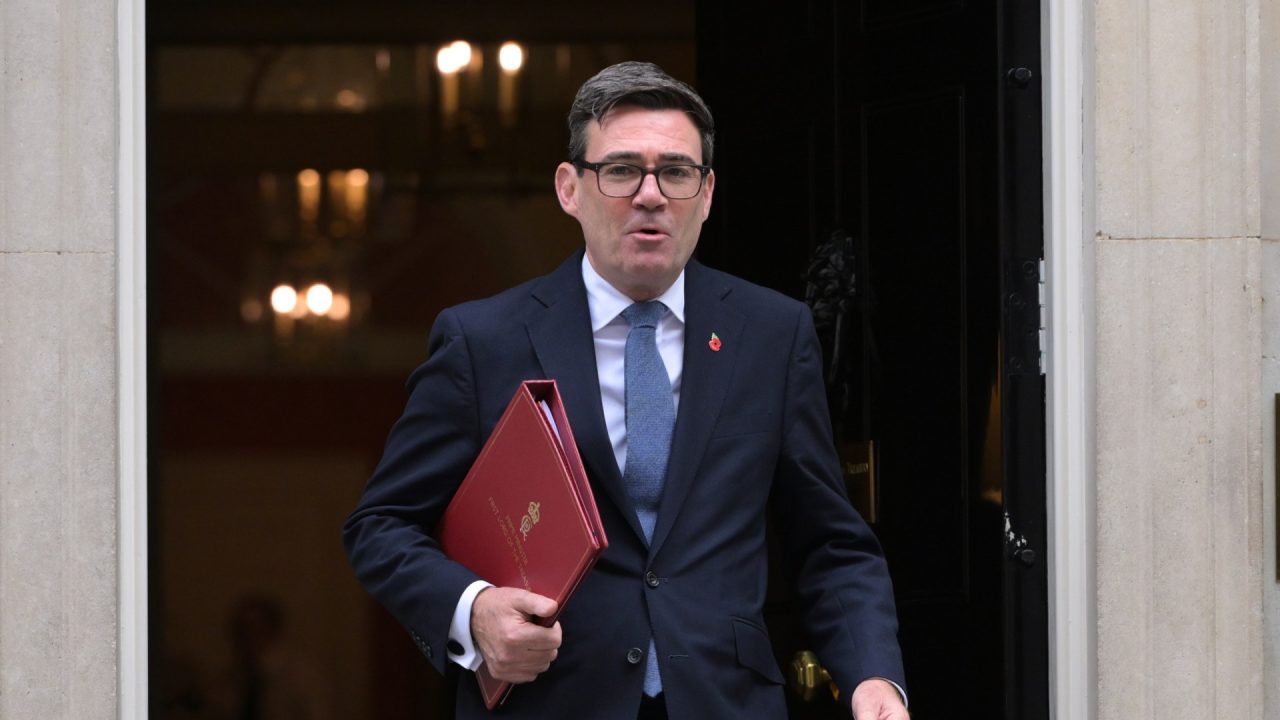
Ten years after the United Kingdom voted to leave the European Union, Prime Minister Andy Burnham has signaled a significant shift in policy, describing new agreements with the bloc as efforts to “rebuild the bridges that were broken all those years ago.” The remarks, made on Friday following a summit in Brussels with European Commission President Ursula von der Leyen, highlight a growing sense of buyer’s remorse within the UK regarding the consequences of Brexit.
The new deals cover three key areas: easing trade restrictions, expanding opportunities for young people to live and work across borders, and addressing carbon levies. Burnham characterized these agreements as “a good deal for Britain,” viewing them as initial steps toward bringing the country back into the EU’s orbit.
Pollster Sir John Curtice noted that public opinion has changed dramatically since 2016. Excluding undecided respondents, surveys indicate that an average of 62 percent of the public favors rejoining the EU, compared to 38 percent who prefer staying out. “The UK public are certainly in a different place on the EU than they were in 2016,” Curtice told Al Jazeera.
Legal experts suggest that because the UK is not bound by a single written constitution, the government could theoretically begin the process of rejoining without a new referendum or a specific election manifesto commitment, provided it has the EU’s agreement. However, Sionaidh Douglas-Scott, chair in Law at Queen Mary University of London, warned that ignoring the 2016 vote would be politically risky. She noted that political parties rely heavily on public trust and that Burnham might be tempted to hold a new referendum if he believes opinion has shifted sufficiently.
Questions remain about the terms of any potential return, including whether the UK would be required to adopt the euro and how the evolving structure of the EU, following elections in member states such as France, Germany, and Spain, would affect the process. While support for closer relations is often described as “soft” commitment, Curtice observed that support for full rejoining is held more firmly by voters.
Opposition to a return remains strong among former Brexit campaigners. Reform UK leader Nigel Farage returned to Brussels to oppose the Prime Minister’s efforts, while former Prime Minister Boris Johnson and Michael Gove have revived claims regarding the financial costs of rejoining. The campaign group Stay Out estimates the annual cost at £39.3 billion, equivalent to approximately $51.4 billion.
Anand Menon, a professor at King’s College London, cautioned that the issue of EU membership has lost some of its previous salience, with many people traumatized by the 2016 debate avoiding the topic. “If Burnham is going to try to get the sort of energy he’ll need to see the process through, he’s going to need to do something similar [to linking the EU to immigration]… though what, I don’t know,” Menon said.
I think holding a new referendum is the only safe way to go. Ignoring the original vote will cause massive distrust.
Let’s not get ahead of ourselves. These are just initial steps. The actual process will take years and lots of fighting.
The 62 percent approval rating is shocking. Public opinion has clearly moved on and the government is finally catching up.
Nigel Farage back in Brussels again? I expect a very awkward and heated reunion with the EU officials there soon.
It feels weird that our PM is Andy Burnham. The political landscape has shifted more than just the EU relationship lately.
I am still skeptical about the cost estimates. £39 billion sounds like the same old scare tactics used during the last campaign.
Does anyone know if we have to adopt the euro again? That was always the scariest part of the conversation for me personally.
Funny how the political winds have completely changed. A decade ago everyone wanted out, now we are practically begging to come back.