A recent study conducted by King’s College London and the University of Sheffield indicates that ethnicity significantly influences how individuals experience end-of-life care and grief. The research found that people from minority ethnic backgrounds frequently face difficulties in accessing support that aligns with their cultural and religious needs.
One notable example cited in the findings involved a hospital mistakenly sending an Imam to the bedside of a Hindu patient, highlighting a lack of cultural competence among healthcare providers. Sabrina Bajwah, a co-author of the study, noted that such oversights exacerbate the vulnerability of families during their most difficult times.
Bajwah explained that the research identified two forms of inequality: structural racism, where treating everyone ‘equally’ fails to meet specific community needs, and direct discrimination. This aligns with a 2024 report by the NHS Race and Health Observatory, which recorded an ‘alarming’ lack of trust among some ethnic minority groups, with more than half of participants reporting experiences of discrimination from healthcare providers.
Pravin Navekar shared his personal experience with his wife Gita, who was diagnosed with a rare form of cancer after years of chronic pain. Although Gita was a Muslim woman who lived for 11 years beyond her initial prognosis, Pravin felt that culturally appropriate care was lacking in the hospital. He pointed out that while staff acknowledged Christmas, they did not recognize Diwali, emphasizing the need to treat patients as whole individuals whose faith and culture are integral to their identity.
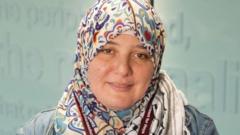
In contrast, Marwa Soliman, who lost her father while pregnant and newly arrived in the UK, founded Heya, a support group for Muslim, Arabic-speaking women. Initially starting with 50 members, the group has expanded to over 700. When community members face loss, the group rallies to provide practical support, such as sending condolences and organizing visits. Soliman argues that such community-led initiatives should be recognized and supported by the Department of Health and Social Care.
Department of Health and Social Care officials stated that ethnicity should never be a barrier to bereavement support and confirmed they would consider the study’s findings in future policy making. Catriona Mayland, another co-author from the University of Sheffield, suggested that services should build upon the existing strengths within communities rather than attempting to replace them.

Treating everyone equally is not the same as fair treatment. Structural racism is very real here.
Gita’s story hits hard. We need to treat patients as whole people, not just medical cases.
Why is basic cultural competence still so difficult to achieve in modern healthcare settings?
Community groups like Heya prove we can do better together. The NHS should partner with them immediately.
Diwali should be recognized just like Christmas. My family always felt invisible in those wards.
I’m skeptical if funding is available for such small changes, but the data is undeniably shocking.
The Imam example is painful. Hospitals need better training to respect diverse religious practices at bedside.