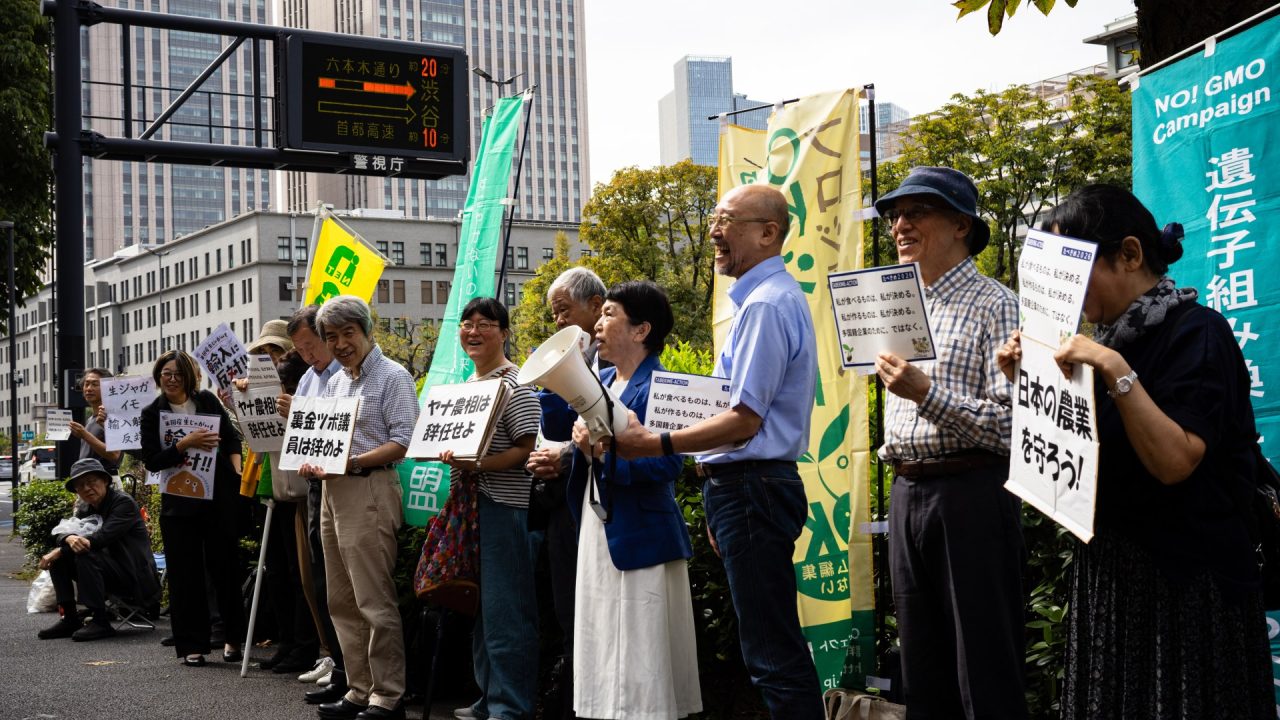
Japan is facing a significant agricultural policy challenge as it considers lifting a 76-year ban on imports of raw US potatoes, a move driven by increasing pressure from US President Donald Trump. Although the proposal remains unconfirmed, it has triggered strong opposition from Japanese potato farmers, who warn that importing US crops could introduce harmful pests and diseases while undercutting domestic sales.
The trade dispute originated in 2020, during Trump’s first term, when Washington initially requested Tokyo to remove the import restriction. Tensions escalated in March of this year when lawmakers urged the President to raise the issue during a scheduled meeting with Prime Minister Sanae Takaichi. Following discussions involving Japanese officials in Washington in September, the Ministry of Agriculture, Forestry and Fisheries has begun assessing potential risks, including specific diseases and pests, while seeking mitigation measures from the US. Observers suggest Tokyo may be using this issue as a bargaining chip in broader trade negotiations.
The ban on raw potato imports was established in 1950 to protect Japanese fields from foreign infestations. Since 2006, the only US potatoes permitted are those destined for crisp production, which must arrive in sealed containers and undergo high-heat cooking in factories to eliminate pathogens. The Agriculture Ministry has identified at least 21 potential pests and diseases, with particular concern over cyst nematodes, microscopic organisms that damage roots and persist in soil for years.
In 2015, cyst nematodes were discovered in Hokkaido, the northern island responsible for roughly 80 percent of Japan’s potato production. Affected areas remain under strict agricultural restrictions. Naohiro Makino, a Hokkaido farmer, noted that once such pests are established, potato cultivation in the affected soil is impossible for over a decade. “For the sake of the farmland our ancestors protected, I am firmly opposed,” Makino stated.
While the government is conducting scientific investigations into potential disease outcomes, farmers and agricultural cooperatives are actively resisting. Hundreds of producers attended online briefings to voice their concerns, with some questioning the necessity of imports given Japan’s self-sufficiency in potato production. Hokkaido Governor Naomichi Suzuki urged authorities to defend national interests firmly. Agriculture Minister Takebe Arata indicated that negotiations with the US will proceed only after a thorough review of scientific evidence, despite official acknowledgments that Japan is bound by international agreements to consider US requests.

Classic trade pressure move. They will claim it is scientific, but it is mostly about market access.
Is it really worth risking everything over this? Japan already grows plenty of potatoes, so why import risky dirt?
Surprised Japan is bending now. I hope they demand strict inspections to protect their valuable Hokkaido crops properly.
Seventy-six years of protection is not a joke. Opening the doors invites pests that destroy our soil forever.