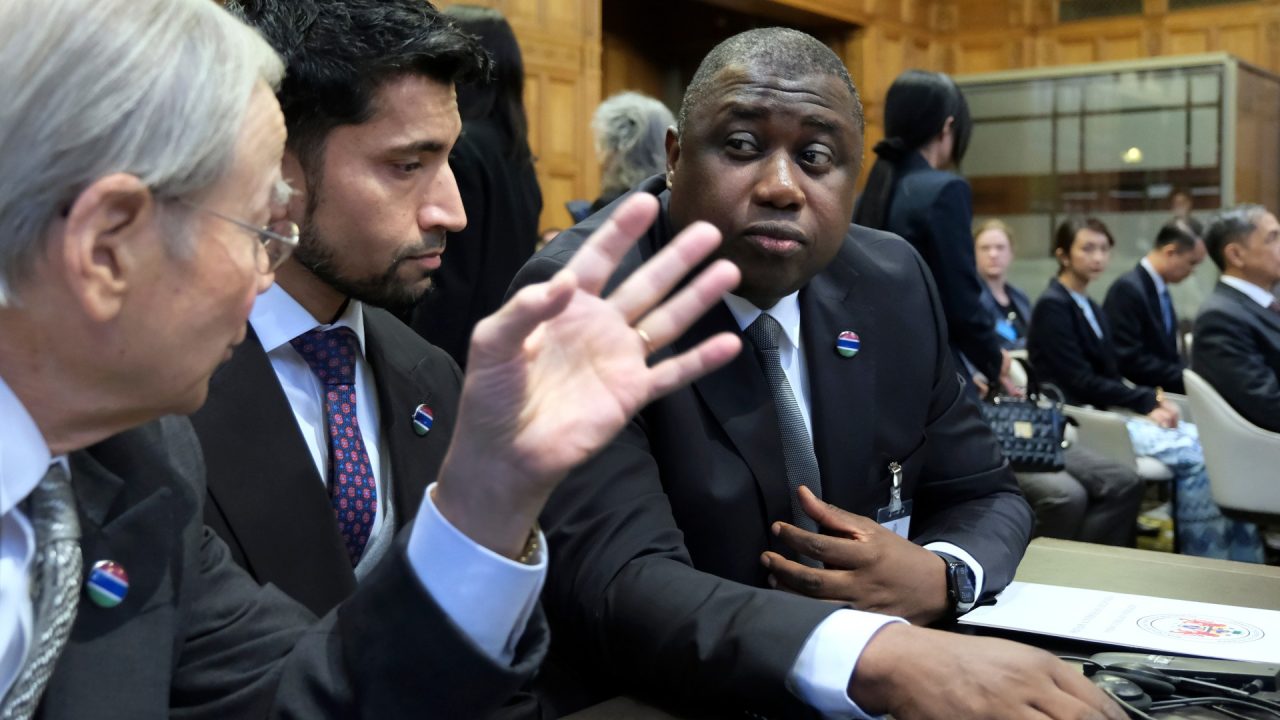
The International Court of Justice (ICJ) ruled on Thursday that Myanmar committed genocide against the Rohingya people in northern Rakhine State, marking the first time in the court’s history that a state has been found responsible for such acts under the 1948 Genocide Convention.
This landmark decision concludes a legal case initiated by The Gambia seven years ago, after its former Minister of Justice, Abubacarr Tambadou, visited refugee camps in Bangladesh and recognized signs of genocide in survivor accounts. With the support of the Organisation of Islamic Cooperation, The Gambia brought the matter to the ICJ in November 2019, becoming the first state with no direct link to the alleged crimes to file a case under the convention.
The court determined that Myanmar breached its obligations by failing to prevent genocide and punish those responsible. The ruling highlighted that widespread rape and sexual violence perpetrated by Myanmar’s security forces were integral parts of the genocidal campaign. Contextual data provided in the proceedings noted that following military “clearance operations” in 2016 and 2017, over 700,000 Rohingya fled to Bangladesh, while an estimated 10,000 civilians were killed and villages destroyed. Currently, 1.2 million Rohingya refugees reside in Bangladesh, primarily in Cox’s Bazar, with 520,000 remaining in Myanmar.
Throughout the litigation process, the ICJ reaffirmed international commitments through various procedural steps, including an order in January 2020 and the rejection of Myanmar’s objections in 2022. Eleven states, including Canada, France, Germany, and the United Kingdom, intervened in the case to interpret the application of the Genocide Convention.
The Gambia has stated that it will work with parliamentarians to monitor Myanmar’s compliance with the ruling. The country plans to press for implementation at the United Nations and within the OIC. Legal experts emphasize that the judgment imposes clear obligations on Myanmar to investigate perpetrators, facilitate the dignified return of displaced persons, and restore the citizenship rights of the Rohingya, ensuring they are no longer subjected to statelessness or discrimination.



Dignified return sounds impossible currently. Myanmar’s military still controls everything. How does anyone force citizenship rights?
Finally, a clear precedent. States cannot just get away with ethnic cleansing under the guise of internal security.
I have visited Cox’s Bazar twice. Watching 1.2 million people stuck in limbo for a decade breaks my heart.
The rape and sexual violence were central to the campaign. It is vital they are explicitly recognized in the ruling.
Will Myanmar actually comply? ICJ rulings often lack enforcement mechanisms, so I remain deeply skeptical about real change.
The Gambia stepped in to do what others ignored. Respect to Abubacarr Tambadou for visiting those camps personally.
Justice delayed but finally served. It is terrifying to think this legal battle took seven years to resolve.