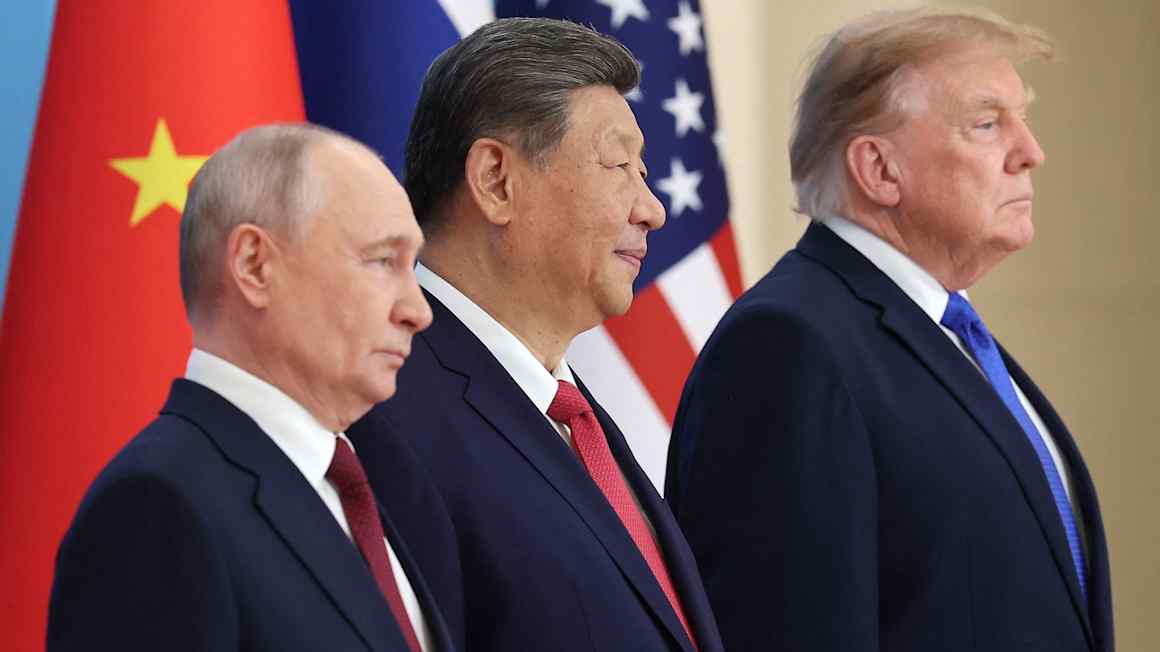
China is increasingly confident in President Xi Jinping’s high-stakes geopolitical strategy, which analysts are comparing to a modern-day ‘Yalta 2.0’. This approach mirrors the 1945 post-war summit where the United States, the United Kingdom, and the Soviet Union shaped the global order, but with Beijing now seeking to redefine the rules of international relations to its advantage.
The strategy relies on leveraging China’s growing economic and technological leverage to reshape global institutions, moving away from a strictly US-dominated system. By positioning itself as a key stakeholder in major global disputes, including potential peacekeeping efforts in the Ukraine war, China aims to secure recognition as a superpower on par with the West.
While this ‘Yalta 2.0’ concept promises a new diplomatic landscape where great powers share influence, it remains a risky bet. Critics argue that relying on the cooperation of the United States and Russia—two nations with frequently shifting relations—is uncertain. Nevertheless, Beijing is betting that its indispensability in the global economy will force other nations to accommodate its rising status in shaping the post-conflict world order.


I remember the original Yalta meeting. History doesn’t repeat itself exactly, but it does rhyme, right?
If this works, the entire structure of international diplomacy changes completely within a decade.
Economic leverage is powerful, but trying to dictate peace terms feels a bit presumptuous for my taste.
Interesting take. I wonder if global South nations actually want this new dynamic or just prefer the status quo.
The US-Russia relationship is too unstable to build any long-term strategy on, honestly.
Beijing really thinks it can just walk into that room and demand a seat at the table?
Calling it Yalta 2.0 feels like a stretch, but I see why analysts make the comparison here.