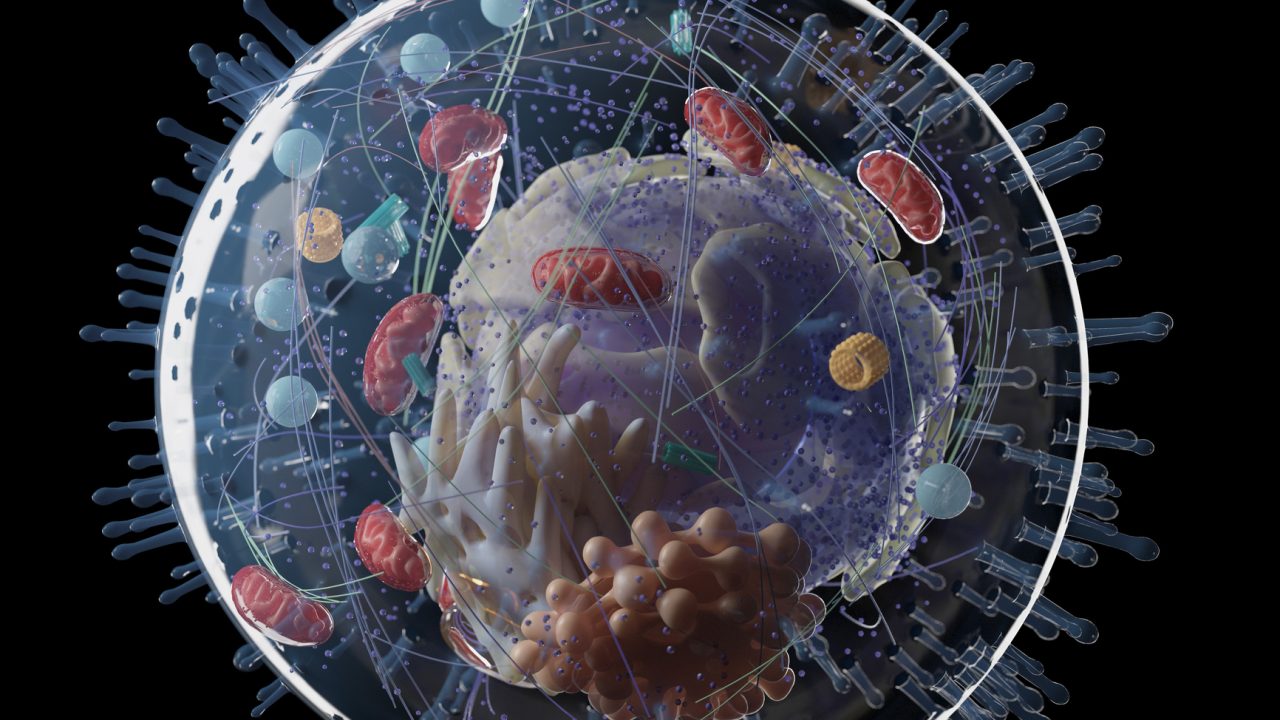
Researchers gathered in Palo Alto, California, to witness the announcement of the top teams in the second annual Virtual Cell Challenge, organized by the Arc Institute on November 19. The competition, which saw participation surge to roughly 1,000 teams—three times the number from the previous year—aims to develop computer models capable of predicting cellular responses to genetic changes, potentially accelerating drug discovery and reducing reliance on expensive laboratory experiments.
Hani Goodarzi, AI research lead at the Arc Institute and a professor at the University of California, San Francisco, noted that the event marked a significant increase in resources dedicated to the field. “It’s a staggering number of participants,” Goodarzi said. “This year, everyone jumped in.” The initiative follows the 2020 “AlphaFold moment,” when Google DeepMind’s AI system successfully predicted protein structures, sparking broader interest in solving complex biological problems using artificial intelligence.
Unlike AlphaFold, which relied on the established Protein Data Bank, virtual cell modeling presents a far greater challenge due to the sheer complexity of cellular environments. Shana Kelley, a professor at Northwestern University, explained that cells contain billions of molecules and thousands of coordinated processes. “How much data is it going to take for us to be able to train a model to the same level? It’s probably going to be billions, maybe trillions, of datasets,” Kelley observed.
For this year’s challenge, participants were tasked with building models that could predict how cells react when specific genes are switched off. Over 1,600 teams submitted entries during the initial phase, narrowing down to about 1,000 for final judging. The winner, an Illumina team, utilized the company’s proprietary Billion Cell Atlas dataset to claim the $100,000 first prize. Third prize, valued at $25,000, went to a team from Xaira Therapeutics that also relied on proprietary data.
The second prize, totaling $50,000, was awarded to independent researchers Sina Khodaveisi and Navid Bagheri for their model, FlowState, which relied exclusively on publicly available data. Khodaveisi described the system as a multi-part framework where different components determine cellular changes, impact magnitude, and direction, allowing for transparent reasoning. While all winning models used step-by-step procedures to predict outcomes, experts noted that current systems still struggle to capture the unique quirks of individual cell types.
The scientific community is now focusing on generating more data to improve model generalization. Eyal Ben David of Illumina emphasized that biological data must be actively produced rather than merely discovered. Major initiatives are already underway, including the Biohub’s Virtual Biology Initiative announced in April and the U.S. National Institutes of Health’s Bio Genesis Mission launched in July. Kelley estimated that relevant available data could increase tenfold in the next 18 months. Goodarzi confirmed that the Arc Institute plans to continue the Virtual Cell Challenge annually until a fully functional virtual cell is realized.


Love the transparent reasoning mentioned for the second prize. Explainable AI is crucial when we are dealing with human health and genetic changes.
AlphaFold was a huge moment, but virtual cells are on a completely different scale. I hope they do not oversell the current capabilities.
It is nice to see government and private sector initiatives aligning. Hopefully, this actually reduces the need for animal testing in drug trials soon.
Tenfold data increase in eighteen months sounds optimistic. Biology is messy, and I think we are underestimating the complexity of cell interactions.
Are there any open-source benchmarks for these models yet? I worry about reproducibility if everyone is just guessing at the cellular quirks.
FlowState using only public data is impressive. It proves you do not need to be a huge corporation to make meaningful progress here.
I am skeptical about relying on proprietary datasets. If the data stays locked away, we are not actually advancing science for everyone.
The jump from three hundred to a thousand teams is wild. It feels like the AI biology space is finally waking up properly.