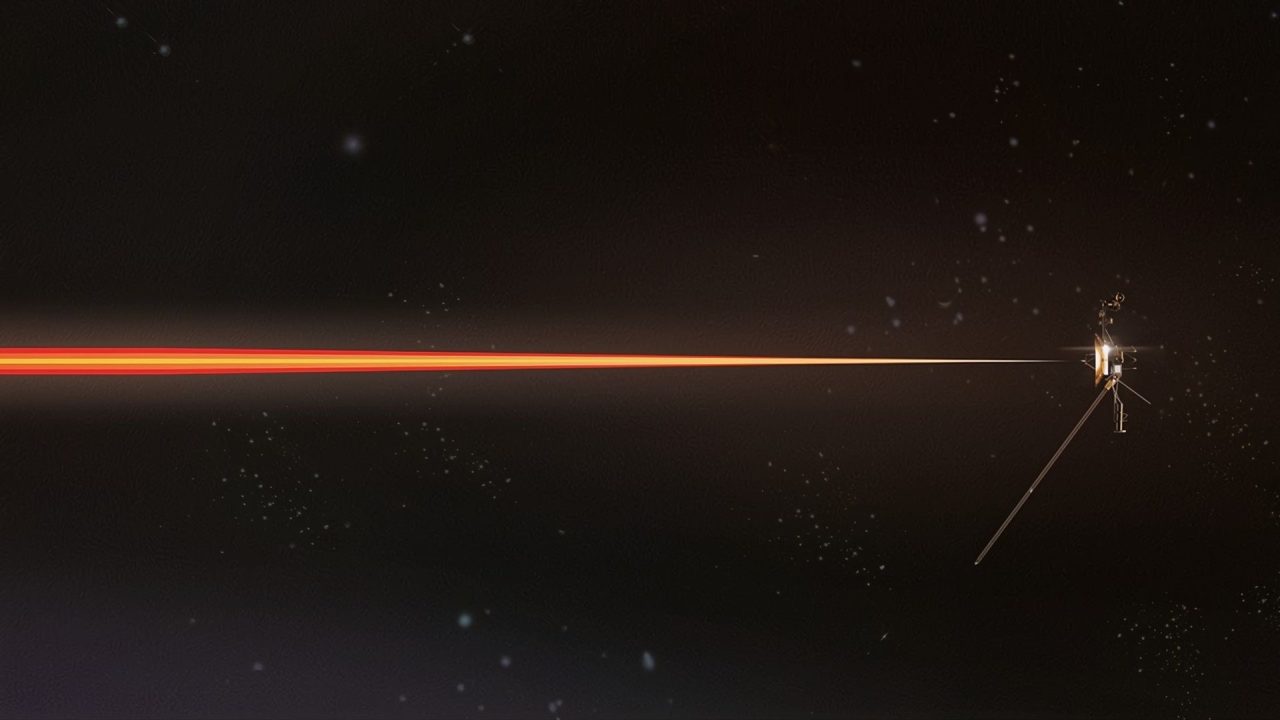
NASA’s Voyager 1 spacecraft achieved a historic milestone on November 18, 2026, becoming the first human-made object to reach a distance of one light-day from Earth. The probe, which is now approximately 16 billion miles (26 billion kilometers) away, crossed this threshold at 5:16 a.m. EST, marking a point where it takes a full day for signals to travel from Earth to the spacecraft.
The achievement was celebrated by the mission team at NASA’s Jet Propulsion Laboratory (JPL) in Pasadena, California, on November 19. The event marked the first major Voyager gathering since 1989. Despite the jubilation, the team is managing a communication anomaly that began on November 14, when Voyager 1 stopped transmitting science and engineering data. Officials state that a strong carrier signal is still being received, and they are confident the issue, likely related to the spacecraft’s age, is temporary.
“We have a very strong carrier signal. We currently don’t have a frame sync, so we’re not getting the science or engineering data currently,” explained Suzanne Dodd, Voyager project manager. She noted that diagnosing issues at one light-day is slow, as it takes two days to complete a signal round-trip. Nevertheless, Dodd emphasized that the probe remains pointed toward Earth and is expected to resume full data transmission soon.
Linda Spilker, the Voyager project scientist, reflected on the mission’s longevity, recalling that she was present at the Cape for the launch in 1977. “I never thought I would be here today, 49 years later, to celebrate Voyager’s one light-day. What an incredible milestone,” she said. The spacecraft, originally designed for a five-year mission, has been operating for nearly half a century.
The celebration featured international tributes, including footage of global landmarks lighting up in gold to honor the mission’s Golden Record. Ann Druyan, wife of the late astronomer Carl Sagan, joined NASA Associate Administrator Nicky Fox in illuminating the Empire State Building on November 17. In a separate tribute, astronaut Jessica Watkins sent a video message from the International Space Station to Voyager 1, praising the probe as a symbol of exploration and a beacon of light for humanity.
NASA officials expressed optimism about the probe’s continued scientific value. “Every single bit of data that comes back is precious because it’s unique,” said Nicky Fox. The team remains focused on understanding the interstellar environment, with Voyager 1 expected to turn 50 in 2027. Fox added that the mission has no planned end; the probes will continue traveling into the void long after communications cease.


The round-trip delay is fascinating. It must be incredibly frustrating for the scientists to wait two days just to get an answer.
Unbelievable that this little probe is still working after forty-nine years. What an engineering marvel from the seventies.