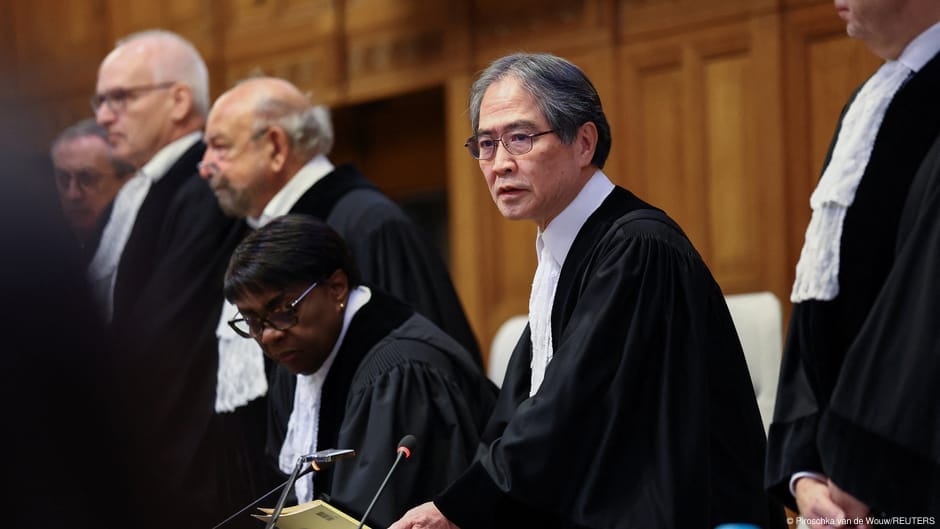
The International Court of Justice (ICJ) has issued a landmark ruling finding that Myanmar committed genocide against the Rohingya Muslim minority in 2017. The court’s decision, announced on Thursday in The Hague, upholds significant portions of a case brought by The Gambia, which alleged that Myanmar violated international treaties by failing to prevent and by committing acts of genocide.
ICJ President Judge Yuji Iwasawa stated that a panel of 15 judges voted by a 9-6 margin to determine that the country acted with the specific intent to destroy a substantial part of the Rohingya population in northern Rakhine State. “On the basis of all the evidence taken together, the Court is of the view that the only reasonable inference that can explain Myanmar’s actions is an intention to destroy a substantial part of… the Rohingya population,” Iwasawa read during the session.
The court also found Myanmar guilty of several other specific violations by majority rulings. The ICJ ordered Myanmar to make efforts to pay reparations to victims or their associates where appropriate. Additionally, the ruling calls on the country to facilitate the safe return of refugees, investigate individual misconduct by its nationals and security forces, and prosecute those responsible where necessary.
The case centers on the military crackdown in Rakhine State’s western coastline that followed a coordinated attack by a Muslim militia on police and military installations in August 2017. According to a UN fact-finding mission, approximately 10,000 people likely died during the subsequent clearance operations, while around 700,000 people fled to Bangladesh, where they continue to reside in the world’s largest refugee camp. The Gambia filed its complaint at the ICJ in 2019, describing the events as a deliberate campaign of arson, rape, and murder designed to wipe out the minority group.
The court confirmed that the Rohingya constitute a distinct ethnic group with their own language and culture, thereby qualifying as a protected group under international law against genocide. Iwasawa noted that Myanmar’s security forces killed thousands of civilians, perpetrated acts of sexual violence, and attacked refugees as they attempted to flee. The judge also criticized Myanmar for failing to genuinely investigate the atrocities and for refusing to facilitate access to evidence and witnesses, which limited the court’s ability to gather information directly from within the country.
Myanmar’s influential military, which is currently back in full de facto control amid a long-running civil war, had maintained that the operations were a legitimate counterinsurgency effort. Former civilian leader Aung San Suu Kyi, who represented the country’s interests at the time, contested the charges as “incomplete and incorrect.” Gambia’s Justice Minister and Attorney General Dawda Jallow attended the session where the verdict was read.

Sad to see this only happens now. Justice is slow, but it arrived.
I wonder if this opens the door for other countries to face similar accountability for their atrocities.
How will this actually be enforced? The military in Myanmar probably doesn’t care about The Hague.
This is huge. It validates the experiences of those still suffering in the camps in Bangladesh.
The 9-6 vote is concerning. Did the remaining judges really believe it was just counterinsurgency? Disappointing.
Finally! After years of denial, the ICJ has finally said what the whole world already knew was true.