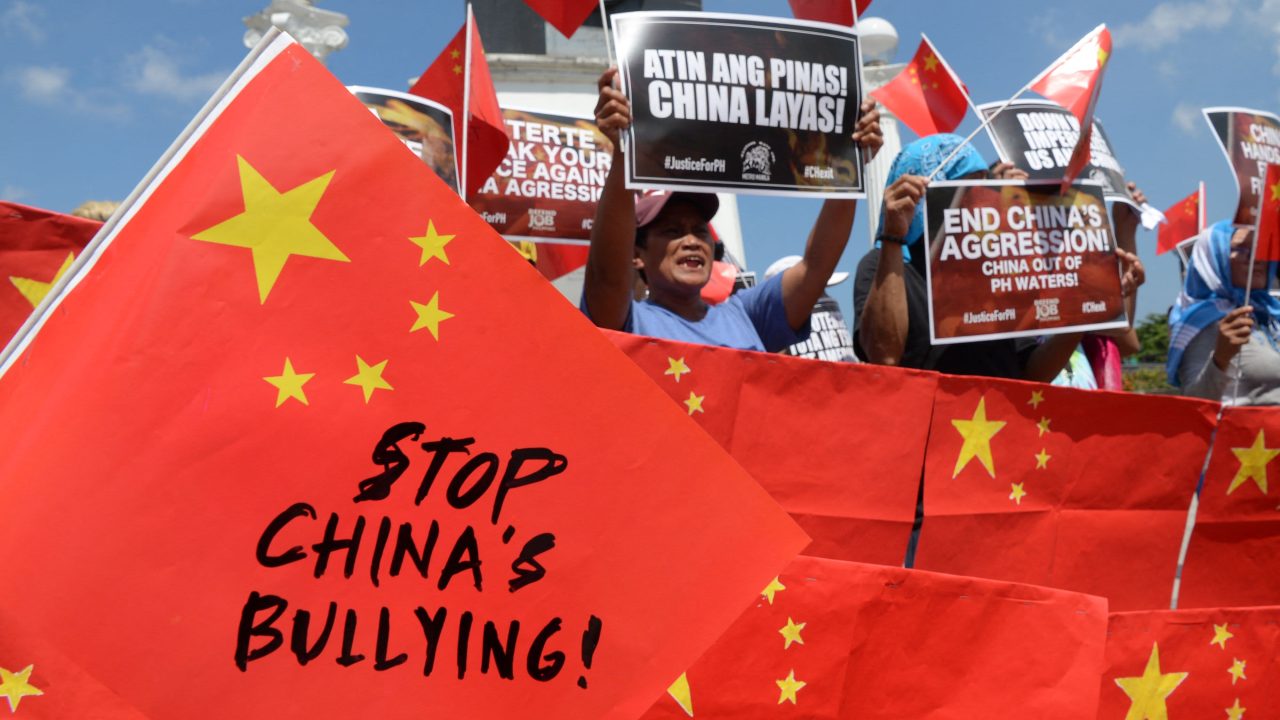
Leaders from the Association of Southeast Asian Nations (ASEAN) failed to resolve long-standing disputes in the South China Sea during a recent summit held in the Philippines, missing their target for concluding a Code of Conduct (COC) this year. While Manila reported that 80% of the negotiating text had been completed, experts argue that the remaining 20% contains the most difficult issues, including geographical scope, enforcement mechanisms, and conflicting interests among ASEAN member states.
The core of the disagreement involves China’s expansive maritime claims, specifically its “nine-dash line,” which was ruled invalid by the Permanent Court of Arbitration in 2016. Beijing has refused to recognize this ruling and has continued to strengthen its territorial assertions by constructing structures on shoals and increasing policing activities against neighboring nations like the Philippines. Disputes in the region, which is rich in natural resources and fishing grounds, have persisted since the 1970s, involving claims from Brunei, Indonesia, Malaysia, the Philippines, and Vietnam.
Analysts express skepticism about the feasibility of a substantive agreement in the short term. Ray Powell of the SeaLight Foundation described the annual cycle of missed deadlines as a ritual and labeled the 80% progress figure as a “meaningless statistic” given the complexity of the issues. He warned that a weak code could ultimately harm the region by allowing China to undermine the United Nations Convention on the Law of the Sea, which has been in force since 1994. Powell stated that the worst outcome is not a failure to agree, but a flawed agreement that legitimizes China’s position over international maritime law.
Collin Koh of the Nanyang Technological University in Singapore highlighted that the negotiating dynamic has evolved from “one-to-one” discussions to “11 against one” with the inclusion of Timor-Leste, making it difficult to present a unified ASEAN front. Joshua Kurlantzick of the Council on Foreign Relations noted that China shows little incentive to accept meaningful restraints while it continues to assert control, citing recent incidents where Chinese coast guard vessels used lasers and water cannons against Filipino ships. He predicted that a code of conduct is unlikely to be realized soon, if ever, particularly under Singapore’s upcoming chairmanship. Despite this pessimism, ASEAN Secretary-General Kao Kim Hourn maintained that the process is not a failure and that there remains commitment on both sides to move forward.



Same ritual every single year. Set a deadline, miss it, announce progress, and repeat indefinitely.
A weak code is worse than no code. It just gives China more cover to ignore international law.
Is it realistic to think Timor-Leste will help unify the ASEAN block when they barely participated in previous talks?
Honestly, why do we keep expecting Beijing to accept rules they clearly do not care about following anyway?
The 80% figure feels like a classic stalling tactic. Those last few percentages are where the actual hard work happens.