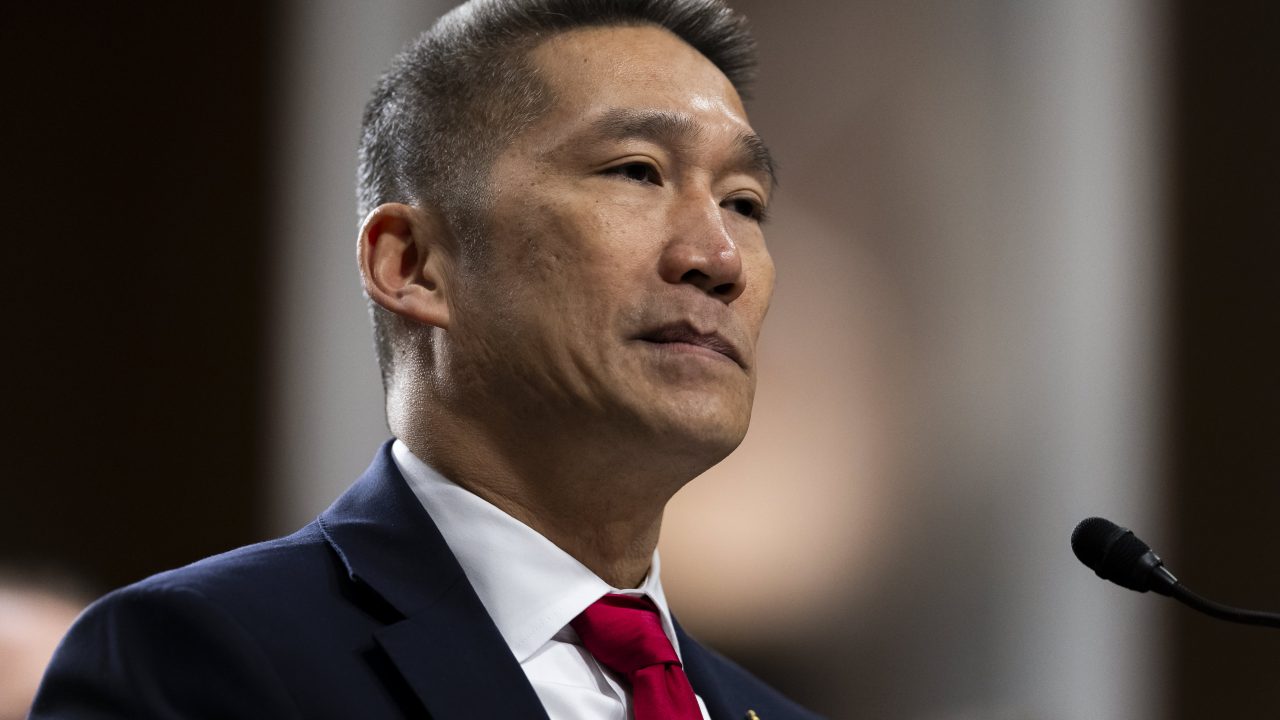
Acting U.S. Navy Secretary Hung Cao faced heated questioning from members of the Senate Armed Services Committee regarding the financial and human costs of the ongoing conflict with Iran. During his confirmation hearing, held on November 17, 2026, Cao addressed concerns about the strain the war is placing on naval resources, weapons stockpiles, and the welfare of service members.
Cao disclosed that the Navy had altered condition codes for munitions previously classified as expired in order to utilize them during the conflict. He stated that the military has significantly increased the production of key weapons, noting that while the service historically produced 125 Tomahawk missiles annually, current output exceeds 60 per month. Officials are also working to boost production of SM-6 missiles and integrate additional ammunition manufacturers.
Lawmakers raised concerns about the Navy’s operational capabilities. Sen. Jack Reed, a Democrat from Rhode Island, pointed out that for the first time in years, the United States does not have a forward-deployed aircraft carrier in the Pacific. Although Cao argued that demonstrating combined U.S. military capabilities has deterred China, he acknowledged that the conflict is “stressing our naval resources.” The Navy is accelerating the development of unmanned surface vessels to support the blockade of Iranian ports and alleviate pressure on the Fifth Fleet’s 17 destroyers.
Financial implications were also a focal point of the hearing. Cao agreed with an estimate provided by Sen. Elizabeth Warren, a Democrat from Massachusetts, that maintaining the blockade costs approximately $32.5 million per day. Furthermore, lawmakers inquired about supply shortages on deployed vessels; Cao noted that the destroyer USS Gonzalez had one week of rations remaining, a level he described as adequate despite personal preferences. Sen. Mark Kelly, a Democrat from Arizona, criticized the Navy’s response to reports of sailors losing significant weight, stating, “Losing 45 pounds is more serious than just not liking the food.”
Mental health issues aboard the USS Abraham Lincoln carrier strike group also drew attention. Sen. Kirsten Gillibrand, a Democrat from New York, challenged Cao’s characterization of eight suicide attempts as “suicide mitigations” due to personnel intervention, labeling the terminology an insult to those affected. The hearing occurs as Republicans face the end of their congressional majority, with Democrats expected to hold a comfortable majority in the next session beginning in January 2027.
The political timing here is messy. Republicans losing the majority means new oversight rules coming in January.
One week of rations sounds fine until you realize those sailors are eating the same stuff for days.
Calling suicide attempts ‘mitigations’ is truly offensive. Sen. Gillibrand was right to call that out immediately.
The lack of a Pacific carrier worries me most. China definitely noticed that gap in our defense.
Wait, they changed condition codes to use expired munitions? That sounds incredibly risky for the sailors deploying them.