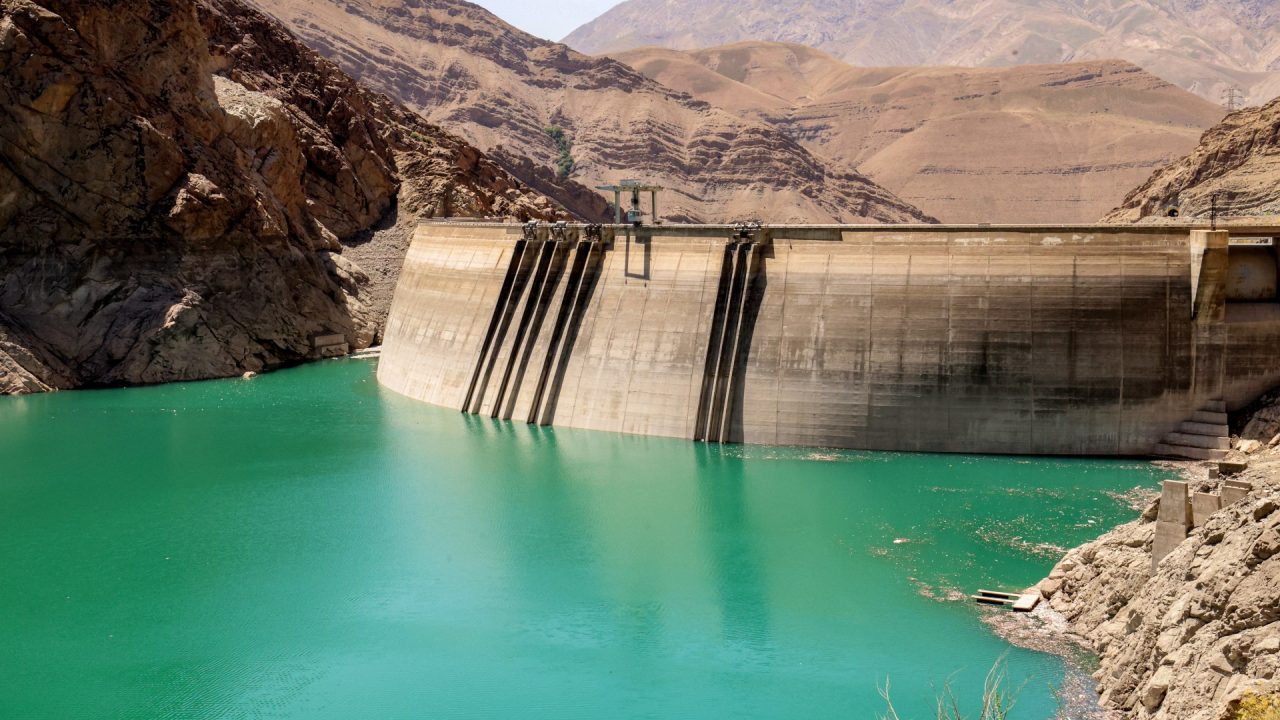
A New York Times report investigating potential connections between Iran’s dam network and its missile program has triggered intense criticism from Iranian officials and water experts. The controversy arises in the context of ongoing military tensions, with Washington threatening renewed action against Tehran. Iranian Foreign Ministry spokesperson Esmaeil Baghaei condemned the allegations as “baseless,” describing them as propaganda intended to justify strikes on vital civilian infrastructure. The criticism has also drawn parallels to the newspaper’s reporting during the lead-up to the 2003 US invasion of Iraq, where claims about weapons of mass destruction later proved unfounded.
The New York Times published the story on Tuesday, headlined “War May Answer Longtime Riddle of Iranian Dams Built for No Clear Reason.” The article cited researchers who noted geographical similarities between the locations of Iranian dams and sites targeted by US and Israeli air strikes. According to the report, some experts suggested that water projects may have been developed to support the country’s military buildup. However, the newspaper acknowledged that any such connection remains speculative due to the secrecy surrounding Iran’s missile program.
Critics fear that framing dams as potential military assets could provide a legal or moral pretext for targeting infrastructure essential to millions of civilians. US President Donald Trump has previously threatened that key Iranian infrastructure could be destroyed within three days. Political analyst Rami Khouri called the reporting “troubling,” arguing that the reliance on conditional language and speculation undermines journalistic credibility and supports “US-Israeli criminal attacks on Iran.”
Several experts quoted in the original article have publicly distanced themselves from its conclusions. Kaveh Madani, director of the United Nations University’s water institute, wrote on social media that “spatial proximity is not causality” and that the narrative was irresponsible journalism with dangerous consequences for civilian water infrastructure. Nima Shokri, a water-security expert at Hamburg University of Technology, clarified that the proximity of dams to military targets does not establish their construction purpose or justify attacks. Amir Aghakouchak, a water expert at the University of California, Irvine, echoed these sentiments, emphasizing that dams are critical for water supply, food security, and energy, and must not become targets of military action.
The New York Times defended its coverage through spokesperson Nicole Taylor, who stated that the report accurately cited analysis by seven international experts. Co-author Sanam Mahoozi added that neither she nor the report endorses attacks on infrastructure. Iranian Foreign Minister Abbas Araghchi dismissed the allegations as “rubbish” and accused pro-Israel media of promoting narratives similar to those used before the 2003 Iraq war. Iran’s parliament speaker, Mohammad Bagher Ghalibaf, warned that such logic could be applied to any civilian facility near US or Israeli bases, characterizing the reporting as preparation for further attacks on civilian infrastructure.


I actually think the reporting was reasonable. Why else build massive concrete structures near military targets without a civilian purpose?
Water security is a humanitarian issue. Linking it to missile programs is a dangerous slippery slope that puts civilians at risk.
The Iraq comparison feels incredibly heavy-handed. Journalists should not be punished for investigating complex geopolitical links.