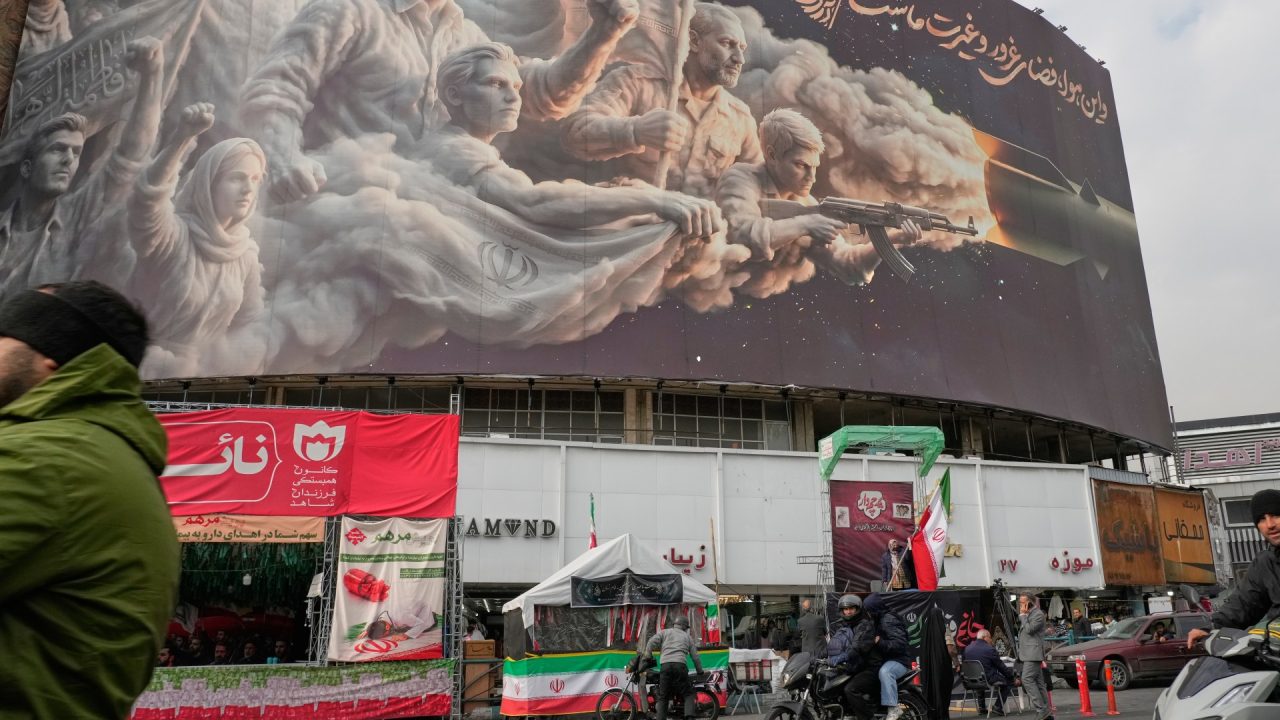
The conflict between the United States, Israel, and Iran is increasingly being characterized by experts as a “frozen conflict,” a state where active hostilities have paused or diminished without a formal peace settlement. U.S. President Donald Trump has signaled that Washington has no immediate rush to end the war, stating on Truth Social that the U.S. no longer needs a deal with Iran and that the era of negotiations has passed. He emphasized that the U.S. has secured access to Iranian financial assets and control over the Strait of Hormuz, while directing Vice President JD Vance to focus on domestic issues regarding corruption in Democratic-run cities.
This shift in messaging comes amid mixed signals from the administration. Trump recently declared the war “militarily… effectively over” but warned he would not hesitate to resume strikes if diplomacy failed. His Republican Party suffered significant losses in the November 3 midterm elections, which Vice President Vance attributed to the unpopularity of the war and its economic consequences, particularly rising fuel prices. Observers note that this internal disagreement suggests some members of the administration are comfortable leaving the conflict unresolved, maintaining the naval blockade of Iranian ports and continuing sanctions.
A frozen conflict is defined by large-scale fighting ceasing while underlying issues remain unresolved, leading to hardened front lines or de facto realities. In this case, the U.S. is blockading Iranian ports, while Iran targets ships in the Strait of Hormuz and missiles US assets in neighboring countries. Both sides maintain forces in place, often separated by ceasefires or buffer zones. Similar dynamics occurred in conflicts in Transnistria, Abkhazia, South Ossetia, and Nagorno-Karabakh during the 1990s and 2000s. According to trade intelligence firm Kpler, shipping through the Strait of Hormuz has dropped sharply, with only five commodity vessels crossing on November 7 and none on November 8, despite U.S. claims of escorting ships.
Iranian President Masoud Pezeshkian announced on November 9 that Supreme Leader Mojtaba Khamenei had ordered officials to end the state of “neither war nor peace.” While Iran is ready to negotiate, it will not yield to coercion. Parliament Speaker Mohammad Bagher Ghalibaf, Iran’s chief negotiator, stated that the ball is now in the American court to accept Iranian terms for talks or continue the war. Iran has set seven conditions for a formal ceasefire, including lifting the U.S. naval blockade, sanctions relief, and the release of frozen funds. However, Iran’s economy is under severe strain, with the official statistics agency reporting a 10.1 percent year-on-year shrinkage between March and June, and the central bank citing 83.8 percent annual inflation in September.
For Washington, serious escalation carries heavy political risk. A Chicago Council on Global Affairs survey in October found that nearly 70 percent of Americans believed the war was not worth fighting. With support for the war at 31 percent and Republicans losing control of Congress to the Democratic Party, a ground operation is considered unsellable by analysts. Yet ending the war on current terms is also unattractive, as lifting the blockade and leaving the Strait of Hormuz under contested Iranian control would leave Trump with little to show for eight months of war. Tallha Abdulrazaq, a researcher at the University of Exeter’s Strategy and Security Institute, noted that Trump wants a deal far exceeding the 2015 Joint Comprehensive Plan of Action (JCPOA), a position that leaves him stuck between a rock and a hard place, as Iran is unwilling to accept such terms.
Historical precedents suggest such stalemates can last for decades, as seen in the Korean Peninsula where no peace treaty followed the 1953 armistice. Eastern Ukraine and Nagorno-Karabakh also illustrate how frozen conflicts can persist until a shift in the balance of power triggers a resurgence. Analysts warn that the siege in and around the Strait of Hormuz will hold only while it remains cost-effective for the U.S. Fears of American casualties, a spike in fuel prices, or intelligence suggesting Iran is moving its highly enriched uranium could break the stalemate. With Republicans holding slim majorities until January, Trump has a narrow window for escalation, but outside that period, the White House may prefer a “no war, no peace” scenario, betting that the U.S. can absorb more economic pain than Iran.

The Strait of Hormuz is the world’s lifeline. A frozen conflict there is an economic nightmare.
Trump saying negotiations are over while demanding better terms is pure contradiction. Nobody believes him anymore.
Five vessels crossing Hormuz? That is effectively a total blockade. This changes global shipping costs massively.
Historically, frozen conflicts last for decades. We should expect this tension to simmer for years.
Vance blaming the war for election losses is bold. They need to own up to their failures.
Iran’s inflation is terrifying. Even if they win diplomatically, their economy might collapse before talks start.
Seventy percent against the war? That explains why the administration is stuck in this weird stalemate.
Is this actually the end of the war or just a pause? The ambiguity worries me.
Frozen conflicts just bleed everyone dry. Economic strain means regular people suffer while politicians play chess.