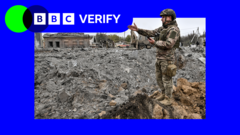
Ukrainian authorities have accused Moscow of deliberately targeting rescue and recovery operations in the village of Komyshuvakha, following a series of strikes that left at least 72 people dead. The incident, described by Kyiv as a ‘double-tap’ attack, occurred on 2 November when Russia is alleged to have struck a humanitarian aid center twice in succession.
According to the State Emergency Service of Ukraine (DSNS), the second impact involved the use of a 3,000kg aerial bomb while residents had taken shelter. The DSNS reported that emergency workers were forced to suspend operations repeatedly due to threats of further shelling. During the incident, three police officers, four workers, and two rescue dogs were injured, and five vehicles were damaged.
Oleksiy, an intelligence officer with Ukraine’s Security Service (SBU), stated that rescue vehicles were clearly marked and accused Russian forces of intentionally destroying humanitarian equipment. He described the ongoing attacks on the village’s infrastructure and residents as ‘outright terror against civilians’ intended to make life on the front line impossible.
Verified footage analyzed by BBC Verify shows police officers warning of impending second strikes on radio channels while rescue workers attempted to free casualties from rubble. Experts Trevor Ball and Chris Proops confirmed that the craters observed are consistent with the FAB-3000 glide bomb, a weapon capable of destroying underground structures. Fragments of the guidance kit found at the scene support this assessment.
International law experts indicated that knowingly attacking rescue workers constitutes a war crime. Professor Ben Saul of the University of Sydney noted that the actions appear to be either a deliberate attack on civilian objects or an indiscriminate attack, both of which are violations of international humanitarian law. The Russian Ministry of Defense did not respond to specific requests for comment regarding the Komyshuvakha strikes, though a general statement on 2 November claimed targeting of energy and transport infrastructure.


Leave a Reply