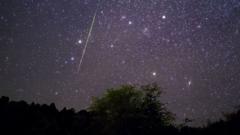
The annual Leonid meteor shower is set to reach its peak activity on Tuesday night, November 17, presenting UK observers with the optimal opportunity to witness the celestial event this year. While the shower will remain visible until November 30, forecasters anticipate the highest frequency of meteors during the night leading into the early hours of Wednesday.
Skywatchers can expect to see between 10 and 15 meteors per hour at peak. These streaks of light are generated by dust particles from Comet 55P/Tempel-Tuttle, which leaves a trail of debris as it orbits the Sun. The particles enter Earth’s atmosphere at speeds reaching 71 kilometers (44 miles) per second, making the Leonids the fastest moving meteors currently visible in the night sky.
Experts recommend selecting a safe, dark location away from light pollution to maximize visibility. The meteors are easily visible to the naked eye, requiring no binoculars or telescopes. To improve detection chances, observers should allow their eyes approximately 20 to 30 minutes to adapt to the darkness. Although meteors can appear anywhere in the sky, the radiant point is located near the head of the constellation Leo. Since Leo does not rise until around midnight, the ideal viewing window opens after midnight and continues into the pre-dawn hours.
Weather conditions will play a decisive role in viewing quality. The Moon sets at approximately 23:30 GMT on Tuesday, reducing reflected light and improving visibility after midnight. The far north of Scotland, including Orkney and Shetland, is expected to have the best chances, with largely broken cloud cover and minimal rain. Parts of Northern Ireland, Wales, the Midlands, and southern England will experience clear spells, though clouds and occasional rain may persist. In contrast, much of Scotland outside the far north and parts of northern England face limited opportunities due to widespread cloud and damp conditions.
Comet Tempel-Tuttle dust is fascinating. Does the debris track change much year to year for us?
Always fun to pack hot drinks and blankets for these events. Nature really is the best movie.
Heading up to Shetland tonight. Hoping the broken clouds clear out so I can see the radiant point.
Did not realize the moon sets early Tuesday. That definitely makes for a much darker night.
Eleven meters per second is fast! Glad I do not need a telescope to see this annual show.
Living in Manchester, so cloudy skies are a problem. Wish the best views were not just in Scotland.
My eyes took thirty minutes to adjust last year. Anyone know if binoculars actually help here?