A third U.S. Navy aircraft carrier has arrived in the Gulf region, intensifying concerns over a renewed escalation in the conflict between Washington and Tehran. The USS Theodore Roosevelt joined the USS George H.W. Bush and the USS George Washington on Sunday, bolstering American military presence despite President Donald Trump’s recent remarks suggesting the war was near its end.
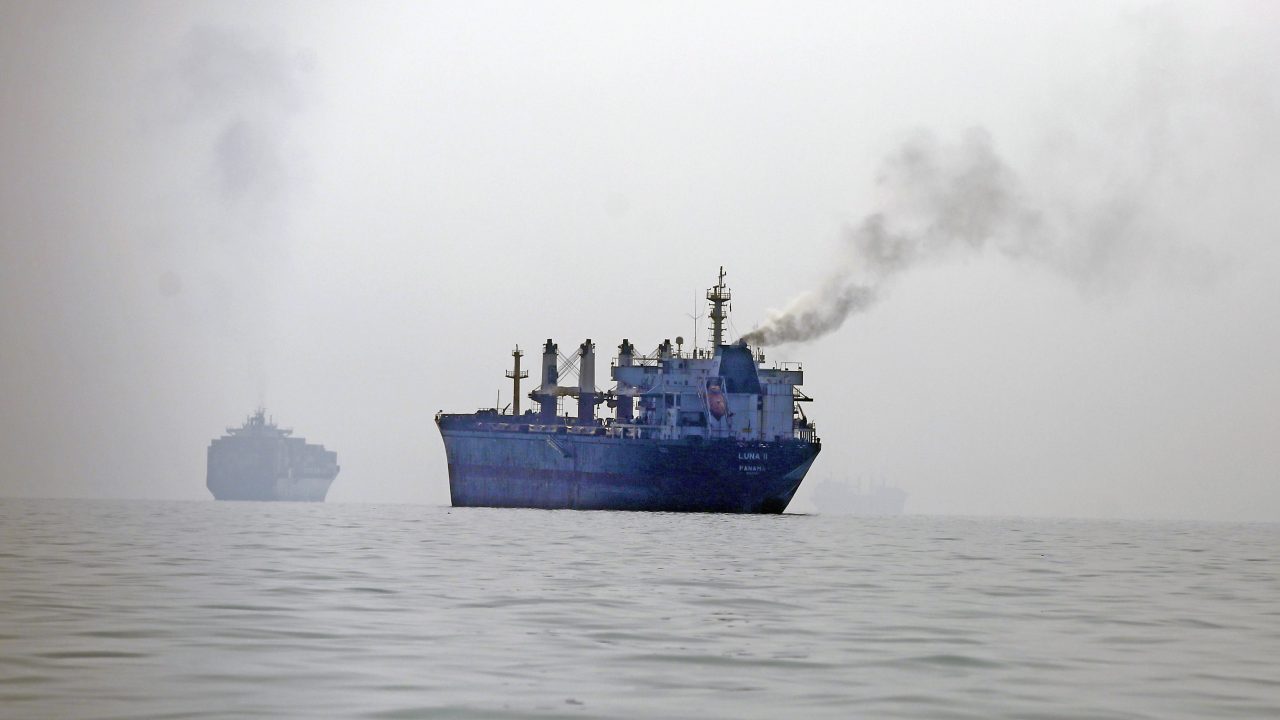
Iranian authorities have escalated threats against commercial shipping and U.S. forces. The Revolutionary Guards Navy warned shipping companies that the U.S.-backed southern route through the Strait of Hormuz is effectively closed, describing the waterway as a “minefield of fire.” Brig. Gen. Mohammad Akrami-Nia, a spokesperson for the Iranian Army, stated that the strait would remain closed until Iran’s conditions are met.
Maritime incidents have increased in the region. The U.K. Maritime Trade Operations reported that a tanker was struck by an unidentified projectile in the Strait of Hormuz on Tuesday, causing a fire. Separately, the Iranian navy claimed that four oil tankers hit mines and caught fire in the eastern part of the strait over the previous 24 hours. The U.K. agency urged vessels to exercise caution and report suspicious activity, without attributing responsibility for the projectile strike.
Heightened security concerns in the United States have also emerged. CNN reported that new U.S. intelligence indicated Iran is developing plans that could target senior administration officials with a chemical weapon in Washington, D.C. However, U.S. officials characterized this as an effort to develop defensive options rather than evidence of an imminent attack. Treasury Secretary Scott Bessent recently relocated to military housing amid the threats, though a White House spokesperson stated that there are no credible threats to the homeland at this time.
Financial markets reacted with relative stability, with Brent crude futures dropping 0.7% to $91.80 per barrel and U.S. West Texas Intermediate futures falling 0.7% to $85.10 per barrel during Asian trading on Tuesday.
The broader conflict, which began in late February with joint U.S. and Israeli strikes on Iran, has since seen retaliatory attacks by Tehran on Israel and Gulf states hosting American bases. Indirect negotiations between the two rivals, mediated by Qatar, have stalled. Iran recently claimed to have launched six drones at a U.S. air-defense radar in Bahrain, a move condemned by Secretary of State Marco Rubio, who reaffirmed Washington’s commitment to Gulf security.
Analyst Ian Bremmer, president of Eurasia Group, warned that Iran is likely to continue escalating attacks on shipping to pressure Washington into concessions, such as lifting the naval blockade on southern ports and sanctions. Bremmer argued that the assumption Iran will eventually succumb to economic pressure is a misread of the Iranian leadership’s capacity to resist, predicting that Iran will intensify efforts to disrupt the Strait of Hormuz over the coming year.



I just want safe travel through the Gulf. The uncertainty is making planning international projects nearly impossible for us.
Did anyone else notice the drone attack on the radar in Bahrain? That was a huge step up from before.
Negotiations stalled again. It feels like we are just escalating without any real diplomatic off-ramp in sight.
Iran calling it a minefield of fire is terrifying rhetoric. Shipping companies are right to worry about this.
I find it suspicious that the White House claims no homeland threats while the Treasury Secretary moves to a bunker.
Who is actually paying for all these deployments? The American taxpayer, obviously, while the markets stay oddly calm.
The oil prices barely dipped? That seems counterintuitive with such high military tension in the Strait of Hormuz.
Three carriers is massive. My insurance premiums for shipping goods are going to skyrocket next quarter. Yikes.