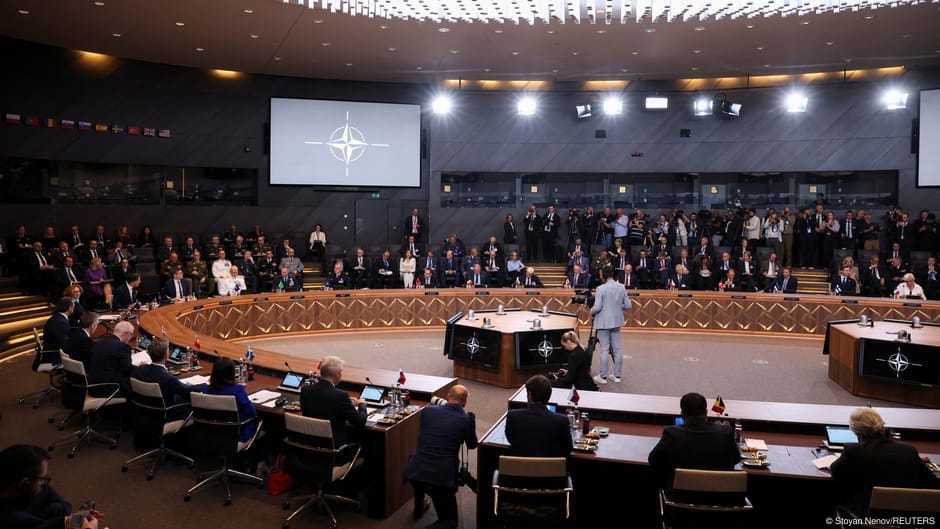
Russia has reportedly presented a comprehensive demand requiring NATO to reverse its post-Cold War expansion in Europe, effectively returning the alliance’s military footprint to its 1997 configuration. According to reports from The New York Times, a document dated November 10, shared by Russian representatives during talks in Abu Dhabi concerning the war in Ukraine, calls not only for a halt to Western arms deliveries to Ukraine but also for the withdrawal of NATO troops and bases from Central and Eastern Europe.
The 1997 benchmark refers to the period before Poland, the Czech Republic, and Hungary formally joined the alliance. While these nations were invited at that time, they did not become members until two years later, and subsequent expansions have brought the total membership to 32 states. The Kremlin’s proposal does not explicitly demand that Eastern European countries leave NATO, but it insists on the removal of allied military infrastructure from those territories.
European leaders have strongly rejected the proposal. Polish Prime Minister Donald Tusk stated that new security rules for Europe will not be established over the heads of Poland and the continent. Bulgarian President Rumen Radev described the idea of a NATO withdrawal as “unthinkable and unrealistic,” while Estonian Prime Minister Kriest Michal asserted that Europe’s security order is functioning well and is not subject to discussion with Russia.
Security experts warn that such a withdrawal would significantly weaken the defense capabilities of post-1997 NATO members. The Baltic states currently rely on rotating NATO air policing missions for fighter jet coverage, a capability that has been integrated into broader air defense efforts since 2026. Additionally, plans for a German brigade in Lithuania, expected to be operational by the end of 2027, and the expansion of Romania’s Mihail Kogalniceanu Air Base would have to be halted.
Proponents of the current security architecture argue that the physical presence of allied troops is essential for deterrence, ensuring that potential aggressors believe NATO can intervene quickly and effectively. While Article 5 guarantees collective defense, critics of the Russian proposal suggest that removing forward deployments could embolden Moscow by reducing the perceived risk of an attack. International agreements, including the 1997 NATO-Russia Founding Act and the 1990 Charter of Paris, affirm that states retain the freedom to choose their own security alliances without external veto.


The 1990 Charter of Paris settled this ages ago. You cannot veto sovereign choices of neighboring countries, period.
This headline makes me nervous. Does this mean our local air defense plans are officially paused or under review again?
It’s surprising how many people still think NATO expansion was just a political move. It really stabilizes the region now.
Removing troops from the Baltics is security suicide. Deterrence works because the force is physically there, not just on paper.
Abu Dhabi negotiations are fascinating. I just hope the middleman actually listens to the smaller European voices properly.
My grandfather lived under Soviet influence. Demanding we retreat to 1997 feels like a return to old, unsafe days.
I didn’t realize the 1997 cutoff specifically excluded Poland and Hungary. That context changes how I view the whole debate.
Who actually signed off on this document? It feels like a tactic to stall rather than a genuine negotiation attempt.
Rolling back borders is like erasing history. Eastern Europe earned their membership through years of hard work and democratic progress.