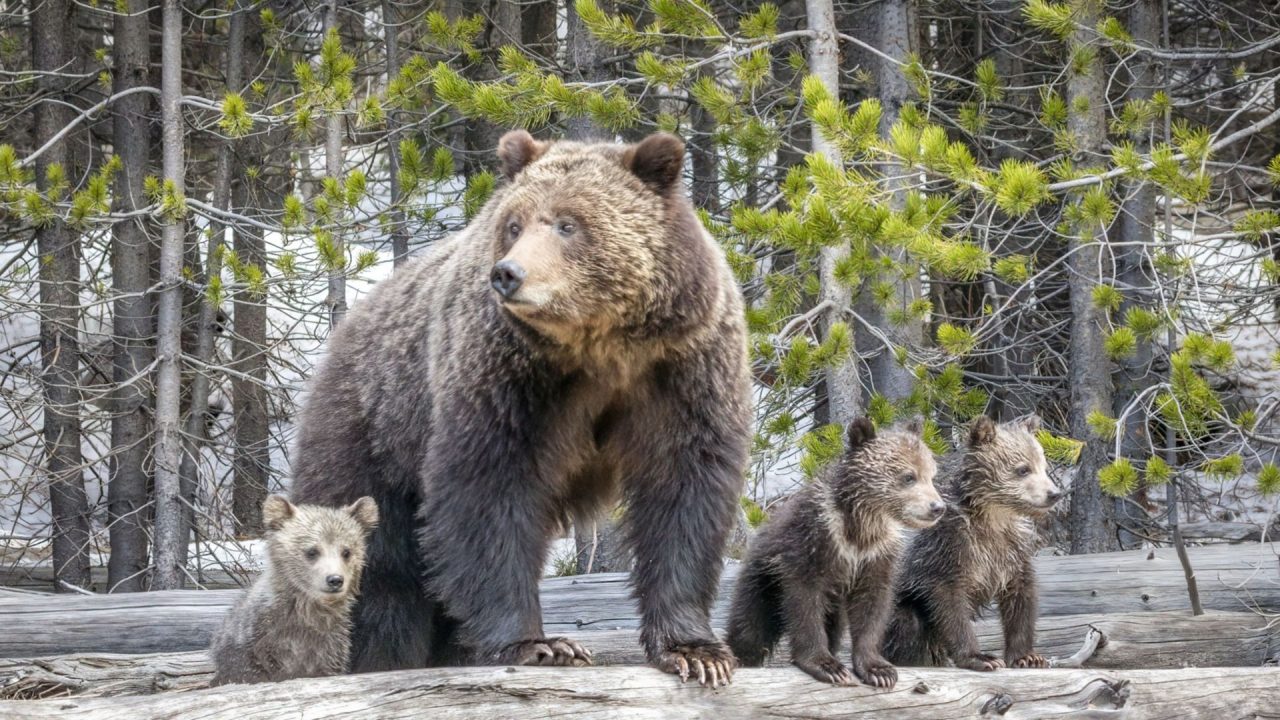
New research suggests that California may hold sufficient habitat to support a viable population of grizzly bears, contradicting long-held assumptions that the species cannot survive in the state. The findings, presented in an excerpt from Peter S. Alagona’s upcoming book “Start With a Bear,” question the methods used by the U.S. Fish and Wildlife Service (FWS) in its grizzly recovery plans.
Alagona, a historian and ecologist, argues that federal habitat models have suffered from a structural bias that prioritizes current bear ranges while excluding other historically suitable areas. He notes that the 1993 Recovery Plan identified six areas where grizzlies were still present or had recently lived, but pledged to assess other regions within their historical range. Despite this commitment, the FWS delayed a comprehensive analysis for nearly three decades.
In 2019, after settling a federal lawsuit, the FWS conducted the delayed analysis using a simplified model. The service concluded that neither the San Juan Mountains in Colorado nor the Sierra Nevada in California contained enough secure habitat to support a population. Critics, including David Mattson, who pioneered the concept of secure habitat, argued that the FWS models were flawed, focusing on artificially small areas and neglecting key ecological factors.
However, Mattson and colleague Troy Merrill later ran a more detailed model for the southwestern United States, identifying seven potential recovery areas with over 45,000 square kilometers of suitable habitat capable of supporting more than 1,000 bears. This research cast doubt on the narrative that grizzly extinction in California was inevitable.
A 2024 study co-authored by Alagona and led by Alex McInturff of the University of Washington further analyzed potential grizzly habitat in California. The team ran four different computer models, including one based on historical sightings, two based on brown bear habits in other regions, and one analyzing puma habitat preferences. Surprisingly, approximately one-third of California appeared as suitable habitat across all four models.
The study identified the southern Sierra Nevada, particularly around Sequoia-Kings Canyon National Park, and the Northwest Forest near the Oregon border as high-quality habitats. While California has a dense population of nearly 40 million people, 95% of its residents live in urban areas, leaving large portions of the state with lower human density than the Northern Rockies. Outside urban and agricultural zones, California possesses more protected land than any state except Alaska.
Although the research indicates that California likely has enough wilderness to support one or more viable grizzly populations, it does not address the social dimension of reintroduction. Alagona notes that while the ecological potential exists, it remains unclear whether Californians are willing to coexist with grizzly bears that might wander outside protected wilderness boundaries.

The models seem to ignore how much development has fragmented these corridors. Ecological potential does not equal a guaranteed population.
I live near the Sequoias and already worry about hiking safety. Would this actually increase tourism or just scare locals?
It is wild to think California has more protected wilderness than most places we expect bears to live. Hopes for the species rise.