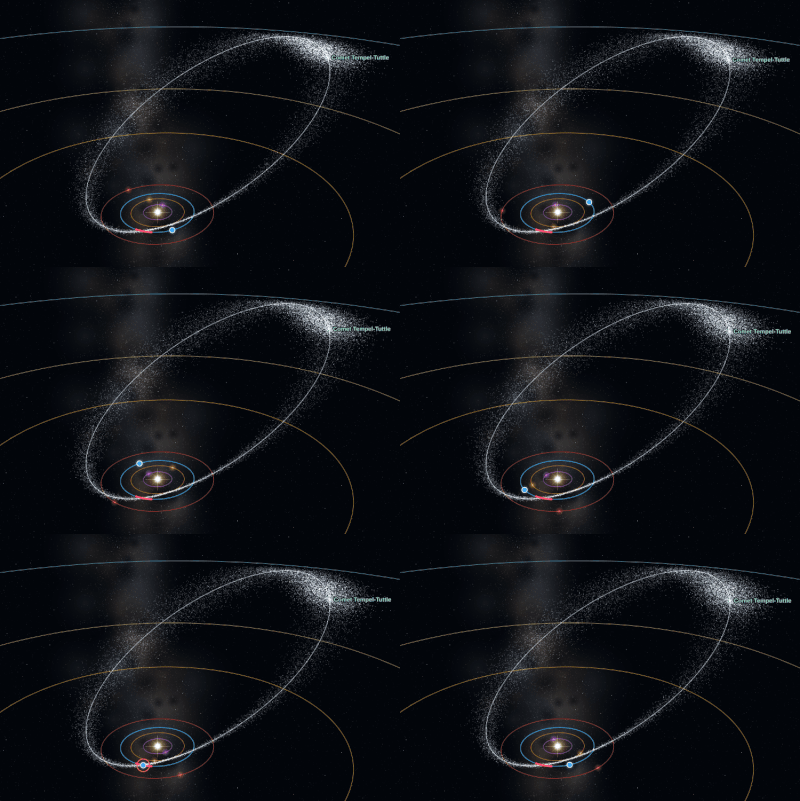
Earth is set to cross the debris trail of Comet Tempel-Tuttle this week, triggering the annual Leonid meteor shower. According to the International Meteor Organization (IMO), the activity is expected to peak on the night between November 17 and 18, around 23:45 GMT.
These meteors are among the fastest in the sky, traveling at approximately 71 kilometers (44 miles) per second. They often appear as bright streaks and can leave glowing trails that persist in the atmosphere for several seconds. While the shower is active from November 6 to 30, observers can expect up to about 15 meteors per hour under ideal dark-sky conditions.
The Leonids are named after the constellation Leo, the radiant point from which the meteors appear to originate. This constellation rises in the east around midnight, making the period between midnight and dawn the optimal time for viewing. The moon will be at its first quarter phase on November 17 and sets around midnight, minimizing interference for the rest of the night.
What distinguishes the Leonids from other major showers, such as the Perseids or Geminids, is their speed and historical association with meteor storms. Every 33 years, when Comet Tempel-Tuttle passes close to the sun, it releases a denser stream of debris, potentially producing more than 1,000 meteors per hour. Notable storms occurred in 1833, 1966, and between 1999 and 2002. The next close approach of the comet is predicted for 2031.
The shower is visible from both hemispheres, though conditions are generally better in the Northern Hemisphere where Leo climbs higher in the sky. In the Southern Hemisphere, the best viewing window is the one to two hours before dawn. Observers are advised to find a location away from artificial light and allow about 20 minutes for their eyes to adjust to the darkness.


Planning a camping trip next weekend just to watch this. Hopefully the weather holds.
Tempel-Tuttle is always sneaky. You never know when the debris density will spike.
My kids will be asleep by the time the radiant rises. Sad reality of adulthood.
Living in the southern hemisphere here, so I need to stay up really late. Good luck.
Seventy-one kilometers per second sounds faster than a car crash, just pure energy.
Do I need a telescope or can I just lay on the grass? Usually the answer is no.
I saw the 2001 storm from my porch. It was terrifyingly beautiful, honestly.
The first quarter moon setting at midnight is actually perfect timing for these fast streaks.
Wait, the next big storm is in 2031? I better save some sleep for that night.
Fifteen per hour is decent, but I hope the light pollution doesn’t ruin my view.