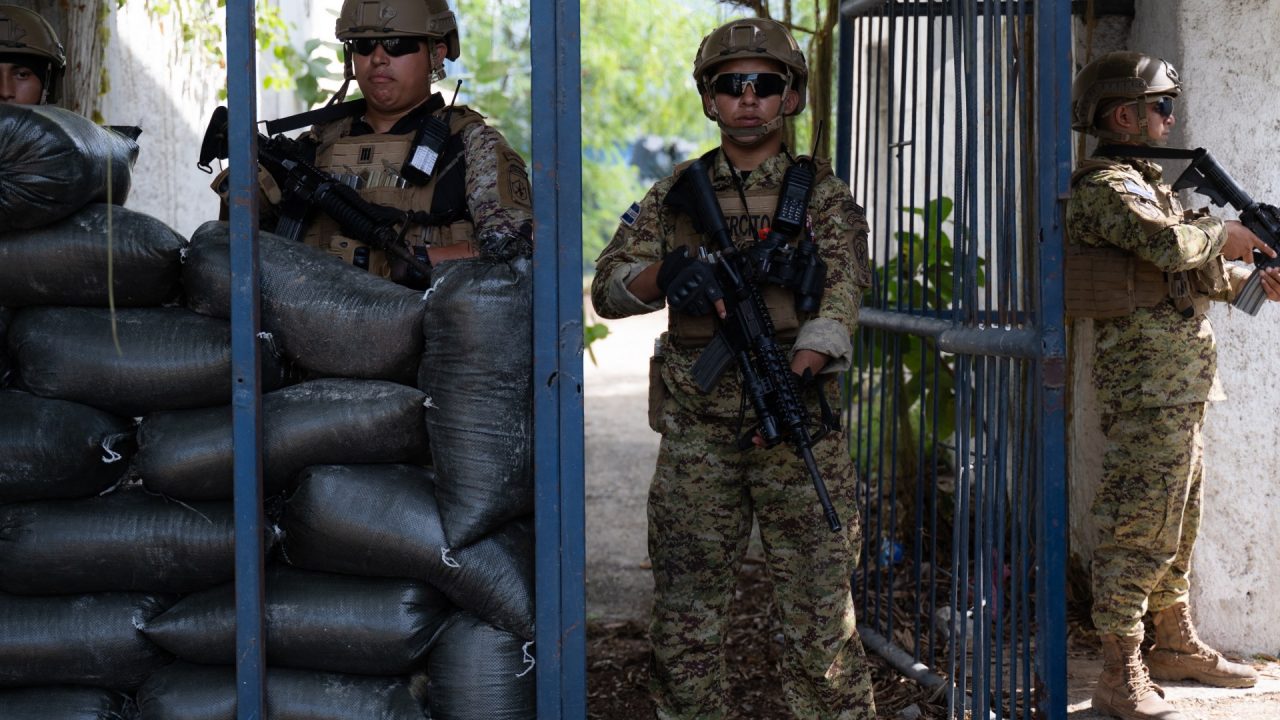
Protesters in several Haitian cities, including the capital Port-au-Prince, marched on Tuesday to express support for the deployment of Salvadoran troops, despite ongoing concerns that the external intervention could exacerbate instability in the Caribbean nation. Hundreds of demonstrators took to the streets carrying signs with slogans such as “Down with the gangs”.
Haiti has faced severe gang violence for years, a crisis that intensified following the assassination of President Jovenel Moise in 2021. The weakening of the central government allowed gangs to expand their influence. The current deployment was triggered by the October 18 kidnapping of four Salvadoran aviation technicians near Port-au-Prince, which prompted President Nayib Bukele to launch a military operation.
On Monday, El Salvador announced that it would withdraw its approximately 2,500 troops once the missing airmen were located. “If they reappear tomorrow, as President Bukele said, we will leave,” Salvadoran Security Minister Gustavo Villatoro stated. However, this announcement was followed by public displays of support from Haitian officials, including a visit to San Salvador by Haitian Justice Minister Patrick Pelissier, who thanked Bukele for the troop surge. Pelissier noted that Haitian and international security forces had recently regained control of the national football stadium, which gangs had occupied for years.
El Salvador has framed the mission as a rescue operation, with Bukele using social media to promote the offensive and claiming the discovery of human skulls in the stadium during the operation. The timeline for the withdrawal remains uncertain, particularly after Wilson Joseph, leader of Haiti’s 400 Mawozo gang, told The Associated Press that the four technicians are already dead. Joseph asserted that the abduction occurred in territory controlled by rival gang Chen Mechan, though he provided no evidence for his claims.
Bukele has popularized a “mano dura” or “strong hand” approach to security, a strategy credited with significantly reducing crime in El Salvador since his 2022 crackdown. However, critics warn that transplanting these hardline tactics to Haiti could lead to a backlash, increased instability, and risks to civilians. They also point to a lack of long-term planning for the deployment, suggesting that a sudden withdrawal could worsen the security situation. Additionally, Bukele is campaigning for a third term in El Salvador’s upcoming February presidential election, with analysts speculating that his actions in Haiti may serve as a campaign tool.
The Salvadoran intervention is the latest in a series of foreign involvements in Haiti, following the arrival of the United Nations-backed Gang Suppression Force in April. Gangs currently control over 80 percent of the capital region, and more than 22,000 people have died since 2022. UN reports indicate that more than half of the deaths in the first nine months of the year resulted from security operations, including 300 civilians, and approximately 2,000 people have been displaced since the Salvadoran troops arrived. Despite this, Justice Minister Pelissier stated that the Haitian government had not reported civilian casualties in the latest operations, describing them as professional efforts to avoid human rights violations.


Classic Bukele political theater. Using a crisis abroad to boost his domestic re-election campaign is bold.
Does anyone know if the civilian casualty reports are accurate, or is the government just hiding the truth?
Surprised to see public support for foreign troops, given the usual distrust of international interventions in our region.
I am skeptical that a quick military exit will actually fix deep-rooted gang control in the streets.