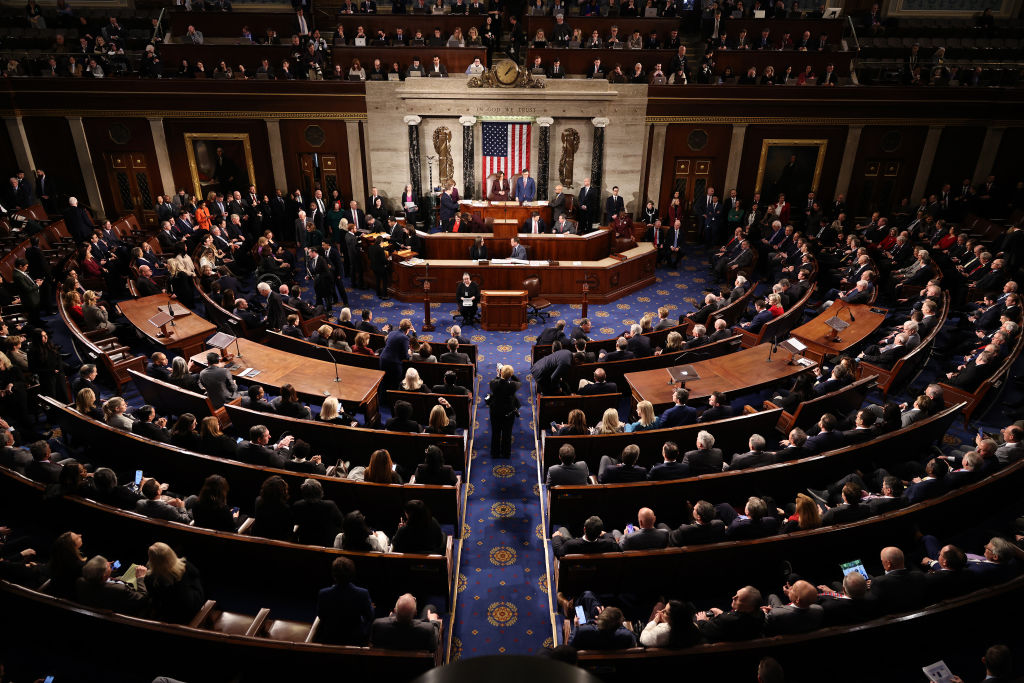
Following their victories in recent midterm elections, Democrats have acquired the political leverage to potentially neutralize the U.S. Electoral College through the National Popular Vote Interstate Compact. By securing control of both chambers of the state legislature and the governorship in Pennsylvania, Michigan, Arizona, Wisconsin, and Nevada, the party now holds the key to reaching the necessary majority to activate the compact.
While formally abolishing the Electoral College requires a constitutional amendment, the compact offers a workaround. It pledges that member states will award their electoral votes to the candidate who wins the nationwide popular vote, rather than the state-level winner. Currently, 18 states and the District of Columbia, representing 222 electoral votes, are already part of the agreement. The compact only takes effect when its members collectively hold at least 270 electoral votes, the majority needed to win the presidency. The five new states account for 61 electoral votes, which is more than sufficient to cross the threshold if they choose to ratify the measure.
The 2016 and 2000 presidential elections, in which the winner of the popular vote lost the Electoral College, highlighted the disparities in the current system and spurred the creation of the compact in 2006. Proponents argue that the agreement would ensure the candidate with the most votes nationally becomes president, thereby making the election more representative. Legal experts are divided on its constitutionality. Harvard Law School Professor Lawrence Lessig describes the compact as clearly permissible under the Constitution, which grants state legislatures the power to determine how to appoint electors. However, Jennifer Hendricks, a law professor at the University of Colorado Boulder, notes that opponents argue it violates the Compact Clause, which prevents states from forming agreements that threaten federal supremacy, though she does not believe the compact meets the bar for such a challenge.
If enacted, the compact would fundamentally alter presidential campaigning. Currently, candidates focus their efforts on a handful of swing states. Under a national popular vote system, experts say candidates would need to compete for voters in all 50 states and D.C., shifting the strategy from focusing on nine key states to all 51 jurisdictions. Yale Law Professor Akhil Amar, who co-authored the initial concept for the compact, warns that this shift could make elections significantly more expensive and notes that the partisan nature of the agreement is a potential flaw. He suggests that without bipartisan support, one party may have an incentive to undermine the system. His brother, Vikram Amar, suggests that delaying implementation until both parties recognize its fairness could help mitigate these concerns and potentially build momentum for a constitutional amendment to abolish the Electoral College entirely.
Great context on the 270 vote threshold. It is wild that we are this close to changing everything via state laws.
It feels partisan to me. Why would one party unilaterally change the rules like this without bipartisan agreement?
This will make campaigns way more expensive. Amar is right that candidates will have to visit every single state now.
Legal experts are divided, so expect endless lawsuits. The compact clause issue is going to be a nightmare to resolve.
Wait, does this mean Pennsylvania actually gets to choose the president now? I am genuinely shocked by this shift.
Finally! The 2016 election proved our current system is broken. I hope these new states follow through on the compact.