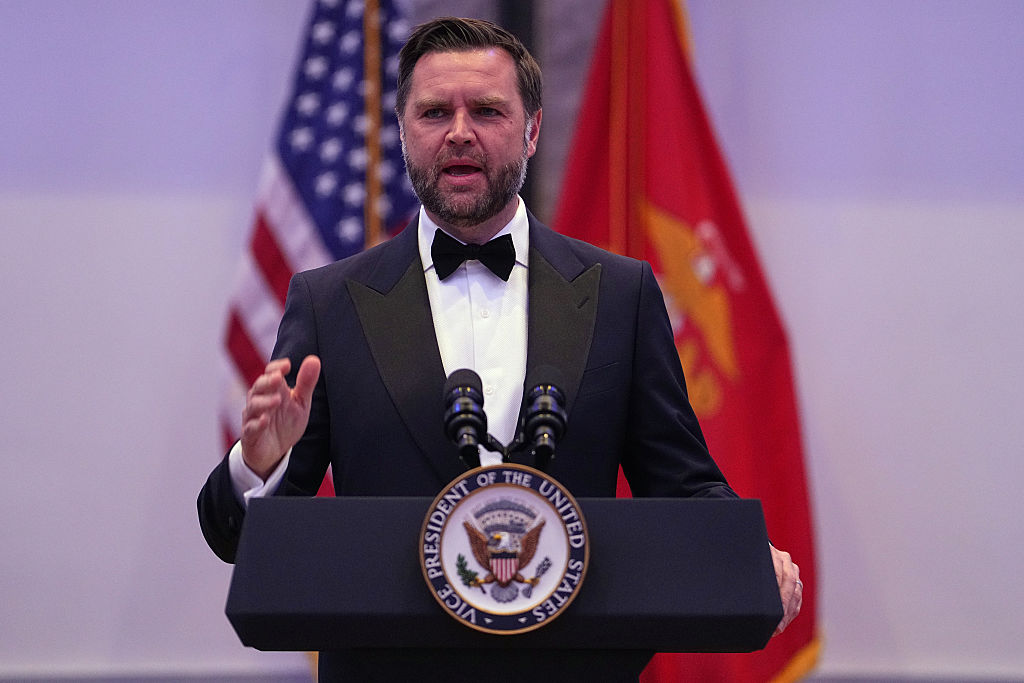
Democratic gains in the recent midterm elections have presented a significant challenge to Vice President J.D. Vance’s potential run for the 2028 presidential nomination. Political analysts indicate that the sweeping nature of the Democratic victory has been interpreted as a severe rebuke of President Donald Trump, potentially complicating Vance’s prospects as a leading Republican contender.
Vance has consistently topped recent polls as the most likely recipient of the Republican nomination, with a YouGov/Economist survey showing that 40% of respondents would support him if the primary were held immediately. However, experts note that his close association with the current administration has become a liability in the wake of the election results. Joel K. Goldstein, a specialist on the Vice Presidency, described the midterm outcome as a dramatic rejection of the administration that went beyond typical historical trends, leaving Vance with what he termed the “baggage” of his office.
The difficulty in separating himself from the President was highlighted by comparisons to former Vice President Kamala Harris, who struggled to establish an independent identity during her 2024 campaign due to public dissatisfaction with the Biden administration. Costas Panagopoulos, a professor of political science at Northeastern University, noted that Vance faces a similar “rock and hard place” scenario, exacerbated by the fact that he is currently serving in the administration rather than being a former official with some temporal distance from the role.
Following the election, Vance attempted to distinguish his political stance from the President by attributing the Republican defeat largely to the unpopularity of the Iran conflict. In a post on social media, Vance stated that while economic messaging may have been insufficient, the primary reason for the loss was the war, a sentiment he said the President had acknowledged. Although Trump partially agreed with this assessment, noting the impact on gasoline prices, he defended his decision to launch the military action.
Political consultants suggest that this effort may be insufficient. Barrett Marson, a GOP consultant, characterized Vance’s public statements as gentle pushback and advised that a more substantial course correction is necessary to mitigate the damage to his electability. Experts believe that Vance will need to demonstrate a more decisive departure from the President’s policies or focus on delivering tangible results regarding economic affordability to remain competitive in a general election. Until then, his strong credentials within the Republican base may not translate into broad electability if he remains viewed as a loyalist to the Trump brand.
He needs to stop playing defense and start showing real leadership. Gentle pushback won’t save his career.
Forty percent support sounds high, but can he actually win a general election with that kind of baggage?
Blaming the Iran conflict feels like a cop-out. The economy was already shaky before that mess started.
Comparing him to Harris is fair. They both inherited a struggling administration and failed to escape its shadow quickly enough.
Vance is stuck in the crosshairs. If Trump is unpopular, his VP carries the same guilt by association.