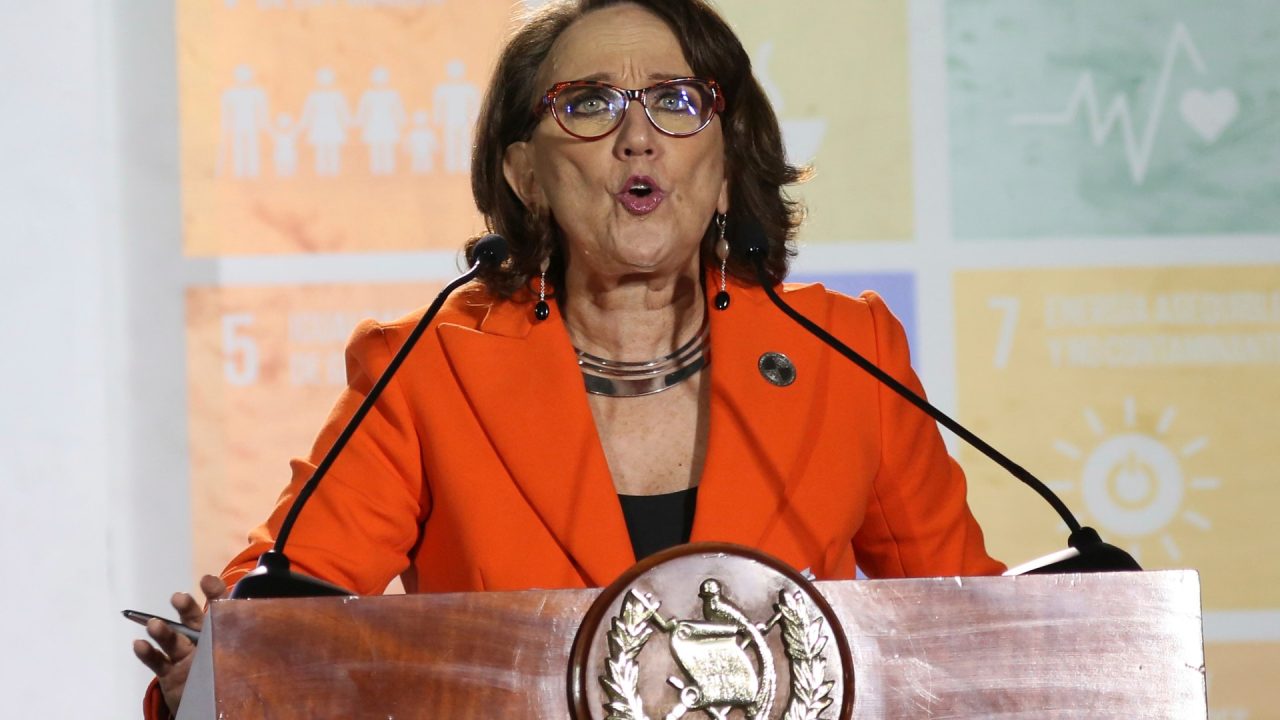
The competition to succeed outgoing United Nations Secretary-General Antonio Guterres has entered a critical phase, with global powers clashing over candidates as the December 31 deadline approaches. The process, marked by opacity and intense geopolitical maneuvering, has raised concerns that the organization could face a leadership vacuum for the first time in its history.
Eight nominees are currently in the running, a field that has been complicated by the recent inclusion of Emirati diplomat Lana Nusseibeh and Turkish candidate Feridun Sinirlioglu. No candidate has yet secured universal support from the five permanent members of the UN Security Council (UNSC), who possess veto power. According to secret polls conducted by the council, Costa Rican diplomat Rebeca Grynspan currently leads as a frontrunner, though she faces opposition from the United States and Russia due to her previous stances on issues such as the Black Sea grain deal and Israeli actions in Gaza.
Grynspan, who heads the UN Conference on Trade and Development (UNCTAD), is viewed as a continuity candidate but is under pressure to demonstrate willingness for institutional reform. Analysts note that while she has engaged in lobbying efforts with key powers, including a meeting with Russian Foreign Minister Sergei Lavrov, overcoming the specific objections of Washington and Moscow remains a significant hurdle.
Other contenders include Rafael Grossi, the Argentine head of the International Atomic Energy Agency (IAEA), who finished second in recent polls but faces scrutiny over his alignment with US policy. Additional candidates from Latin America, such as Guyanese diplomat Carolyn Rodrigues Birkett, have received mixed or negative signals in straw polls, with Birkett drawing attention for labeling Israeli actions in Gaza as “genocide.”
The late entries of Nusseibeh and Sinirlioglu have further fractured the consensus-building process. While Nusseibeh is reportedly favored by the US and Russia, her candidacy faces skepticism from China regarding alleged UAE involvement in the Sudan conflict. Sinirlioglu, meanwhile, is expected to face opposition from Greece and other council members.
Experts describe the current contest as a reflection of deepening geopolitical tensions and a multilateral system under strain. The UN itself is grappling with a financial crisis and criticism from US President Donald Trump. While previous elections have occasionally extended into December, analysts warn that a prolonged impasse could weaken the organization’s operational capacity. If no successor is appointed by year’s end, the UN Charter does not provide for an automatic interim leader, requiring ad hoc agreements among UN bodies to manage the transition.
Did anyone else notice the financial crisis mentioned? They are fighting for the job while the UN is broke.
It is wild that the biggest global institution is paralyzed by P5 vetoes. The whole system is broken right now.
A leadership vacuum at the UN would be disastrous. They really need to find a compromise candidate before year-end.