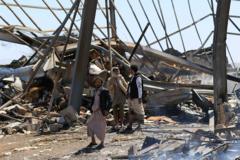
Iran-backed Houthi forces in Yemen have compelled the internationally recognised government’s military to pull back from key sections of the Red Sea coastline to fortify their interim capital, Aden. This military retreat represents a significant strategic shift in the ongoing conflict, raising concerns about escalating tensions in the Middle East and broader disruptions to global supply chains.
Yemen’s geographic position at the southern tip of the Arabian Peninsula places it adjacent to the Bab al-Mandab Strait, a critical maritime chokepoint that typically facilitates approximately 12% of global trade. Although the Houthis assert that they do not intend to threaten commercial shipping, their active conflict with Saudi Arabia has rendered the waters hazardous for oil tankers. This development follows a broader regional escalation in which Tehran effectively blocked the Strait of Hormuz after a war with the US and Israel began in February, leading to a surge in oil prices and increased inflationary pressure worldwide.
Saudi Arabia initially mitigated these risks by rerouting oil exports via an overland pipeline to the Red Sea port of Yanbu. However, a breakdown in a temporary truce with the Houthis in July resulted in drone strikes on the pipeline infrastructure, prompting the rebels to launch missile and drone attacks across Saudi territory. On the ground, the Houthis seized the initiative with a rapid advance down the Red Sea coast, forcing a chaotic retreat by the Yemeni army. Currently, the rebels are reported to have full control over the Bab al-Mandab Strait and surrounding offshore islands.
Nicholas Hopton, former British Ambassador to Yemen and Iran and current director-general of the Middle East Association, noted that the decision to prioritise the defence of Aden suggests the war is not progressing well for the Saudi-backed government. He warned that if Aden, a city of roughly 1.25 million people, falls to the Houthis, it would likely intensify the regional crisis and further destabilise the global economy.
Conversely, Mohammed al-Basha of the US-based risk advisory firm Basha Report believes the Houthis will face significant challenges in capturing the heavily fortified city. He stated that an urban offensive would likely result in high casualties and expose rebel forces to air power. Al-Basha suggested that the Houthis are likely seeking a negotiated surrender to exploit internal divisions among southern factions.
Former British defence attaché to Yemen, Colonel Iain Smailes, cautioned that the recent advance could trigger another spike in oil prices, similar to the one seen in September. He also warned that extended Houthi control over the western coastline would enhance their capacity to smuggle weapons from Iran and the Horn of Africa, thereby increasing security threats beyond Yemen’s borders and extending Iranian and Houthi influence in East Africa.


Smuggling routes to East Africa are now a major security headache. This impacts much more than just Yemen.
Another war in the Middle East. When will the global economy actually stabilize and breathe?
I am just worried about the civilians in Aden. A city that size is going to be devastated.
The context of the earlier Hormuz blockade makes this new crisis seem inevitable. It is all connected.
Skeptical that the Houthis can hold the coast for long. Saudi air power will likely turn the tables quickly.
Do we know if insurance premiums for shipping companies have increased yet? That would affect grocery prices eventually.
It is surprising how much a single strait can control global supply chains. The world is fragile.
Oil prices are going to skyrocket again. My car payments are going to suffer because of this mess.