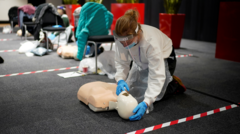
Workers should be granted the right to paid time off to train for national emergencies, a House of Lords committee has recommended. In a report released on Monday, the 12-member national resilience committee proposed a new ‘civic resilience leave’ entitlement. This would allow employees to undertake training and emergency volunteering without suffering a loss of income.
The recommendation is part of a broader effort to improve the UK’s capacity to respond to crises, including wars, power cuts, cyber-attacks, and natural disasters. The committee noted that while the government recently launched a campaign encouraging the public to stockpile essentials like tinned food and bottled water, the nation remains underprepared. The peers argued that the public lacks a complete understanding of potential threats from Russia, China, and Iran, particularly regarding cyber-attacks.
To address these gaps, the committee suggested that all local councils should maintain registers of volunteers with relevant skills and capabilities. Additionally, councils should compile lists of buildings in their areas that could serve as emergency shelters. The report also called for a national campaign for registered volunteers and civil reservists, modeled after the National Health Service’s ‘volunteer responders’ programme launched during the pandemic.
The proposal for paid leave aims to cover ‘approved’ training and volunteering roles, such as those in the coastguard rescue, firefighting, or St John Ambulance. Currently, there is no legal entitlement to paid leave for such roles, although Army reservists can claim up to £400 a day from the government to cover lost pay when mobilised. The committee did not specify exact leave entitlements but urged Labour ministers to collaborate with employers to design ‘proportionate arrangements’.
Other recommendations in the report include sending crisis preparedness booklets to every household, similar to practices in Sweden and Denmark. The committee rejected the government’s proposal to rely solely on website-based information, warning that it risks excluding certain groups and failing during prolonged disruptions. They also advocated for the development of a multilingual ‘public preparedness app’ that could provide official guidance and allow users to share their location with emergency authorities, akin to Finland’s 112 Suomi app.
The Cabinet Office stated it would ‘carefully review’ the report, emphasizing that the government is already taking action to improve crisis resilience. Officials pointed to ongoing work to update the secret ‘war book’ defence plans and a major resilience exercise scheduled for next year. They also highlighted recent measures to protect undersea internet cables, including new powers for officials to inspect cable landing stations.



Councils maintaining volunteer registers is a good start. We saw how much the NHS volunteer responders did during the pandemic.
Stockpiling tinned food feels a bit extreme unless something bad actually happens. Are we preparing for a war or a bad winter?
I train for the coastguard volunteers. It would be great if I didn’t have to ask my boss for unpaid time off every month.
The multilingual app idea is smart. Finland has done this before, and it really helped during their infrastructure challenges recently.
Is this just political posturing? They mention Russia and China threats, but do they have the budget to back up this leave?
Interesting comparison to Sweden sending physical booklets. In the digital age, that feels almost quaint but perhaps necessary for resilience.
Who is paying for this? Employers will hate it. We already struggle with statutory leave, adding more paid training is tough.
Finally seeing paid leave proposed for civilian roles is huge progress. It makes volunteering actually accessible for working people.